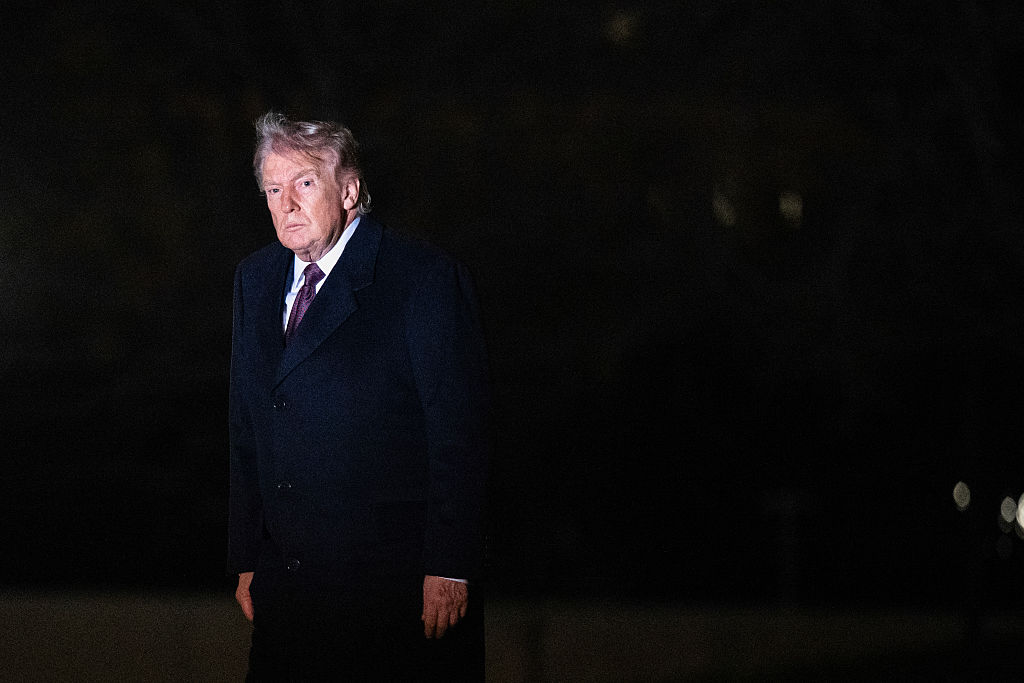
In 2022, I published an essay endorsing Donald Trump for the 2024 Republican nomination. The essay raised not a few media eyebrows, including at CNN. Back then, Ron DeSantis mania was in full swing among American conservatives. Endorsing Trump bucked the consensus of the Right’s consultant class, which sought “Trumpism without Trump” and had settled on the Florida governor as the best vehicle for it: a populist (sort of) without Trump’s baggage and antics.
It was notable, too, that my co-author, Matthew Schmitz, and I weren’t early MAGA die-hards. Not Mike Cernovich or Jack Posobiec or the late Scott Adams, but, for lack of a better word, respectable conservatives with mainstream careers. Hard to imagine as it might seem today, Trump in 2022 was seen as a lost cause in our milieu: dogged by numerous lawfare prosecutions and civil suits, deranged by his belief that Joe Biden had “stolen” the previous election.
Even so, we proclaimed that “He’s Still the One” (a headline echoing the Shania Twain song). Trump was still the best choice for those who believed that the conventional “conservative movement is part of the problem,” as the essay contended. “Only Trump defied the deep state empowered by his Republican predecessors. Only Trump has broken from the disastrous foreign policy championed by the conservative movement.”
But now, Trump has abandoned the intuitions and commitments that seemed to set him apart from the post-Nixon Republican mainstream, not least an aversion to wanton bloodshed and destruction.
Psychoanalysis speaks of “determination by the signifier”: the way people end up inhabiting the picture of them inscribed by others (parents, social institutions, and the like). You become what they say you are. Just so, Trump the war-wary populist has now fully given way to his liberal caricature: venal, erratic, childish, a chaos agent. Ordinary Americans do their best to protect their pocketbooks and 401(k) accounts from his whims; other world leaders increasingly look beyond him in preparing for the unstable international order he will leave behind.
Why this happened will be a historian’s debate for decades to come. But a first-blush analysis must return to the character factor that was too quickly dismissed by those of us who were thrilled by his shattering of GOP policy orthodoxies.
Trump had famously described George W. Bush’s Iraq War as a “big, fat mistake” in a 2016 Republican primary debate. And four years later, he’d vented the American people’s fatigue with the Middle East more generally, blaming bipartisan hawks for sinking “$8 trillion” into the region that could’ve been spent “fixing our roads in this country” or “fixing our highways, our tunnels, our bridges, our hospitals even, our schools even — it’s crazy.”
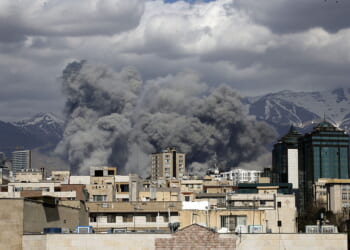
Well, here we are: Trump has now launched a broadly unpopular invasion of Iran in conjunction with Israel. And this, in pursuit of vague objectives that shift depending on which Cabinet member you ask and when. The result: an open-ended regional war that has decimated America’s military basing architecture in the Middle East, triggered the closure of the Strait of Hormuz, and sent gas prices spiking back home (the sharpest four-week rise since Hurricane Katrina). An expeditionary force of 2,500 Marines is on its way to the Gulf as I write. What Trump reportedly envisioned as a quickie, Venezuela-style affair will thus widen into a prolonged operation with a ground component.
I can’t claim to speak for my co-author, but this was exactly the type of scenario I had in mind when, back in 2022, I celebrated Trump for ditching the foreign-policy consensus of conventional conservatism. And lest the hawks and pro-Israel hard-liners who now lord it over MAGA attempt gaslighting, the Trump campaign in 2024 listed the plank “PREVENT WORLD WAR THREE” near the top of its platform.
Pro-war pundits insist that there is no betrayal, no switcheroo. They dig up obscure, decades-old anti-Iran statements from Trump: You fell for the “PEACE TICKET” sloganeering from 18 months ago? Well, sucker, you should have combed through 1980s news clippings! They also point to polls showing that the war — erm, “excursion” — is overwhelmingly popular among self-identified “MAGA Republicans.” Last week, Senate Republicans posted a graphic on X touting “94% support” for the war in a huge font; beneath it, in minuscule font: “of MAGA Republicans.”
“Trump the war-wary populist has now fully given way to his liberal caricature.”
Such arguments, of course, elide the fact that Trump supporters recoiling from the war might decline to identify as “MAGA Republicans,” thus leaving a self-selecting pool of hard-liners who would be as likely to back Trump if he made peace with Tehran and converted to Twelver Shiism tomorrow.
Then, too, “MAGA Republicans” are only a part of the coalition Trump assembled in 2016 and expanded over the decade that followed. That broader coalition also included many Independents, of whom only about a third approve of the Iran war (at best). The full Trump coalition also included nearly half of Hispanic men, a fifth of black men, and normally Democratic-leaning Obama-to-Trump voters: the groups, in short, that were drawn by Trump’s talk of leaving the Mideast behind to build up roads, schools, hospitals.
These voters may not have called themselves “MAGA Republicans,” but they were willing to place a bet on Trump as a force for domestic renewal and foreign-policy restraint. Yet they are being told, in effect, to go stuff their complaints. The new coalition is to be much smaller: MAGA die-hards plus the pro-war pundits and donors — many of whom couldn’t wait to be rid of Trump back in 2022, when DeSantis was still viable.
One almost wishes, however, that they had succeeded with DeSantis, who by all accounts is a competent crisis manager who has cooperated effectively with Sunshine State lawmakers to legislate his priorities. As president, DeSantis would have been an old-school, donor-beholden hawk. But we are getting the same thing with the second Trump administration, only with the chaos, messaging confusion, and sheer incompetence characteristic of the multiply-bankrupt ex-developer and reality-TV shouter.
If the United States was bound to waste $200 billion (the Pentagon’s latest ask from Congress) on another Mideast war radiating instability into Europe and beyond, would that it were under a commander in chief blessed with an orderly mind and advised by policy heavyweights instead of yes men. A president who wouldn’t be surprised by the Iranians lashing out at the Gulf — something they repeatedly threatened to do in case of attack. A president who wouldn’t suddenly beg European allies to join him in the adventure, then insult them when they declined. A president whose son-in-law wouldn’t shamelessly commingle diplomacy with the pursuit of profit.
Yes, the Republican Party is structurally militaristic, as Michael Lind has argued in these pages. Yes, donors wield far too much unaccountable power over it (and over the Democrats, as well). But those of us reckoning with the scale of these failures must return to the character problem that first gave rise to the Never Trump movement. Among those of us who made our peace with Trump, it was too easy to praise his “animal instincts” — a phrase I often used in this context — by way of overlooking his lack of personal virtue. Sound instincts are, of course, part of leadership. But without the ballast of character and prudence, they can veer in any direction or fall under the sway of any whispered counsel, no matter how foolish.
Trump lacked that ballast. He was never the one.