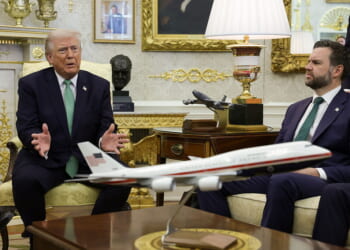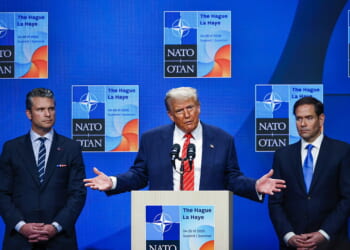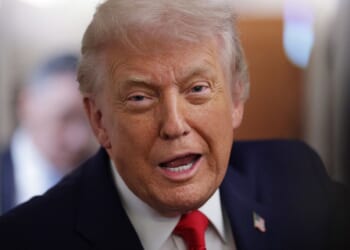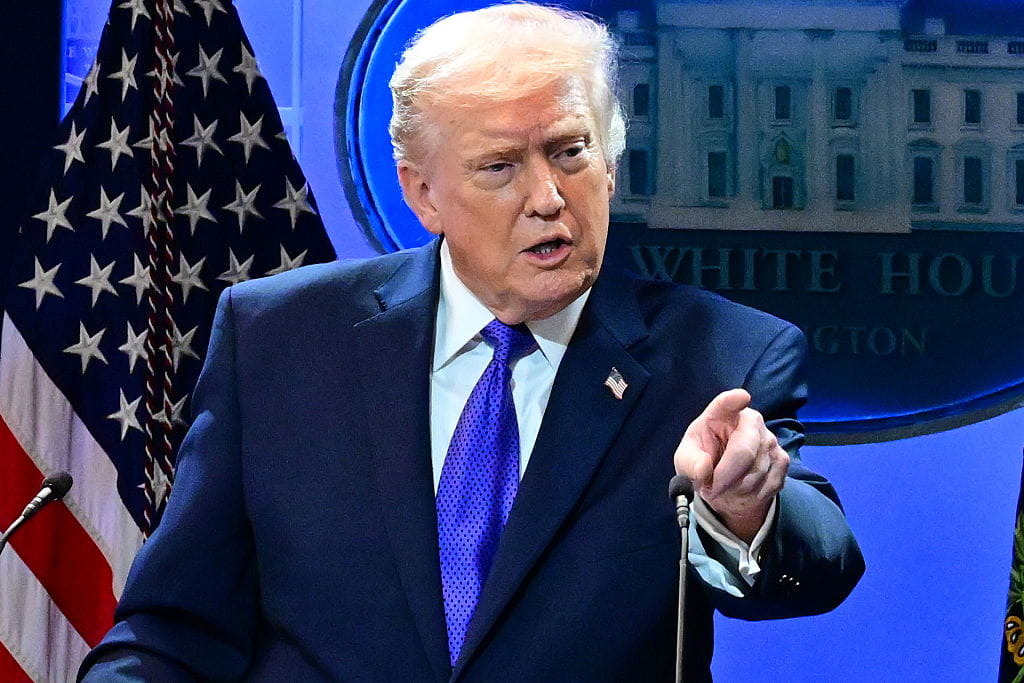
The Supreme Court may have ruled against President Donald Trump’s first choice for validating his tariffs, but he wasted no time in pivoting to his plan B. In a press conference, Trump zeroed in on the Court’s language affirming his authority to charge more tariffs than he had been charging in the past year under various other statutes.
President’s Plan B
“Therefore, effective immediately, all national security tariffs under section 232 and existing section 301 tariffs, they’re existing, they’re there, remain in place, fully in place and in full force and effect,” President Trump explained. “Today, I will sign an order to impose a 10% global tariff under section 122 over and above our normal tariffs already being charged. And we’re also initiating several section 301 and other investigations to protect our country from unfair trading practices of other countries and companies.”
The president said the US could collect far more money in tariffs than the country has been taking. US Secretary of Treasury Scott Bessent appeared on FOX News’ Will Cain Show and called the Supreme Court’s ruling a “loss for the American people.” He said:
“By taking away President Trump’s instantaneous leverage, using the IEEPA authority, the American people suffered a significant setback. Think to this time last year when President Trump put on the fentanyl tariffs against Mexico, Canada, China for the precursor chemicals. And then, we saw a rapid decline in fentanyl deaths. If that’s not an emergency authority, what was? On October 8th, when Chinese government said that they were going to put a worldwide export control on any product that had .01% Chinese rare earths in it, 24 hours later, President Trump said that he would impose a 100% tariff on China if they did it. They immediately came to the negotiating table.”
But the president, the secretary, and other analysts pointed out the Court’s affirmation of Trump’s power to institute a full trade embargo. Instead, he imposed a 10% import duty for a period of 150 days under Section 122 of the Trade Act of 1974 and he continued existing tariffs on national security grounds under Section 232 of the Trade Expansion Act of 1962, and Section 301 based on the discrimination against American products.

In the meantime, Bessent says the durability of those statutes will launch investigations into additional trade deficiencies by the Department of Commerce and the US Trade Representative, which will take anywhere from 30 to 90 days. Bessent predicted Treasury would not see a decrease in revenue.
The Court was silent on refunding the IEEPA tariff revenues the US collected, which Penn-Wharton Budget Model economists reportedly estimate to exceed $175 billion.
Michael Froman, president of the Council on Foreign Relations, wrote on Friday: “Legally, that should be refunded, but going forward, the combination of the 10 percent tariff under Section 122 and whatever additional tariffs might be imposed as the Section 232 and 301 processes conclude could well substitute for that.”
Froman suggested another consequence of the Court’s ruling is it could chill President Trump’s threat of tariffs against European nations in his negotiations for the US acquisition of Greenland, or against Canada for its cozying up to China to import electric cars.
What happens now?
“No one can deny that the President’s use of tariffs has brought in billions of dollars and created immense leverage for America’s trade strategy and for securing strong, reciprocal America-first trade agreements with countries that had been taking advantage of American workers for decades,” House Speaker Mike Johnson (R-LA) posted on X in response to the Supreme Court’s ruling. “Congress and the Administration will determine the best path forward in the coming weeks.”
The White House, in its weekly newsletter released on Saturday, called the ruling “short-sighted” and “troubling,” adding an optional survey at the end: “The Supreme Court wrongfully struck down tariffs imposed by President Trump. In his dissent, Justice Kavanaugh pointed to the other tools available to the President that would make their ruling invalid. Do you support President Trump’s use of tariffs to protect American businesses and jobs? Why or why not?”
President Trump will likely have more to say on the ruling at Tuesday’s State of the Union address.