“My message to Tunbridge Wells at the moment, and it’s a horrible thing to have to say, but I feel we need to start behaving and thinking like those American preppers.” The water has been off for four days and I’m standing in Jonathan Hawker’s modish kitchen, a place not exactly conducive to imagining the end of the world. But Hawker has not completely lost the plot. For the last few years, the taps have been on and off at the hands of failing water company South East Water. The saga has cost the Kent town £20 million, seen pensioners evacuated to London, and forced middle-aged men to defecate in the woods. A place the BBC once called “the spiritual home of middle England,” has, in the words of one of Hawker’s neighbours, “sometimes become a bit third worldly”.
The one-hour journey down from London to this most famous incarnation of Middle England is a jarring transition from drab suburb to rolling green. And it was this Arcadian escape that once helped birthed a national joke: a provincial dreamscape of undulating Georgian townhouses and posh schoolchildren had somehow curated an unfathomable discontent. “The Disgusted of Tunbridge Wells” were letter writers and moralists, the sort of people who once made sure the bins were collected and sex was kept in the bedroom. So damaging was the archetype that in 2009 the council forced a rebrand: the disgusted were encouraged to give up the act and become the “delighted of Tunbridge Wells” instead.
Ten years on, you have to blend the two to understand the local mood. The busybodying and spleen, now more in step with the national mood, is taking on the behemoth of British decline. “I am using what I would call an application of chaos theory to apply pressure on all agencies through an increase in media relations,” as Hawker confidently puts it. Southern Water is the target: the indebted utility that has paid out more to shareholders than invested in keeping the town’s famous royal waters agush. It helps that the inconvenience also touches on the town’s usual bêtes noires: infrastructure that cannot keep up with the steady flight to Tunbridge Wells from London and a nation that’s lost its common decency.
Residents have organised accordingly. Once the nation imagined them making jam and penning acerbic notes to the Telegraph. Now they’re organising emergency relief. “It’s the lies, the lack of information and the lack of honesty,” says Mel Alesi, the parish councillor that runs Staplehurst Emergency Help Team, a sort of disaster-focused residential association that now hosts a 24-hour helpline for the things that keep the new Middle England up at night: pandemic, water shortage, the collapse of civic authority. Alesi proudly explains her body was quicker off the line than officials in nearby Maidstone, quickly delivering a private water supply they had been quietly hoarding in anticipation of the worst.
For 114 years, the Tories ruled Tunbridge Wells without ever really thinking about the place. The Lib Dems triumphing in mid-Nineties local election was, as one local journalist recalled, “marginally less seismic than the defeat of Rome.” On a Friday afternoon in the Pantiles, a Georgian promenade that is uncharacteristically thriving for an English high street, no one is particularly sad to see the old empire go. Like many towns in the south east, it’s now an extended suburb of London, where young couples rub up next to proprietorial men in corduroys who look like John Simpson.
Up in the hills you can find the Conservative Club, what looks like a run down colonial villa gazing over its erstwhile patch. A photo of the former Tory MP, who lost his seat to a Lib Dem rout of the Home Counties in 2024, still hangs in a dusty frame. Yet it is Reform that now hosts its meetings here, having now tripled its local party membership. By the party’s local headquarters, next to a cottage where Thackeray once lived, two elderly burghers quickly disappear inside when I announce myself. No one in the local Conservative Party wants to talk at all.
In a place that never had to think much about politics — not for nothing is its town’s motto “Do Well Doubt Not” — what’s now unfolding is a new dynamic in British politics, where Reform and the Lib Dems, two parties that could as well come from different planets, find themselves battling for the middling soul of the country.
The idea of Middle England, as Joe Moran argues in his essay on the term, is one of the foundational myths of recent British politics. In an age when parties won from the centre, discerning the sensibilities of the market towns and suburbs became something of a national sport. Class: A View from Middle England, a 1979 book by Jilly Cooper, was the first to popularise the term; the book’s forensic obsession with the vagaries of taste and class soon leaked into the politics. From the early Nineties onwards, somehow “Middle England” came to represent everywhere from Tunbridge Wells to Woking to Peterborough, encompassing grammar schools, aspiration, “Pebbledash People” and “Mondeo Man”, foreign holidays, family values and the sort of budding jobsworths who called up John Major’s famous “cone hotlines”.
The stereotype was always confused and shapeshifting because it was designed to be fundamentally apolitical, a “small-c conservatism” forever moving with the expanding middle classes. The concept, by those who sought to court it (and those who despised it) was always ripe for abuse. Philip Gould, reflecting on New Labour’s triumphs, settled on a suitably broad definition: “A rich vein of empirical common sense that has always been central to the British people.” It is exactly this sort of sophistry, Moran argues, that led to the “tenacious idea that the key median voters decide elections.”
In the country’s present upheaval, it’s an idea being tested to extinction by everything from recent immigration arriving into the shires to failing water firms. In their survey of Britain’s fragmenting political landscape, More in Common evokes seven political tribes — in response to the majority that now believe “the system is at fault” for the county’s decline. In practice, they range from “established liberals”, who believe in moderately reforming Britain’s existing institutions, to the “rooted patriots and dissenting disruptors” who seem on the verge of marching on London.
Taken together, the More in Common analysis is a spotters guide to voters in the towns and villages of the Kent High Weald — where neither of the two major parties have featured prominently. All the while, it seems clear that “Middle England” has now become little more than a centrist sop, bound together by docile slogans about family, stability and home. Now, though, all that’s unravelling, a portent not only for political volatility beyond 2029, but also for a corner of the country changing far faster than the old myths can cope with.
Ed Davey, the cricket-playing, bungee-jumping leader of the Liberal Democrats, has emerged as the last great defender of this apolitical calm. In the great tradition of Middle English politics, he has attempted to raise a big tent: exploiting the latent if superficial snobbery of places like Tunbridge Wells to form a sort of moralistic anti-populist front. “There’s just this massive space, call it ‘Middle Britain,” he told the New Statesman last September, “decent people who think Labour haven’t provided change but who are deeply worried about Reform.”
I ask the local MP Mike Martin to dig a bit deeper. The former Army man, a Pashtun speaker who made his name calling out the follies of British strategy in Afghanistan, is both patrician and progressive, the sort of Tunbridge Wells hybrid who could inspire the town’s sixth formers to take their Duke of Edinburgh to the Donbas. “If you go out on a Saturday morning, the people look like me,” Martin tells me over the phone. “They’ve got two kids, they want a sensibly run economy, they’re socially liberal and internationalist and they reject the parochialism we are seeing from the Conservatives.”
His undeniable popularity comes with a caveat: everyone likes the idea of Martin, but no one I speak to seems able to explain what the Lib Dems actually stand for when it comes to keeping the water running and the “disgusted” at bay. “I don’t think that’s fair,” the MP responds when I put it to him. “It’s about being radical in a way that is also credible. And we’re not there yet, but I think we are moving in the right direction.”
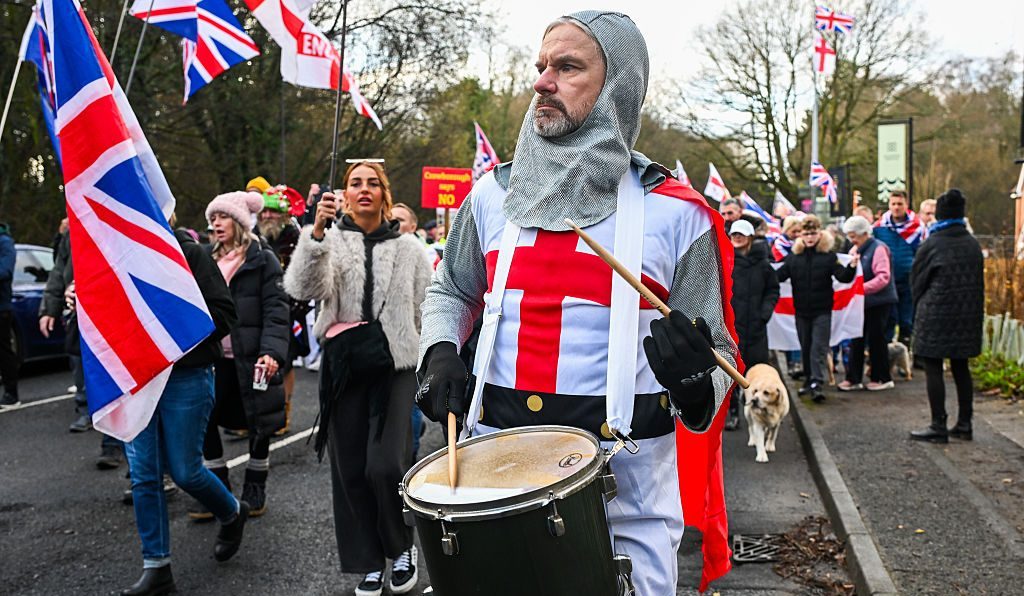
A short drive from Tunbridge Wells is an ominous reminder of how vulnerable this vagueness now feels. For the last three months, the pretty market town of Crowborough has seen a coalition of public sector workers and retired investment bankers mobilise for weekly protests via an organisation called Crowborough Shield. This is a community group that has trumped the old rigmarole parish politics and unearthed a mood — via legal challenges to the Home Office and self-funded community patrols — that feels borderline insurrectionist.
The sense of rebellion is jarring. This is a place where Arthur Conan Doyle once went to play golf and die. The morning I arrive, the Government has quietly been moving asylum seekers into the town’s army base, part of their operation to end the use of commercial hotels. Crowborough’s disquiet has curdled into outright paranoia. Walking up the hill from the station, the sight of a lone male sends pensioners scuttling inside. As they pass, vigilant Land Rovers give me the once over.
“This is a place where Arthur Conan Doyle once went to play golf and die.”
In the White Hart Pub at the bottom of Chapel Green, I meet Nick Jones, former scout leader, and founder of the Crowborough Watch. Another community-funded patrol group, its mix of school teachers, ex-bouncers and councillors has come together to put local minds at rest. “Last night on patrol, we found a woman quivering in a hedge,” Jones tells me. “It could have just been paranoia on her part, but the slightest thing now is unnerving because of the vacuum of information from the Home Office.”
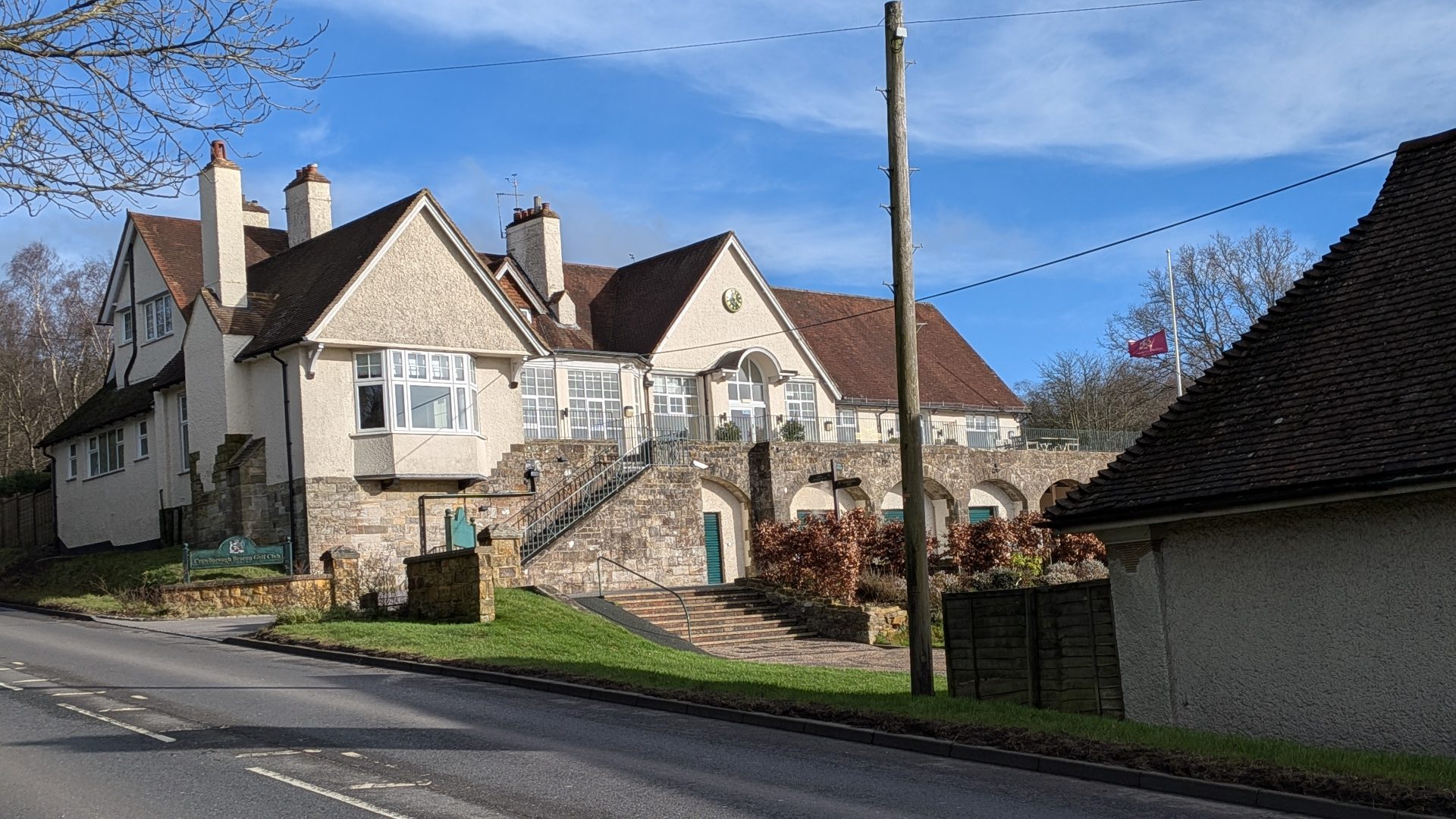
To reach Crowborough’s new asylum camp, you have to travel through the very heart of this new Middle England. Management consultants in lycra jog past forbidden Tudor mansions that look out over manicured golf clubs. A road hazard sign reads: “Elderly People.” At the entrance to the new asylum base, you arrive at a newly built estate that aspires to the gentler Crowborough of yore. Walking back towards the unsold houses, one family approaches with a pair of huskies and a sullen toddler in a pram. They moved in November and have already had reporters knocking to ask if they’ll sell for £20.
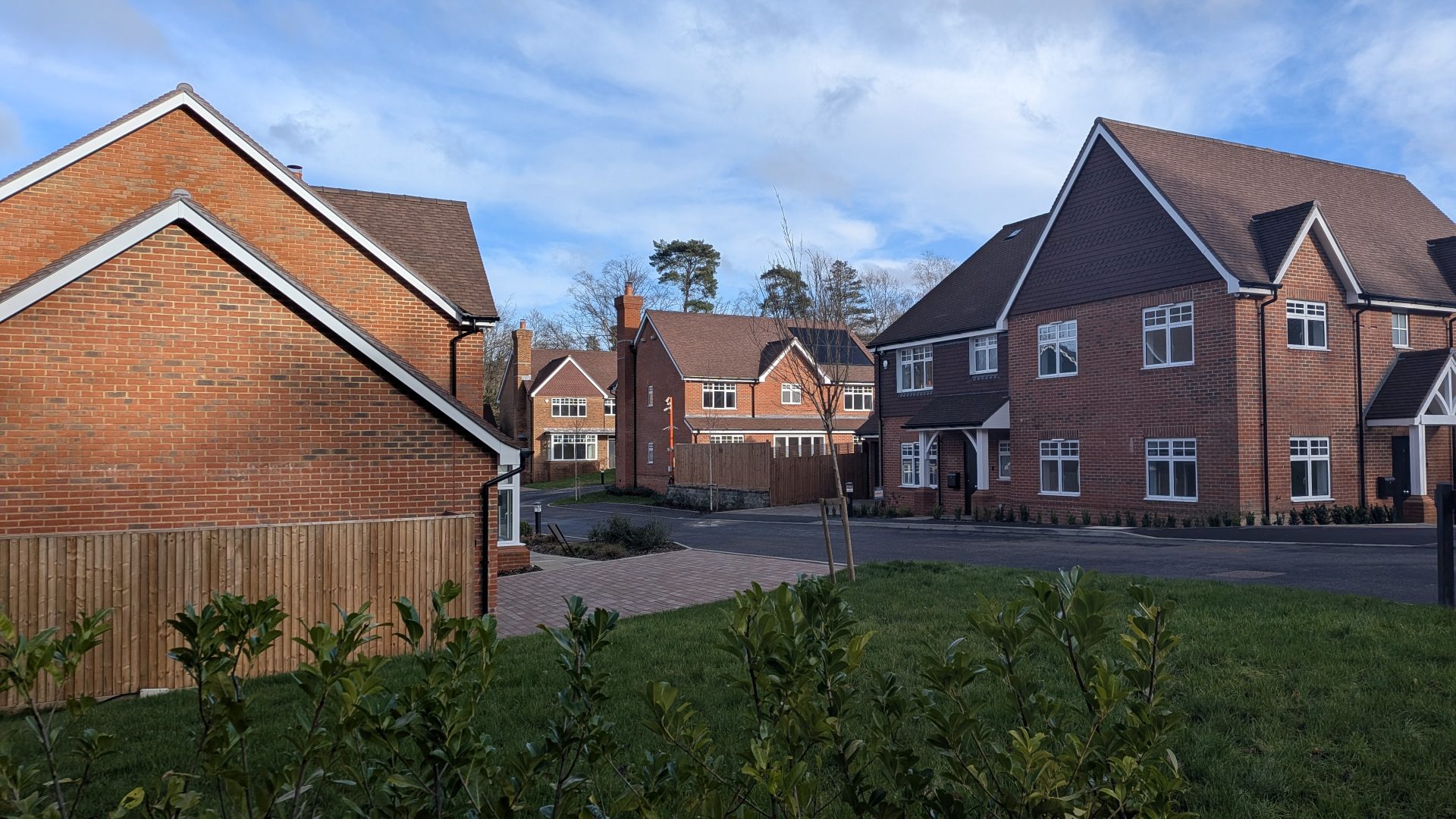
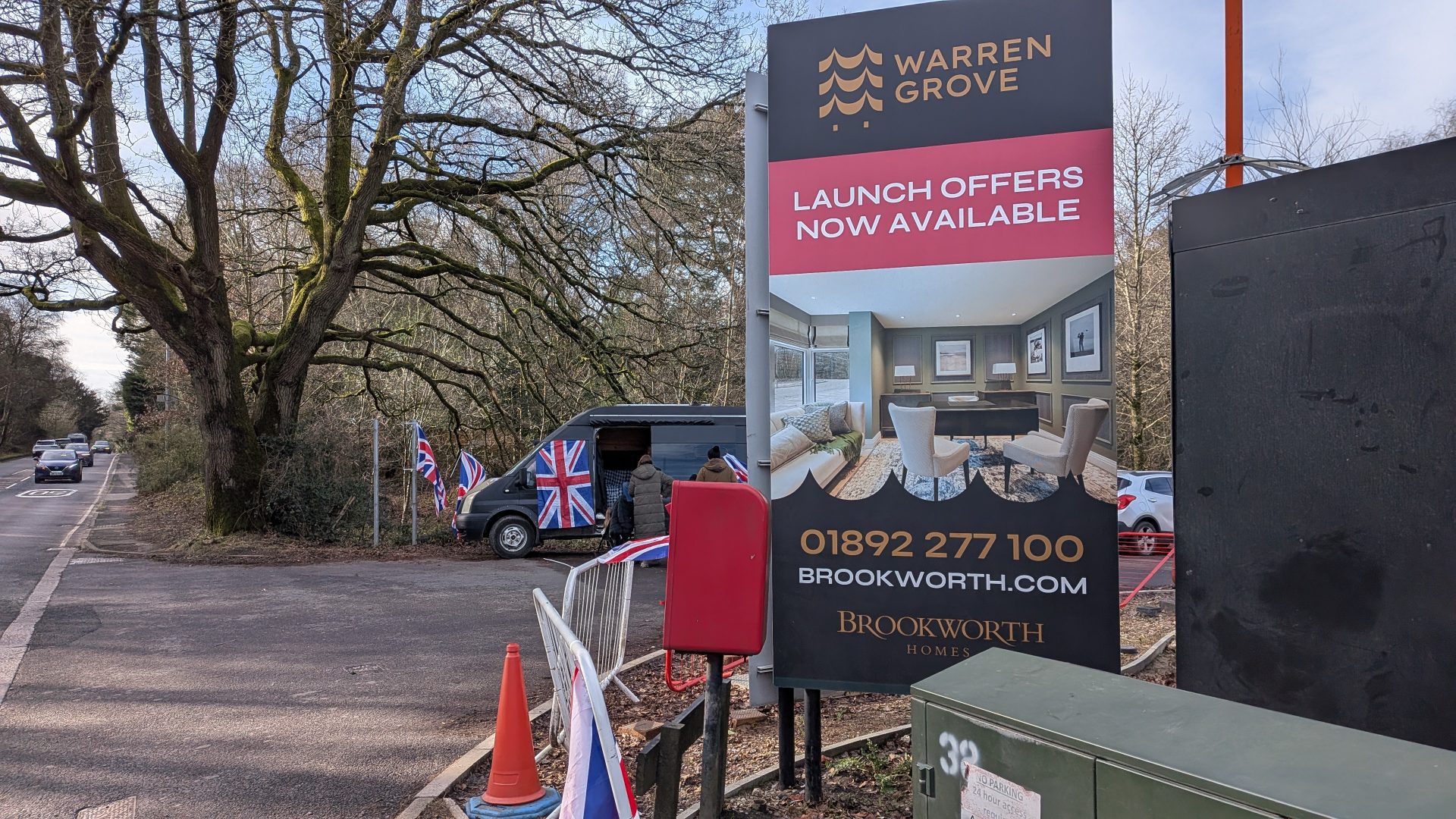
I try to strike up a conversation about politics. Are the Conservatives still relevant in their spiritual home? “Everyone I’ve spoken to in Crowborough is voting Reform,” the mother says bluntly. Further up the road, a group of policemen are trying to encourage a YouTube streamer in a van to move on. Tomorrow, the town is preparing for a set piece protest, with rumours that everyone from Tommy Robinson to Rupert Lowe will turn up to steal the show. “You don’t really care unless it’s in your town,” the mum adds of the new arrivals. “I expect they’ll get bored of Crowborough and travel into Tunbridge Wells. They’ve got no idea what’s coming.”
Away from the camp, I seek out some of the town’s older residents, wandering down one of Crowborough’s winding private roads. The big mansions were built for people who wanted to drift off into the sleep of deep England. I find a smart, polite woman in a pink Gore-Tex jacket and black sunglasses out for a walk. Did she ever imagine the country’s present chaos finding its way here? “I think it was inevitable,” she says with rehearsed drollness. “Since Covid, those wilderness years, we all hoped our life would go back to normal but it hasn’t.” I ask her if she still believes in the Tory party, the shires, the old idea of Middle England. “I just like the middle ground,” she says. Does she think it still exists? “Probably not.”