Yet another unplanned benefit of the growing anti-Iran coalition: Ukraine may finally get its due.
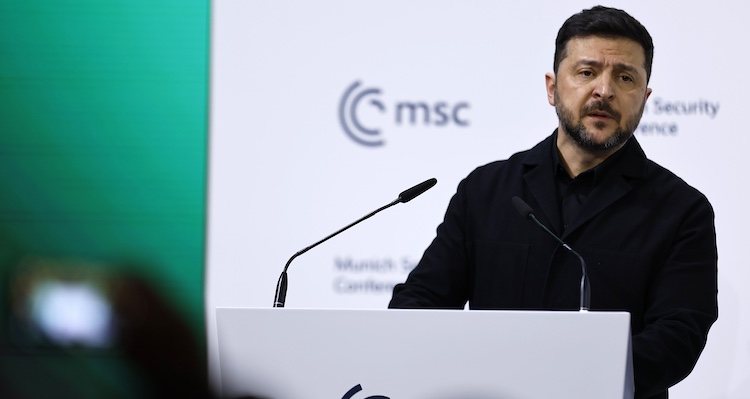
As Ukrainian President Volodymyr Zelensky himself posted this afternoon: “We received a request from the United States for specific support in protection against ‘shaheds’ [Iranian-made drones] in the Middle East region. I gave instructions to provide the necessary means and ensure the presence of Ukrainian specialists who can guarantee the required security. Ukraine helps partners who help ensure our security and protect the lives of our people. Glory to Ukraine!”
The issue is that the Iranian missiles and suicide drones cost far less to fire than they do to be intercepted by modern missile-defense systems across the Mideast. It is Tehran’s one point of advantage in this war, though the U.S. and Israeli missions have been destroying Iranian launch sites at an impressive clip. Ukraine had to figure out how to defend against the Shaheds because Russia was acquiring them from Iran and firing them at Ukraine, in large part to bankrupt Kiev’s defense.
So Ukraine came up with a solution: drones to intercept the drones. It’s a fascinating case of two sides in a war reverting to the use of less-advanced technology in the part of the war that will be decisive: the battle for the skies.
As the Telegraph reported on such innovations last July, “One unveiled by Ukraine’s western air command this month is a flying-wing shaped, rail-launched craft that looks a bit like a Stealth bomber, and which a grown man can just about carry under one arm. Others look ‘a bit like an American football with wings’, says Bob Tollast, of the Royal United Services Institute. The Ukrainian Wild Hornets group has one called Sting, with four large fins attached, for hunting Shaheds.”
Earlier in the war, our own Abe Greenwald wrote about how Russia’s Black Sea forces were pushed back in part by “ingeniously designed Ukrainian sea drones.” Ukraine then moved on to developing flight drones, and the tactic was a resounding success; some versions of the interceptors cost less than $1,000 a piece.
Necessity is the mother of invention. Iran’s strategy of firing drones and missiles all over the Gulf is aimed at picking off weak links in the coalition who can’t afford to keep shooting down Shaheds. The answer is to fight cheap fire with cheap fire, and no one knows how to do that better than the Ukrainians.
Zelensky would like additional American Patriot systems in return. He should get them. By now it is clearer than ever that victory in this conflict depends on isolating Iran. Tehran has hurt its own cause in this way at times, by shooting at Turkey and Qatar and turning those states into active combatants on the same side as the U.S. and Israel. Iran may have even dragged the UK into the war, though it’s unclear if Prime Minister Keir Starmer had made the decision to get involved before or after Iran fired at British assets on Cyprus. Hezbollah’s decision to jump into the war brought not just Israeli reprisal but French diplomatic pressure on the government in Beirut to crack down on Hezbollah’s ability to operate anywhere in the country.
And the Economist reports that “Gulf rulers are privately advising [Trump] to stay the course. The alternative looks grim. If America ends the war now, Gulf states will be left with a wounded, hostile regime.”
Indeed. And Ukraine is a perfect example of how this coalition is growing during the course of the war to adapt to challenges along the way.