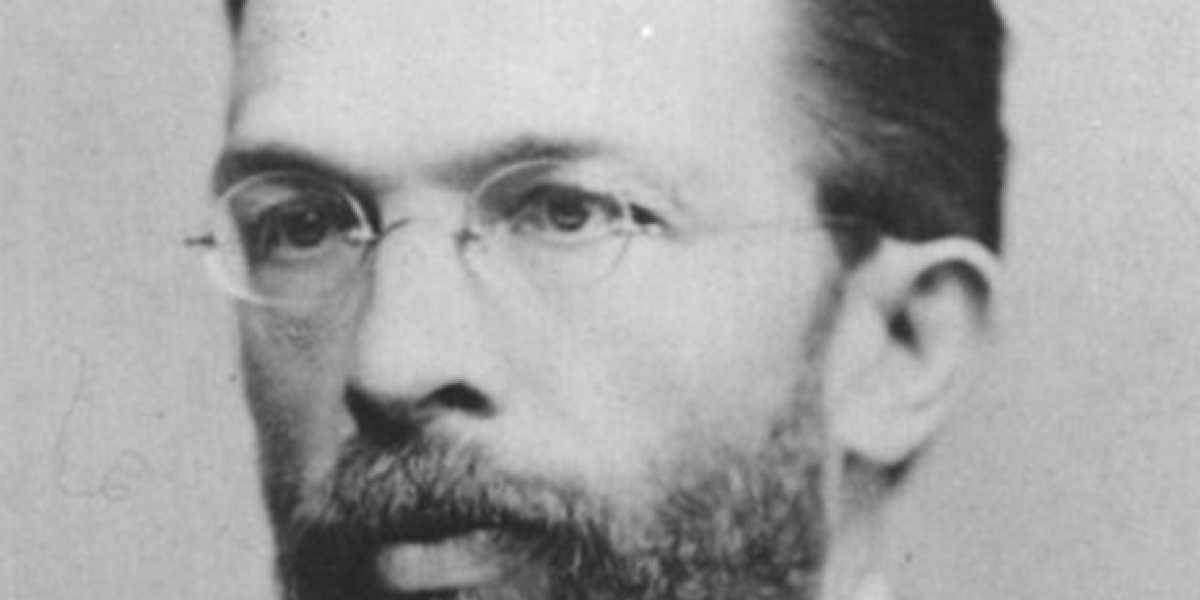
In my article “Carl Menger’s Overlooked Vital Evolutionary Insights,” I tried to summarize and bring attention to founder of the Austrian School of economics Carl Menger’s “vital evolutionary insights” regarding the evolved, non-human-designed emergence of social institutions like “law, of language, of the origin of markets, the origin of communities and of states.” And Menger’s focus on the evolution of money, which enables the division of labor and information, profit and loss calculation, economic competition, and other emergent market mechanisms. These non-human-designed mechanisms coordinate the actions of people to create what Menger and British philosopher Herbert Spencer so cleverly referred to as “The Social Organism,” similar to how the evolved respiratory, digestive, and other mechanisms coordinate the actions of cells to create multicellular organisms.
To Menger, these social institutions (law, language, culture, money, etc.) are “the unintended result of individual human efforts (pursuing individual interests) without a common will directed toward their establishment” and “the unintended product of historical development.”
Let us next apply some of Menger’s wisdom towards the emergence and functioning of the finance and banking industry and how it relates to our Jew-Gentile misunderstandings and emerging polarizations.
Money-lending, finance, banking, and the phenomenon of interest rates greatly help society in two ways. For one, they allow entrepreneurs to have access to wealth needed to carry out big projects (skyscrapers, factories, etc.). They also motivate people whose inferior business ideas do not have a return on investment greater than prevailing interest rates to save, and thus accumulate and place the wealth they would have otherwise consumed under the control of borrower-entrepreneurs whose ideas do have a return on investment greater than prevailing interest rates as they make a profit large enough to pay back the loans with interest. This process inadvertently, “as unintended results of historical development,” and certainly not as the result of our “reason,” gives a massive computational boost to society as wealth is accumulated and subsequently used to reorder society by the minds that have the best ideas and information. The interest rate is like a barometer that inadvertently helps a mind decide whether it should do the saving or borrowing/investing (see my article “Interest Rates, Computational Boosts, and the Austrian Theory of the Business Cycle”).
The classic, and perhaps most important example of the co-evolution of the modern free market economy (capitalism), culture, and our eventual Jew-Gentile frictions, can be seen with the emergence of modern banking-finance. For example, Islam has strong prohibitions against charging interest (“usury”) which have short-circuited or greatly hampered the potential benefits of finance and banking summarized above in the Islamic world. The following passages from the Qur’an are some of the most relevant:
(T)aking interest despite its prohibition, and consuming people’s wealth unjustly. We have prepared for the disbelievers among them a painful punishment. (4:161)
Those who consume interest will stand ˹on Judgment Day˺ like those driven to madness by Satan’s touch. That is because they say, “Trade is no different than interest.” But Allah has permitted trading and forbidden interest. (2:275)
Allah has made interest fruitless and charity fruitful. And Allah does not like any ungrateful evildoer. (2:276)
Christianity’s New Testament seems more usury-friendly via passages like, Luke 19:23, “Then why did you not put my money in the bank, and having come, I would have collected it with interest?”, but Luke 6:35, “But love your enemies, and do good, and lend, expecting nothing in return;…” could be used to support an anti-usury position which is what the Roman Catholic Church (RCC) enforced for over a thousand years before eventually abandoning the strong anti-usury stand.
When it comes to Judaism and the Old Testament, God’s message is one that shuns charging interest between Israelites-Jews but allows it to be charged to non-Israelites. The most influential verses are Deuteronomy 23:20, “You may charge interest to a foreigner, but to your countrymen you shall not charge interest,…” and Exodus 22:25, “If you lend money to My people, to the poor among you, you are not to act as a creditor to him; you shall not charge him interest.”
These few religious scriptures have had profound ramifications that are the “unintended results of historical development.” Historian Paul Johnson writes in his History of the Jews (1988, p. 174):
The Jews reacted by engaging in the one business where Christian laws actually discriminated in their favour, and so became identified with the hated trade of moneylending. Rabbi Joseph Colon, who knew both France and Italy in the second half of the fifteenth century, wrote that the Jews of both countries hardly engaged in any other profession.
Christian and Islamic leaders inadvertently incentivized the Western world to place much of its saved wealth and money in the control of Jews, giving them immense power and influence way out of proportion to their numbers. The prevalence of Jews as moneylenders even shows itself in the Magna Carta where there is a small section establishing some rules when dealing with Jewish moneylenders.
Hitler—who, like most popular leaders, was the embodiment of the economic fallacies, myths, and prejudices of the times—was, of course, a coercive, competition-immune, central planning “National Socialist” (Nazi), who had little understanding of the vital role that private property, freedom, and emerging “economic competition” play in generating and spreading superior information and subsequent order as companies innovate and have to copy competitor’s innovations (see my article “How Economic Competition, Rational Economic Calculation, and Civilization Emerge from Private Property”). Hitler erroneously saw things like the emerging stock markets and the finance industry, especially given the over-representation of Jews, as some gimmick-scam plotted by Jews to the detriment of non-Jews. His fallacies and ignorance can easily be seen in numerous excerpts like this one from a speech given in Munich on July 28, 1922:
The directors of these institutions were, and are without exception, Jews. I say ‘without exception,’ for the few non-Jews who had a share in them are in the last resort nothing but screens, shop-window Christians, whom one needs in order, for the sake of the masses, to keep up the appearance that these institutions were after all founded as a natural outcome of the needs and the economic life of all peoples alike, and were not, as was the fact, institutions which correspond only with the essential characteristics of the Jewish people and are the outcome of those characteristics.
Do the cells in your body have the slightest clue about the roles they play in the various evolved systems—such as respiratory or digestive—that coordinate your body? Of course not. Similarly, as Menger noted, the evolved nature of market mechanisms, combined with widespread economic ignorance, leads many to misunderstand them. As Hayek writes: “To them [people] the market economy is largely incomprehensible…and its results seem to them irrational and immoral. They often see in it merely an arbitrary structure maintained by some sinister power.” Unfortunately, due to the aforementioned factors contributing to Jewish overrepresentation in finance and banking, which are not the result of some “Jewish conspiracy,” but “the unintended product of historical development” many erroneously view “the Jews” as that sinister power.
The great Jewish-born economist, Ludwig von Mises tells us: “Man has only one tool to fight error: reason.” Hitler, of course, held anti-Jewish fallacies (see my article “The Economic Fallacies Underpinning Hitler’s Disastrous Views”). However, vilifying or attempting to harm, coerce, criminalize, or kill people for their potential errors—through measures like “hate speech” laws—instead of overcoming those errors with reason and education does nothing to overcome them. In fact, it intensifies them and is itself a fallacy, just as responsible—if not more so—for the resulting polarizations and chaos.