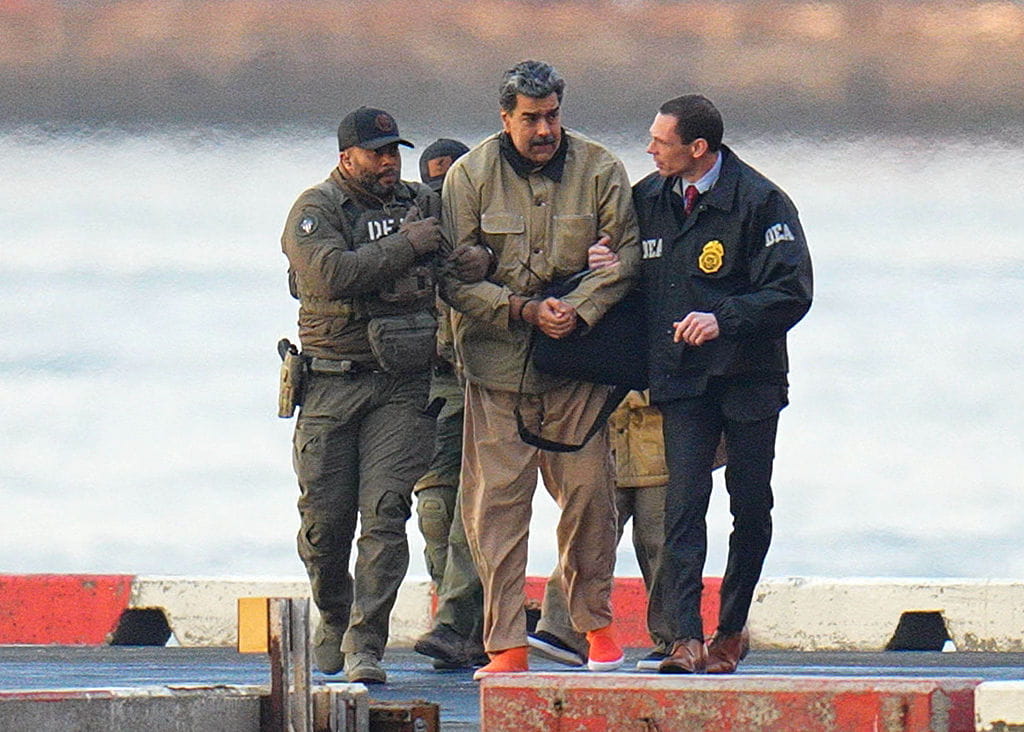
Smoldering buildings and destroyed military vehicles – the targets of US air attacks in the early-morning hours of Jan. 3 – are the only evidence remaining that American military forces had swooped in and captured Venezuelan President Nicolas Maduro and his wife, Cilia Flores. That may be a problem. Without a strong US presence on the ground in Caracas and throughout Venezuela, can a government emerge that will be democratically constituted, cordial to the United States, and focused on ridding the country of transnational organized crime and terrorism, and the likes of Hezbollah? These are the challenges to be faced in the next few months.
An Opportunity for Venezuela
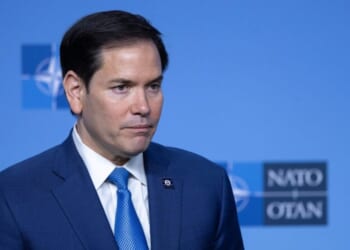
Removing Maduro is one thing; working with a remnant of the Venezuelan government is something else. As Michele White explained in her Liberty Nation News article, Secretary of State Marco Rubio, “Trump’s Venezuela Whisperer,” will be running point on rebuilding the relationship between Caracas and Washington, DC. To be clear, Venezuela is not Iraq, Afghanistan, or a Middle East country, all of which have sapped a good deal of America’s diplomatic and foreign policy energy in recent years. Unlike the Middle East, Venezuela has a historical foundation of capitalism and a democratically constituted government that can be rekindled. However, forces are in play that must be addressed.
With Maduro gone, transnational criminal groups, among them Tren de Aragua, which had enjoyed a free hand in running illegal enterprises, will certainly take exception to any attempt to rein in their activities. Controlling the criminal organizations in Venezuela will require a government dedicated to working with the United States to achieve that end. Without a significant US presence in the country, attempting to reduce or eliminate the influence of drug and human traffickers, money launderers, extortionists, and murderers will be difficult.
It is encouraging that Venezuelans close to Maduro aided in tracking his whereabouts, enabling the US military’s capture operation. As the Center for Strategic and International Studies observed, “Given the precision of the ‘snatch and grab’ operation, it is highly likely that the United States had the assistance of several regime insiders either looking to cash in the $50 million reward for Maduro’s capture or negotiate a cushier exile for themselves.” If the ebullient reaction from the Venezuelan people at Maduro’s ouster is any indication, the opposition to the former president may prove helpful in reconstituting a democratic government. However, it is not a done deal by any stretch of the imagination.
Once the shock of the US operation began to wear off, what was left of the Maduro regime began to assert itself. “Defense Minister Vladimir Padrino López quickly stepped in publicly to take control on the ground. And hardline Interior Minister Diosdado Cabello released a video showing himself surrounded by armed police, condemning US actions and promising to fight,” said a Council on Foreign Relations commentary. That bravado seemed to ignore President Donald Trump’s public comments about leaving open the option for a second strike on key Venezuelan targets if necessary.
Then there is the problem of Iran and its proxy Hezbollah’s rampant influence in the South American country. The recognized terrorist organization has established a strong presence in facilitating narco-terrorism and terrorist training camps in Venezuela, like the one on Margarita Island. In a recent interview on CBS’ Face the Nation, Secretary of State Rubio made very clear that “the day after” tasks will address Hezbollah:
“On top of that, it’s very simple, okay, in the 21st Century, under the Trump administration, we are not going to have a country like Venezuela in our own hemisphere, in the sphere of control and the crossroads for Hezbollah, for Iran, and for every other malign influence in the country, in the world. That’s just not going to exist.”
Russia, China, and Cuba Are the Big Losers
The big losers in the ouster of Maduro are Russia, China, and Cuba. Russia and China have invested billions of dollars over the years in the Venezuelan military and infrastructure. According to GIS Reports (a publication focused on geopolitical analysis), during Hugo Chavez’s presidency until 2018, “Venezuela secured over $62 billion in loans and around $6 billion in investments from China. The funding accounted for 46 percent of all Chinese financial support in Latin America during that same period.” The day before Maduro’s removal, he and China’s envoy to Latin America, Qiu Xiaoqi, were glad-handing at the Miraflores Palace in Caracas. “Through an ‘all-weather strategic partnership’ established in 2023, Beijing pulled Caracas further into its orbit with deepened economic aid and diplomatic support,” CNN reported. Absent Maduro, the “all-weather strategic partnership” has run into some stormy seas.
Russia finds itself in the same predicament. Politico noted, “Since 1999, Russia has supplied more than $20 billion in military equipment — financed through loans and secured in part by control over Venezuela’s oil industry — investments that will now be of little avail to Moscow.”
If Trump has his way, he will ensure there will be very little return on China’s and Russia’s investments. Cuba had an estimated 15,000 to 20,000 advisers in Venezuela, with 500 of them training the armed forces. It’s unlikely that Cuban visitors will be allowed to stay. Furthermore, Cuba relied on Venezuelan oil for 25% of its energy needs. According to an Argus Media report, “Venezuelan oil flows to Cuba have stopped for now, and cargoes to other destinations are grinding to a halt … as US pressure on Caracas continues to build.” Rubio has said that sanctions on Venezuelan crude oil will continue.
Dealing with a plethora of “day after” problems while pulling Venezuela back into the US orbit will not be easy going. However, with the Trump team running Venezuela, as promised, there is a better-than-even chance that the strategy to secure this part of America’s backyard will prove successful.
~
The views expressed are those of the author and not of any other affiliate.