If the victors write history, where would this idea land? Propaganda worthy of a Howard Zinn history book.
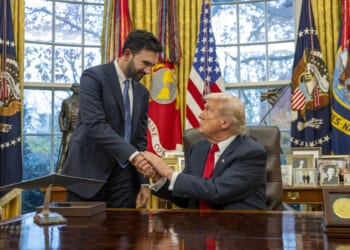
Virginia House Delegate Dan Helmer (D-10th) sponsored HB 333 to force public schools to describe Jan. 6, 2021, as an unprecedented violent attack on democratic institutions if teachers decide to cover it in class.
HB 333, crafted by Delegate Dan I. Helmer of Fairfax, bars public school programs from describing the Jan. 6, 2021, Capitol riot as a peaceful protest or presenting claims that widespread election fraud altered the 2020 presidential results as credible.
The bill specifically “prohibits” instruction that portrays the insurrection as peaceful or suggests there was “extensive election fraud” that could have changed the election outcome. However, it does not lay out any explicit criminal penalties for violations.
Despite overwhelming evidence to the contrary, the bill prevents teachers from describing events as a peaceful protest or from suggesting that widespread election fraud altered the outcome of the 2020 presidential election.
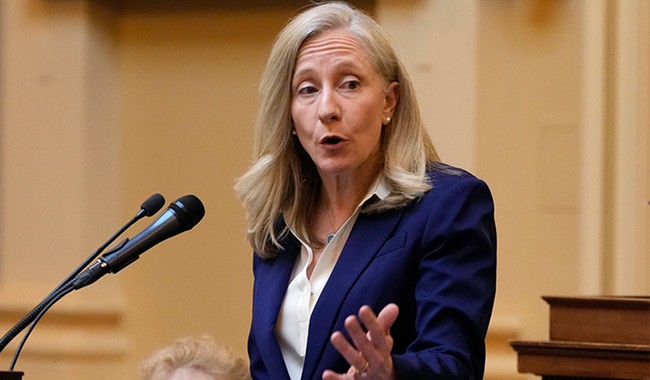
The Democratic majority in the Virginia House of Delegates and the Virginia Senate pushed the legislation through on party-line votes, with all 19 Republican senators voting against it. The bill now sits on Governor Abigail Spanberger’s desk.
Helmer’s efforts to cement a single political interpretation into classroom instruction come even though federal prosecutions connected to the event largely involved charges such as trespassing, assault, obstruction, and disorderly conduct, rather than the broad and wrong charge of insurrection.
The legislation orders teachers to present the events of Jan. 6 as an insurrection whenever the subject appears in classroom discussions.
Lawmakers usually write broad education standards that outline subjects, eras, and required civic topics.
Schools teaching about Jan. 6 must describe it as an attack “on U.S. democratic institutions, infrastructure, and representatives for the purpose of overturning the results of the 2020 presidential election,” according to the bill’s language.
Mr. Helmer said the legislation would “make sure that our history is protected” as “Trump and MAGA Republicans across the country are trying to rewrite this history — turning traitors into patriots.”
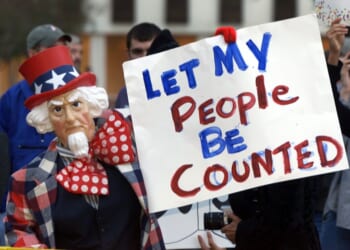
The bill represents the latest front in a five-year battle between Republicans and Democrats to control the narrative about what happened when pro-Trump supporters stormed the Capitol.
A new White House webpage unveiled on the riot’s fifth anniversary states Democrats “reversed reality after Jan. 6, branding peaceful patriotic protesters as ’insurrectionists.’”
HB 333 instead drills down into specific wording what teachers must use when describing a modern political controversy.
In this issue, lawmakers crossed the line from setting education policy to dictating the exact language used in classroom instruction.
The protests on Jan. 6, 2021, in Washington escalated into a riot, where a breach of the U.S. Capitol during electoral vote certification led to violence, injuries, and deaths.
Federal prosecutors managed hundreds of related criminal cases, resulting in lefty judges convicting several dozen people on charges of trespassing, obstruction of Congress, and assault on law enforcement.
When President Donald Trump began his second term, he pardoned nearly all those convicted, thankfully overturning an egregious wheel that kept violating the civil rights, including due process, of those people.
Helmer’s proposal has drawn fierce criticism from lawmakers and education observers who believe classroom discussion should include competing interpretations of recent events. Teachers normally guide students through historical evidence and allow debate about complex topics. HB 333 is a bill that would make the characters in George Orwell’s novel 1984 proud, as it replaces that approach with a government directive that affixes a political label inside the curriculum before historians and legal scholars have even finished researching the event.
The proposal reflects an attempt by Richmond politicians to turn public schools into message amplifiers for a preferred narrative, in which the state is taking an unusual step by requiring teachers to adopt a single word that carries significant political and legal implications.
Virginia schools already face a long list of academic challenges. State assessments have shown uneven results in reading and math across multiple districts. Students struggle with learning gaps that expanded during pandemic shutdowns, and teachers continue working to restore consistent academic performance across the state. Adding politically charged curriculum mandates increases pressure on classrooms that already carry heavy responsibilities.
Of course, the bill supporters insist the measure protects democratic institutions by ensuring students understand the seriousness of the events that disrupted the Electoral College vote certification. However, government officials should never dictate conclusions about modern political controversies while the historical record remains under debate.
Helmer’s legislation now waits for a final decision from Governor Spanberger. If she signs the bill, Virginia schools will operate under one of the most direct political mandates ever imposed on a history lesson. Teachers would face clear legal instructions about which label they must use when explaining the events of Jan. 6.
Oh, before I finish, have I mentioned the First Amendment implications?
Legal scholar Jonathan Turley has.
However, HB 333, drafted by Del. Dan I. Helmer of Fairfax, raises serious concerns over academic freedom and free speech.
Yet, “insurrection” and “sedition” are legal terms. They have a meaning. The FBI investigated thousands after Jan. 6 and charged hundreds. Not one was charged with insurrection or conspiracy to overthrow the country. The vast majority are charged with relatively minor offenses of trespass or unlawful entry or property damage- the type of charges that are common in protests and riots.
Indeed, the Supreme Court effectively reduced many of the charges to mere trespass in later litigation, rejecting obstruction claims.
Faced with a collapsing historical and legal narrative, Democrats are now moving to simply indoctrinate students that this was an “insurrection.”
Two cases refute any efforts to squash public workers’ First Amendment rights.
Pickering v. Board of Education (1968): This case is considered the foundation for public employee free speech. Marvin Pickering was a high school teacher who wrote a letter to the editor of a local newspaper criticizing the school board’s handling of funding and tax proposals. The school board fired him, arguing that his letter was detrimental to the “efficient operation” of the schools.
Decades later, the legal landscape shifted with Garcetti v. Ceballos. This case involved Richard Ceballos, a deputy district attorney who wrote a memo to his supervisors stating that a search warrant was based on misrepresentations. He claimed he was retaliated against for this speech.
Virginia’s approach raises an uncomfortable question about the future of classroom instruction. When elected officials begin selecting the exact words teachers must use to describe political events, education risks sliding from inquiry into scripted narrative. Confidence in the neutrality of public education collapses when lawmakers begin writing political conclusions directly into lesson plans.
Expect Spanberger to sign the bill into law, setting up an interesting legal case once a teacher or student files their opposition to it.
Want more blunt analysis that doesn’t tiptoe around political spin? Join PJ Media VIP and support independent journalism that calls out government overreach and narrative manipulation. Use promo code FIGHT today and receive 60% off a VIP membership.