Washington State has the embarrassing honor of having the highest organized retail crime in the nation. And because it is heavily dependent on sales tax to meet its budget needs, theft has a direct impact on government finances. So why did Democrat Gov. Bob Ferguson veto a bill that would provide funding to help combat this issue?
Organized Retail Crime Crippling Washington State
The Evergreen State continues to be in the news as one piece of economic legislation after another hits the Pacific Northwest. Recently, the governor signed into law the millionaire’s tax, which charges a 9.9% tax on those who make more than $1 million per year, even though the state’s constitution forbids an income tax. Seattle Mayor Katie Wilson is considering another wealth tax for businesses in the area. So, while lawmakers are targeting the wealthy, the governor vetoed $500,000 in funding allocated to reduce organized retail crime. He blamed the budget deficit and having to choose which programs to keep and which to defund.
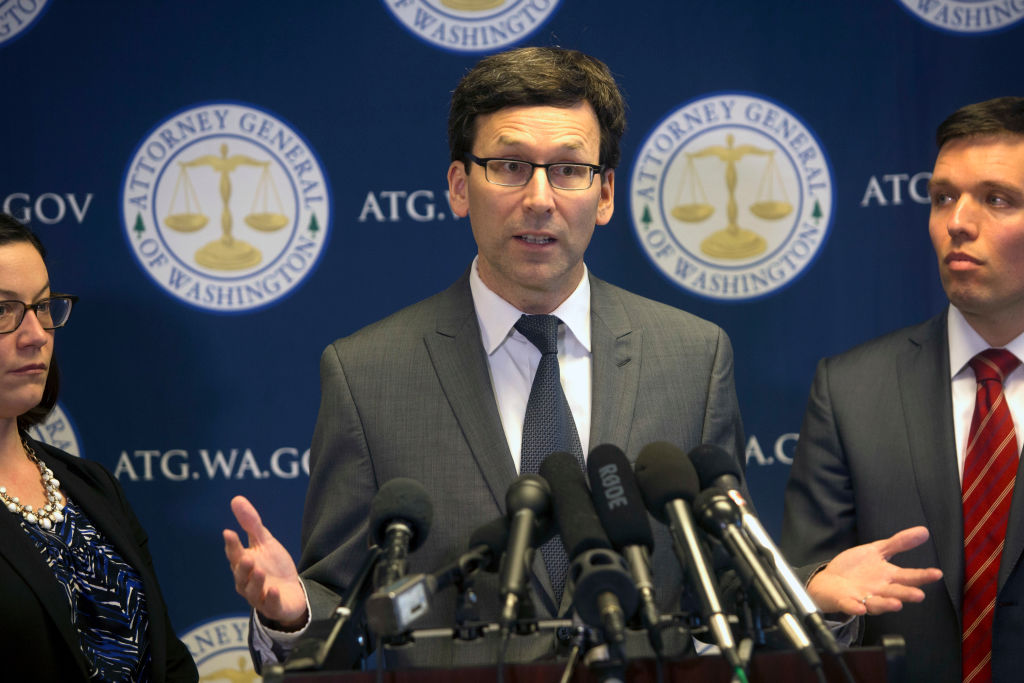
“While we face this challenging situation, consequently, we have limited ability to absorb additional work or expenses that are not funded in the budget,” Ferguson said. “That is why I vetoed a few programs. It’s also consistent with how I approach budgeting. We have a proposal to do something in our budget. We’ve got to have the funding to do it.”
Half a million dollars seems like a good investment when Washington largely depends on sales tax. The governor isn’t pleasing his own party with this move, either. State Rep. Mari Leavitt (D) said in a statement:
“I am deeply disappointed and puzzled by the Governor’s decision to veto a budget measure that focuses on combating organized crime. Washington is number one in the nation for retail crime, contributing to nearly a $3 billion impact to our economy and businesses because of lost revenue, and representing a consequential challenge to our state.”
When the CEO of the Nordstrom retail outlets, Erik Nordstrom, attended a retail crime summit in 2024, he claimed that the stores in King County, which includes Seattle, are responsible for approximately 10% of the company’s losses due to theft. “We’re born and raised here and huge homers when it comes to anything local,” Nordstrom said at the summit. “Unfortunately, King County is our worst area for this. It’s a big financial headwind.”
Ironically, when Ferguson was attorney general in 2022, he approved of and helped develop a statewide Organized Retail Crime Theft Task Force to improve coordination and collaboration among the agencies. “The task force will focus on sophisticated, organized crime rings that account for almost $70 billion in retail losses across the country,” he said in a press release.
Organized retail crime is not just random individuals who snatch makeup, candy, or clothes; it’s coordinated groups, each with many people who steal from various stores and then sell the items online or on the streets. Some of these thefts include intimidation of and even violence against employees.
“Coordination is key to combatting this growing, and sometimes dangerous problem,” Ferguson said in the 2022 release. “These organized crimes cross jurisdictions and cause significant economic harm. I’m committed to working together with law enforcement and retail partners to help combat this significant and growing problem.”

The program, launched last year with $1 million in funding, had support from the governor at the time. Data from the first half of 2025, as reported by MyNorthwest, “showed increased activity in King County, where prosecutors filed 142 retail theft cases between January and June – more than double the average over the previous four years.” Furthermore, the Washington Retail Association said the pilot program “generated hundreds of law enforcement responses and thousands of retail crime reports in its early months, while identifying more than a thousand individuals eligible for diversion programs.”
After Ferguson vetoed the measure, Leavitt criticized the move. “Without these funds, we are unable to build on those successes, and the progress we have made has been put at risk,” she said. “It leaves our small businesses at risk and does nothing to help customers and workers in our communities feel safe. It is short-sighted and harmful to our neighborhoods. This veto will end up costing us far more than what was requested in the allocation.”
When a state is experiencing a budget deficit, it’s understandable that some programs need to be reduced or even cut. But when a state depends on its sales tax, cutting a program that helps mitigate organized retail crime doesn’t seem like a prudent decision.