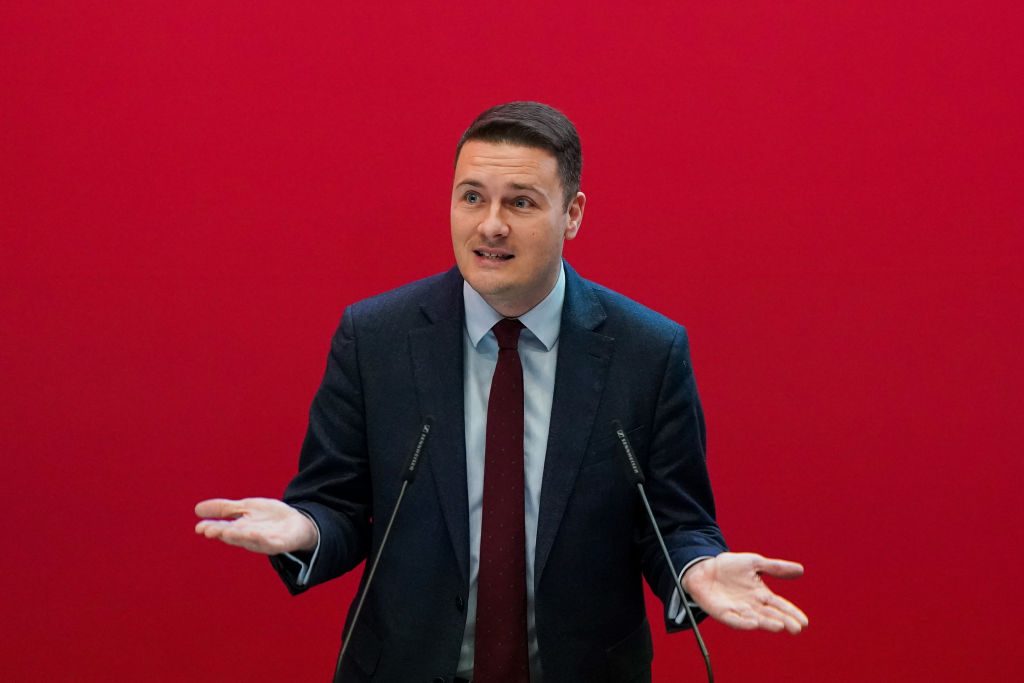
It’s the week before Christmas, and as I listen to desperate patients and exhausted colleagues, Wes Streeting’s words ring hollow. The Health Secretary speaks about winter pressures and a “superflu” as if we are dealing with a sudden, unpredictable weather event. But in A&Es across the country, the reality is far more brutal. To be an emergency doctor right now is to stand on a battlefield where the generals have abandoned the post, leaving the soldiers to manage a slaughter that was entirely foreseeable.
Every winter, emergency departments prepare for the familiar seasonal surge. We have the same warnings, the same predictable rise in admissions. This year, in my department, a growing number of patients are dying before they are even admitted onto a ward. Ailing patients lie on corridors for hours and often days, waiting for beds that simply do not exist. The data confirms what clinicians see. Flu admissions have spiked by 55% in just seven days to an average of 2,660 patients a day — the highest ever recorded for this time of year. Norovirus cases alone have jumped 35% week-on-week, filling hundreds of beds that we desperately need. Meanwhile, the overall waiting list has crept up again to 7.4 million.
Nowhere is this dystopia more visible than at Leicester Royal Infirmary — not far from where I work — which has become ground zero for the crisis. In a single day last week, 932 patients streamed through its doors — an 8% increase from the previous year. The human cost of this overcrowding is staggering: one patient endured an agonising 106-hour wait for a bed, while another languished for 34 hours. The hospital has had to convert prefabricated structures into permanent wards just to house the overflow. When you have children’s waiting areas filling up by late afternoon and “patients in every cubicle”, as consultants there have reported, you know the system is broken.
Seasonally, it’s the toxic cocktail of the flu, Covid, RSV (Respiratory Syncytial Virus) and Norovirus commonly known as the “quademic” that’s driving this epidemic. However, to even call it a “crisis” would imply a degree of surprise — and that is the lie at the heart of this disaster. We are witnessing what I can only describe as a total disconnect between our key decision-makers, the chronically ill and the clinicians tasked with saving them.
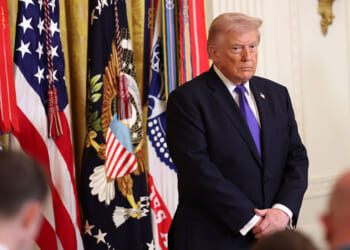
Everybody knew this quademic was coming. Not least Wes Streeting. Any competent leader — whether a military general or a health secretary — understands that the role requires foresight, planning and strategising. We saw the bed pressures as far back as August. We knew that as soon as millions of children returned to their schools in September, the weather changed, the cold and damp set in, that all four virus vectors would align.
Yet we are led by what can only be described as “professional amateurs”. Instead of leading from the front and tackling the quademic head-on, our political and management class are looking over their shoulders to consolidate their own positions — or looking ahead at the next big shiny gig.
As the old saying goes, “a fish rots from the head”. The Health Secretary seems more preoccupied with the optics of reforming the NHS and going toe to toe with the BMA and junior doctors. His political manoeuvrings are becoming a distraction: he’s patently more focused on the path to Number 10 than the clinical catastrophe unfolding.
While the crisis continues to worsen, Streeting has admitted in an interview that he’s “pretty frustrated” — but he was referring to his own party’s polling numbers, not the crisis in the NHS. He bemoaned Labour’s “practical, technocratic approach” for making the government look like a “maintenance department for the country”, worrying that voters might switch to a “cheaper maintenance company”. It’s as if Streeting’s team is continually briefing the media with a key message: “it’s not Wes’s fault.” Rather than preparing the nation for the worst, Streeting’s spin doctors are prepping the public with doublespeak, rebranding the flu as “superflu”. He’d have been better off listening to clinical advisers who have warned him for months about the scale of the problem we face. Instead he chose Orwellian trickery, a futile PR-driven battle with an intransigent BMA or simply disappearing when the going gets tough.
His lack of preparedness makes the fictional ineptitude of Yes Minister’s Jim Hacker look like the work of a neurosurgeon. It is a profound failure of strategy where the leadership is reactive rather than pre-emptive. Streeting has waited until the trolleys are backed up to the sliding doors before feigning shock-horror, abdicating responsibility and blaming the situation on yet another “unprecedented” set of circumstances.
The tragedy is that the pandemic should have taught us one simple lesson: we cannot afford to be flat-footed in the face of a crisis. We knew the variants were coming. We knew immunity gaps existed. And we know what the fallout will be. Yet, a clear and present plan to tackle any of this is nowhere to be found.
So, when you read about the “winter crisis” in the coming weeks, spare a thought for those worst affected. The elderly, the sick and the vulnerable I will be treating over the holidays are once again collateral damage in a political failure dressed up as an inevitability. Do not accept the narrative that this is an unavoidable act of nature. This is a man-made disaster, fuelled by complacency and a political and bureaucratic class that has forgotten that their primary job is not to massage news cycles and win elections but to keep the public alive and well.