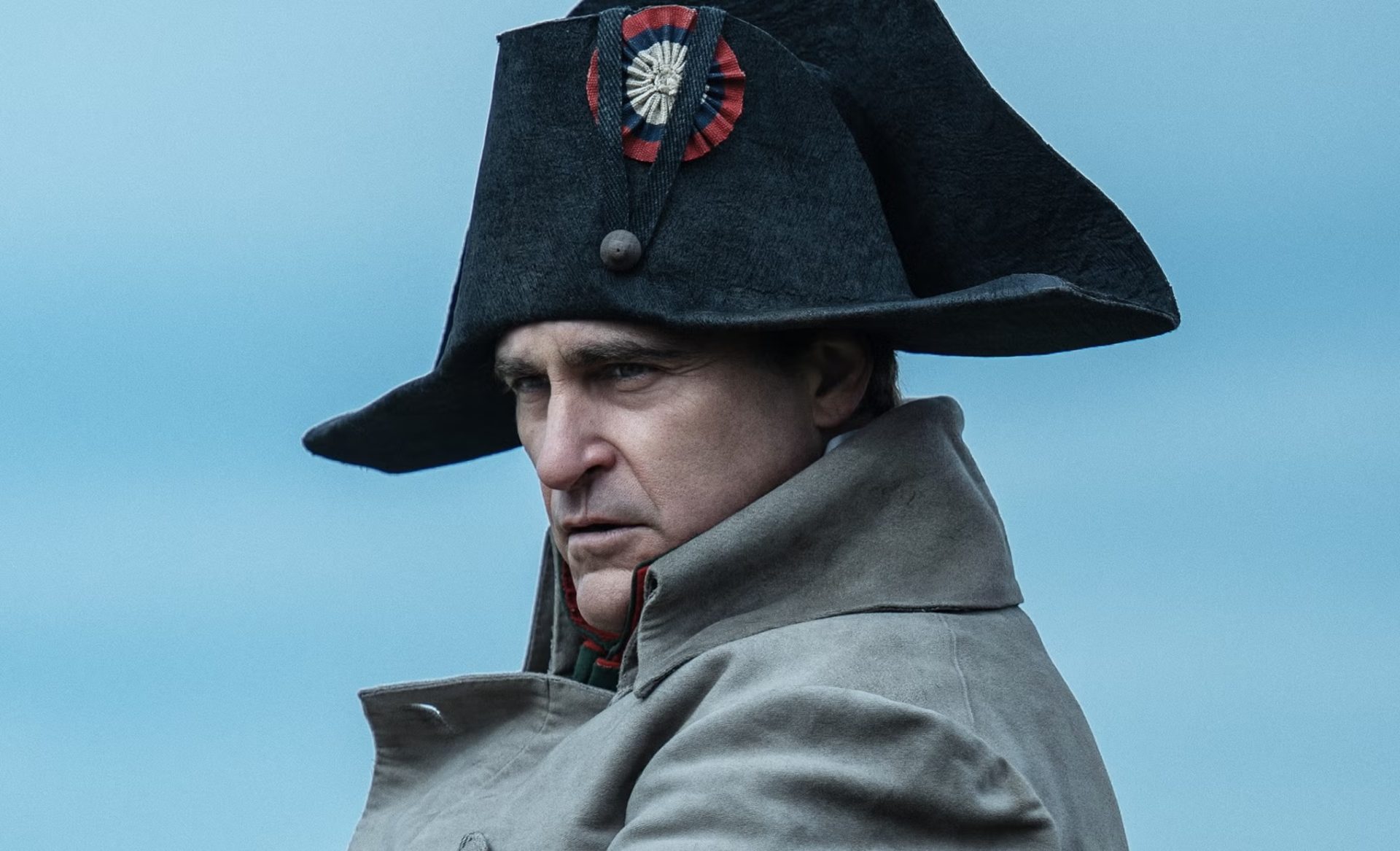
Should the present have the right to “erase history”? Should we cancel the past? These are the questions debated by strollers in London’s grandest public space — Austerlitz Square, of course — in Bryan Talbot’s new graphic novel, The Casebook of Stamford Hawksmoor. After all, that statue of Emperor Napoleon I (ancestor of the current Napoleon XI) has stood atop its column in front of the Imperial Gallery for generations.
Now the incoming government of the newly autonomous territory wants to replace it with a monument to the leader of the British independence movement, Harold Drummond. As one Londoner insists, the first Napoleon was “a consummate despot who brutally subjugated this country and had our royal family guillotined”. So “probably best not to continue honouring him”. The citizens who wrangle over cancel culture, it should be said, are all animal-headed figures of various species smartly turned out in the late 19th-century fashions of the Belle Époque. On his column, Napoleon I sports a lion’s head.
Welcome to the world of Grandville. Between 2009 and 2017, Bryan Talbot — a former comics artist acclaimed for visually and verbally ingenious graphic fictions such as Alice in Sunderland — published five “anthropomorphic steampunk tales” set in a deliriously witty and inventive alternative past. Beast-headed characters with apt monikers, such as his badger detective Inspector Archie LeBrock, populate twisty thrillers of murder, corruption and conspiracy in high places. They inhabit a Britain subject to French colonial rule over the nearly two centuries since Napoleon’s epoch-making victory at Waterloo.
Steam and gas technology have generated a civilisation of advanced, but electricity-free, amenities, from “voicepipes” for instant communication to high-speed air services by dirigible and that engineering marvel, the cross-Channel rail bridge. The language of “Grandville” — Paris, seat of the world-spanning French Empire — has supplanted English except in backward rural districts. There the “old tongue” of the obscure, almost-forgotten playwright Shakespeare persists. Although Talbot’s animals often banter in thickest Cockney and even (in one scene set in a transvestite bar) the venerable gay argot Polari, the notices and posters around them remind us that, in the stories’ world, they’re all speaking French. As one holiday ad proclaims: Skegness est tellement vivifiant!
After a bitter struggle for autonomy pursued both through mass strikes and civil disobedience, and terrorist outrages perpetrated by the “Angry Brigade”, the imperial authorities in Grandville have finally granted self-government to the restive Brits. Even the infamous General Pierre Woolf is dead. The lupine “dictator of Britain”, he ruled the colony with an iron paw and inflicted carnage on protestors in the Brick Lane Massacre. But the ruthless old elites — French or native-born — will not go quietly. A succession of dastardly plots, stunts and atrocities attempt to thwart British self-government. This backlash calls for all the investigative skills of the staunchly proletarian Detective-Inspector LeBrock and his shrewd patrician sidekick, Detective-Sergeant Roderick Ratzi.
The action of the five Grandville volumes took place shortly after the achievement of a fragile self-rule in Britain. Now Talbot has produced a kind of prequel, or origin story. Just published, The Casebook of Stamford Hawksmoor backtracks two decades to the year of independence. Its protagonist, DI Hawksmoor, is a legend among the coppers at the Cour d’Écosse. A saturnine eagle-headed sleuth, armed with Sherlock Holmes-like deerstalker and pipe, he will go on to become LeBrock’s admired mentor and model. The suspicious “suicide” in a Suffolk field of Stamford’s stuffy and rigid civil servant brother (one of many nods to Arthur Conan Doyle) puts our aquiline investigator on the trail of low-life killers (notably the “Butcher of Shoreditch”) and upper-class conspirators. He uncovers a fatal web of corruption around the construction of the neo-Gothic British Parliament at Westminster. But should Hawksmoor trust the ferocious DCI Doberman of Special Branch, let alone his new assistant DS Adrian Rowe, a slick little deer who pretends to come from Kingston nick but speaks with “that distinctive disdainful nasal burr common to Eton alumni”? Even in this anthropomorphic alternate universe, some things never change. Elsewhere, a punter bets 10 francs on Arsenal trouncing Millwall although “Arsenal ain’t won a major pétanque tournament for three years”.
Beyond the plentiful gags and myriad artistic and literary allusions — quotes from Shakespeare, Milton and Byron, visual evocations of Gustave Doré’s vistas of the London slums or Sidney Paget’s original Sherlock Holmes illustrations — Talbot builds his parallel world with terrific audacity and dexterity. What his introduction calls the “historically divergent realm” of Grandville has both the internal logic and the imaginative reach of the boldest fantasy landscapes.
Born in Wigan, Talbot had risen through the hard school of comics illustration for DC Comics, 2000 A.D. and other series. He published his first major graphic novel, The Adventures of Luther Arkwright, in 1982. Over a decade later, The Tale of One Bad Rat — with its Beatrix Potter-style story of surviving child abuse — indicated that his formal ambitions for the “pictorial narrative” had few limits. If the Lewis Carroll-inspired Alice in Sunderland confirmed his gifts, later collaborations with his wife Mary M Talbot took them in fresh directions. Dotter of Her Father’s Eyes, which won the Whitbread Biography Prize, is a hybrid memoir-biography that combines two father-daughter relationships: that of Mary Talbot with her academic father, and James Joyce with the troubled Lucia.
Yet if Talbot has travelled a long way from the playground escapades of Beano and Dandy, he always salutes the comics wizards who pioneered his storytelling art. Background homages to Leo Baxendale, Talbot’s inspirational friend and the creator of the Bash Street Kids and Minnie the Minx, jostle with deftly executed pastiches of Manet, Millais, Mucha, and a score of other artists in the frames and full-page panels of the Grandville books. Talbot the art-history buff even invents a chicken-headed abstract expressionist painter named — Jackson Pollo. Fiercely proud of his working-class roots and secure in his old-school radicalism, he might not appreciate being dubbed the Tom Stoppard of the British graphic novel. Still, this sophisticated and encyclopaedic wit, allied to a command of multiple narrative genres, make the comparison far from absurd. And LeBrock does indeed have an admiring canine colleague called Inspector Hound.
The Grandville world of intelligent beasts in a steampunk Napoleonic Britain began when Talbot discovered the satirical anthropomorphic cartoons of an early 19th-century French illustrator, Jean Ignace Isidore Gérard. They triggered a sort of epiphany. “In a moment of genius,” reports Talbot’s publisher Dan Franklin in an afterword to the new story, “Bryan suddenly saw a world.”
The imagination of alternative pasts has flourished for centuries in the arenas of fiction, illustration and (not least) history itself. These days, however, the entire “counterfactual” domain struggles to escape from interminable “what-if-the Nazis-won” accounts of an alternative Second World War. In his (distinctly sceptical) book about the genre and its uses, Altered Pasts, the historian Richard J.Evans traces several generations of “victorious Hitler” speculations in fiction, film and historical writing. Landmarks such as Len Deighton’s SS-GB, Philip K Dick’s The Man in the High Castle and Robert Harris’s Fatherland rise above a terrain crowded over decades with rampant Nazis.
“These days, the entire counterfactual domain struggles to escape from interminable “what-if-the Nazis-won” accounts of an alternative Second World War.”
Evans casts a baleful eye on counterfactual tales in whatever guise, whether they take the form of Wishful Thinking or Awful Warning. He sees the invention of parallel pasts as an essentially reactionary genre. It has proliferated because “the concept of progress… took a hard knock” as deterministic visions of an inevitable rosy future — whether Marxist or liberal — lost their allure. It turns out that a sort of Left-Right split governs historians’ discussion of counterfactual narratives. In the other camp, Niall Ferguson — above all in the theoretical introduction to his edited collection of alt-history essays, Virtual History — celebrates the return of chance and uncertainty in thinking about the past. Ferguson advocates a “chaotic” conception of history: one that recognises complex patterns behind events but also the role of accidents, disruptions and reversals. Such an outlook permits writers to “reconcile the notions of causation and contingency”. Imagine things otherwise and you restore freedom to the past, and to its actors. So conjectural speculation can amount to more than a “parlour game”, or donnish diversion.
Bryan Talbot might strike both Evans and Ferguson as an anomaly: a Left-wing spinner of counterfactual stories (albeit with animal heads) motivated by neither nostalgic longing nor dystopian dread. Narratives that spin off from Bonaparte’s imaginary but perfectly possible triumph at Waterloo themselves have a long history; the idea drives a famous, wistful passage of Victor Hugo’s Les Misérables. Evans explains that in 1836 Louis Geoffroy — an adopted son of the Emperor himself — wrote a treatise that imagined Napoleon’s conquest of the world: he smashes the British army at the decisive Battle of Cambridge after landing his forces at Great Yarmouth. And a 1907 essay by G.M. Trevelyan, doyen of progress-worshipping Whig historians, spelled out the dire future of British decline that would have followed from Wellington’s defeat in 1815.
The Grandville premise, of long-term French imperial mastery, yielding gradually to home rule, allows Talbot to map (say) the Irish or Indian colonial experience onto British society. The upper crust does very nicely, thank you, with a Frenchified elite not that different — animal identities apart — from their actual counterparts in the era of pea-soupers, hansom cabs, and discreet plush bordellos for the gentry. (That matronly hippo Madame Riverhorse runs a famous house.) As for the plebs, Talbot portrays many varieties of collaboration and resistance, from the moderate nationalism of Harold Drummond (a bulldog, naturally) and his socialists to the terror attacks of the Angry Brigade. Drummond denounces them as “xenophobic fanatics” but the hard-line nationalist tabloids love them, “cynically whipping up hatred of the French for their own profit”. Time and again, the Grandville stories pluck features from our own world and wittily transfer them to its upside-down, inside-out milieu. We even meet a piscine avatar of the author himself: one “Byron Turbot”, an odd fish who ghost-writes “sixty-centime dreadful” true-crime thrillers.
It may seem bizarre to look for enlightenment in the debate over counterfactual stories to a set of comic-book adventures with a cast of talking animals set in a fantasy mock-Victorian Britain. But the Grandville books both imagine a plausible conjectural history — the consequences of a Napoleonic victory — and show how social and technological forces might still have led to a London (and Paris) similar in key aspects to the world we know. And crucially, if also comically, Talbot’s animal kingdom presents a thoroughly colonised Britain with a credible spread of attitudes to the Bonapartes’ dynastic rule: from eager collaboration through grumbling complicity to violent revolt. Counterfactual history has seldom painted as rich an alternative past as Talbot’s — and never a wittier one. Reverse engineered chronology aside, the visual gags on every page delight. Who’s that sad, tipsy ursine figure we spot swigging from a bottle in the street outside the Cour d’Écosse? Bonsoir, Paddington.