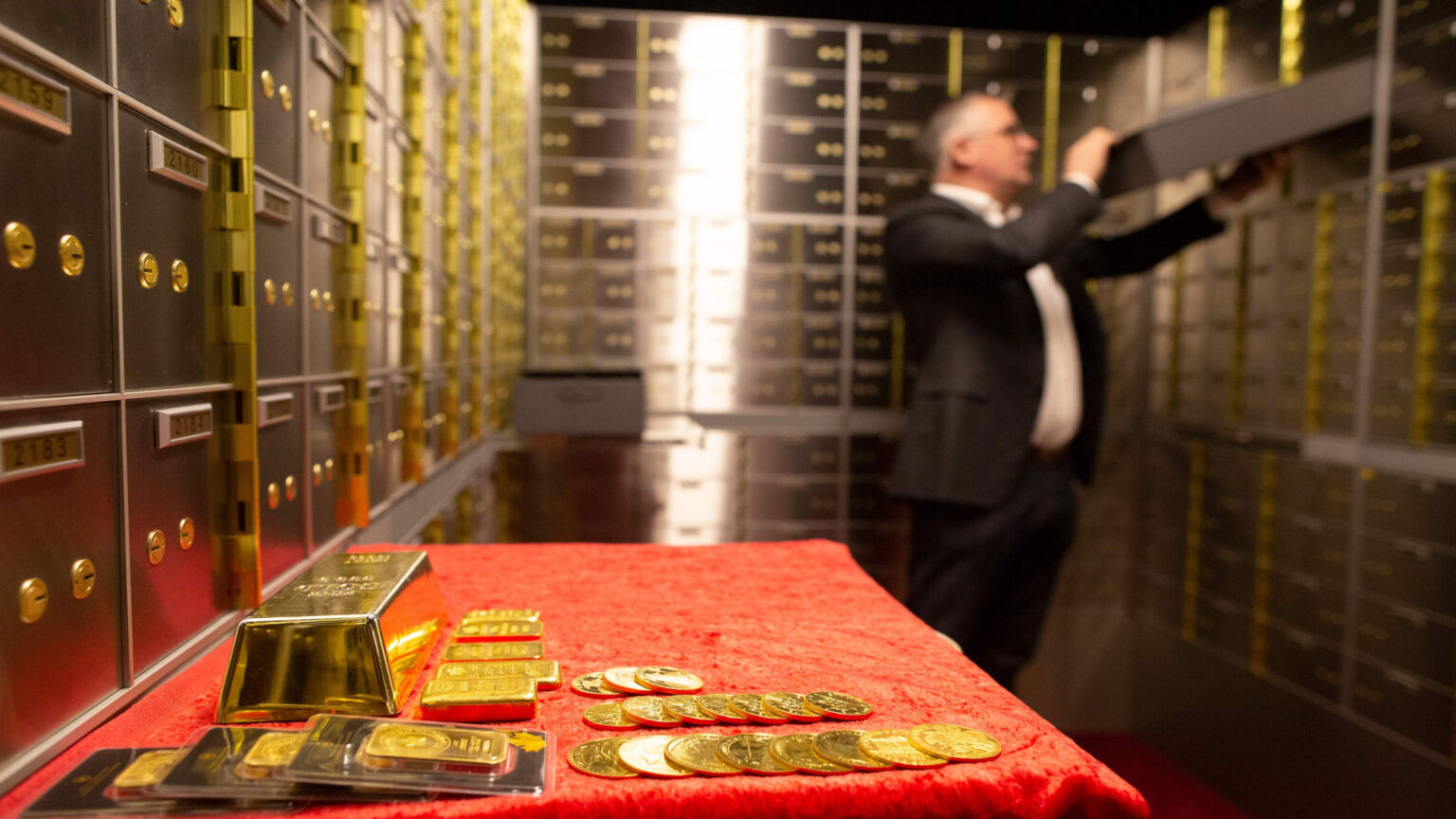
The price of gold has been surging in recent years. On Monday, it broke through a new milestone of $5,000 per ounce, just three months after the yellow metal hit $4,000 per ounce. For perspective, two years ago, the price of gold was only $2,000 per ounce. Indeed, since the start of this decade, the price of gold has delivered a better return than the Nasdaq 100 – an index of large, mostly tech, US companies.
This isn’t normal. Gold is not supposed to provide a better return to investors than major, highly successful companies for any sustained period of time. It is particularly rare when such companies themselves are performing well.
That’s because gold is, essentially, just a shiny lump of metal. It has no intrinsic value. Its price is simply what someone else is willing to pay for it. It produces no cashflow and pays no dividend. In contrast, the sort of companies that are found on the Nasdaq – such as Apple, Microsoft and Amazon – are among the most profitable businesses to ever exist. When investors do own gold, it’s often thought of as insurance within a portfolio – an asset to own that acts as a buffer when stock markets tank.
We can also track investor enthusiasm for gold by looking at how much money has been invested into exchange-traded funds (ETFs) in gold – the most popular way for investors to buy gold. These are funds that can be bought or sold on stock exchanges, but are backed by physical gold. Last year, investment in gold ETFs reached record levels.
Still, the fact that the price of gold has gone up simply because more individuals are buying it doesn’t explain why it has been appealing to investors for so long.
So, what has driven this dramatic increase in the price of gold? Is it all market mania? Or, does it tell us something more fundamental about the state and flux of the world? As mentioned above, gold itself is seen as an asset to own in times of uncertainty and fear. And there are many reasons to be uncertain and fearful.
The geopolitical backdrop is volatile, to put it simply. There is an all-encompassing sense that the relative stability the world had experienced since the end of the Cold War is over. In recent years, we have witnessed Russia’s invasion of Ukraine and the accelerating rise of China. America’s attempts to redefine its place in the world have also been destabilising. This has ranged from Donald Trump’s threats to annex Greenland, the territory of a longstanding ally, to his trigger-happy approach to tariffs.
On top of that, the Trump administration also appears set on undermining the independence of the Federal Reserve, the US central bank. Earlier this month, the Department of Justice initiated a criminal probe into Fed chair Jerome Powell, over public statements he made regarding the refurbishment of the Fed’s Washington headquarters.
While Trump claims to have had no knowledge of the investigation, it is widely read as an attempt to exert pressure on Powell. The US president has repeatedly made clear that he believes Powell should cut interest rates and lower borrowing costs. Powell has so far resisted this interference, but with his tenure set to end in May, there are fears that his replacement may be much more amenable to the president’s demands. The fear is that future monetary policy will not be set with lowering inflation in mind, but rather, to keep the government’s borrowing costs low. In central-banking terms, this is called ‘fiscal dominance’.
This is not just a US story. Across the developed world, there are growing concerns about the sustainability of government debts. Most governments have shown little interest in addressing their yawning deficits. As a result, a growing share of budgets are going towards interest payments on existing debt. There is a well-grounded fear that central banks elsewhere will succumb to the pressure of fiscal dominance. Gold, therefore, becomes more attractive relative to dollars, pounds, euros or yen.
In times of crisis and instability, investors will typically look to own ‘safe-haven assets’. At the height of Covid and during the Global Financial Crisis, investors flocked to US government bonds, which are usually seen as almost risk-free. The problem right now, however, is that much of the uncertainty and fear about our times is emanating from the US itself. The safe-haven status of the US dollar and US government bonds is being questioned. Investors, therefore, are seeking alternatives, with gold a prime candidate.
Whether gold prices will rise even higher is anyone’s guess. But its climb so far reflects a loss of confidence in the assumptions that once underpinned global stability.
Tom Bailey is a writer.