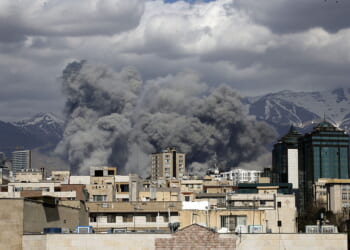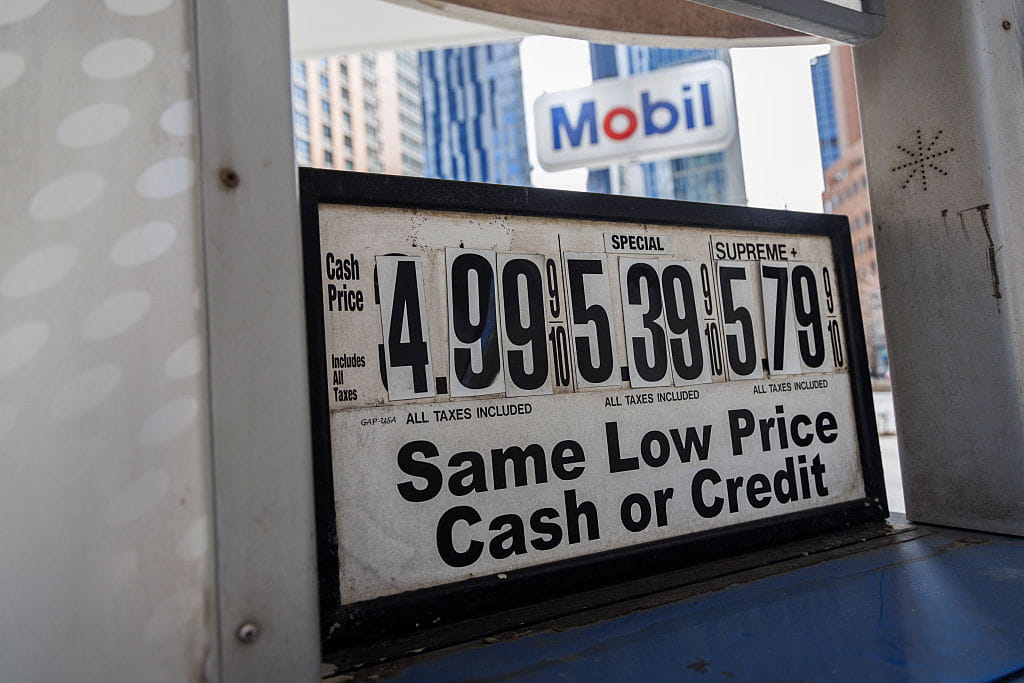
Who knew energy would be a key challenge for President Donald Trump? After achieving what was unthinkable just a few years ago – crude oil prices below $60 and gasoline firmly under $3 – the United States is now facing another affordability threat, as a barrel of Texas tea is well above $100 and motorists are enduring pain at the pump. It is not due to a lack of production at home but rather the war in Iran that has effectively shuttered the Strait of Hormuz.
The White House has thrown everything but the kitchen sink to ensure West Texas Intermediate – US-produced, high-quality crude oil – stays in the double digits. But it has proven insufficient, and now a barrel of Brent, the waterborne crude from the North Sea that serves as the international benchmark, is cheaper than its American counterpart.
Holding Your Wallet Close, Watching Oil Prices
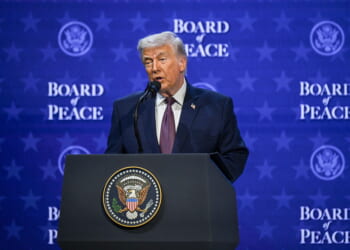
Prior to President Trump’s primetime address on April 1, investors were widely anticipating an announcement confirming the winding down of the Iranian conflict. US stocks rallied, the dollar’s risk premium faded, and oil prices fell. It turned out to be an April Fool’s Joke for Wall Street.
Trump reaffirmed his administration’s commitment to eviscerating the regime in Tehran, triggering a sea of red in equities and an ocean of green in energy commodities in futures trading. By the time everyone woke up the next morning, US crude surged as much as 13% to around $113 a barrel on the New York Mercantile Exchange, exceeding the international benchmark by a few bucks.
This was inconceivable a week ago when the two contracts experienced the widest divergence in approximately two decades. Unfortunately, this is only part of the story, since the world’s main physical oil prices are nearing $140 a barrel. Either way, this is not good for the United States or the rest of the world, as many places are also already experiencing energy shocks.
The national average for a gallon of gas will now remain firmly above $4 for the foreseeable future, fueled not only by the war in Iran but also by the spring-summer driving season. Over the next few months, be sure to look away when you are driving or walking by a gas station!
Is there anything the Trump administration could do to mitigate the spike and provide relief? The options are rather limited at this point.
‘Rockets and Feathers’
In March, the administration established a $20 billion guaranteed political risk insurance program. The Jones Act, a century-old shipping law, was suspended for 60 days. Iranian and Russian crude oil stranded at sea was unsanctioned. Washington tapped into 172 million barrels from the Strategic Petroleum Reserves.

Despite the best intentions to inject supply into global energy markets, this has not been enough. The only solution, it seems, is to end the conflict. Until then, motorists will not be happy because of the “rockets and feathers” model in gasoline markets. Even if the war ended today and the Strait of Hormuz stabilized, oil prices, which account for half of the cost of a gallon of gas, would tank, but not gas prices.
Asymmetric price transmission between crude and gasoline occurs because stations immediately raise prices to cover the higher cost of their next shipment. However, when oil prices decline, gas prices come down at a sluggish pace to cover their margins and clear out the older inventory purchased at the higher, older level.
Theoretically, it could take until the end of the year for drivers to enjoy $2.70-a-gallon gas again. That is, of course, if the regime change operation is concluded by then.
Still, one proposal that has gained momentum among conservative economists is suspending the US government’s 18.4-cent-per-gallon gas tax. States could also adopt a similar tactic to offer a break. So far, there has been little talk of policymakers implementing it.
Aside from that, Treasury Secretary Scott Bessent might not be able to bailout President Trump this time and assuage Wall Street.
One Battle After Another
The longer the war drags on, the worse it will be for energy markets and the global economy. Consumer demand will likely slow, businesses will face higher input costs, inflation expectations will rise, and central banks will consider tightening monetary policy.
For cash-strapped Americans, tough times will likely be ahead. If the letter K were already lowercase in the US marketplace, the next few months could turn it into a capital letter. Economists have been sounding alarm bells that the wealthy are keeping the economy afloat while low-income households are struggling.
So far, if The Conference Board’s Consumer Confidence Index is any indication, the public is taking it in stride. But their patience will wear thin, and it may show during the midterm elections.