Imagine Vladimir Nabokov submitting Lolita to a Master of Fine Arts degree program. First, under the tenured wisdom of his failed-novelist-professor, Nabokov’s style would be radically de-escalated and purloined of some 30,000 imperishable words, including every adverb. This, of course, is a mere paper cut compared to what would be coming down the pike for the unfortunate masterpiece and its schlepping emigre author. Next, the 10 or so randomly assembled mediocrities would zero in on Lolita’s title: it would be strongly if not threateningly suggested to steer away from the Latinx toward something more in Nabokov’s ethnic wheelhouse, perhaps Larissa, or Lilya.
Just barely skirting expulsion and social ostracization for the pedophilia of the first draft, the author, by the end of term, would revise Lilya to be about a widowed man who takes his 12-year-old biological daughter on an innocent and sexually eventless road trip, learning a thing or two about fourth-wave feminism and gender theory along the way. There’d be incredulous lines over the steering wheel like, “How do you know that?” and “How old are you?” (Not to mention the “You go girl”s from the reader.) Having been recognized as a “Master of Fine Arts” for this ability to be editorially coerced by 20-year-olds, Nabokov would spend a sleepless fortnight after graduation researching 140 literary agents so as to pretend in his query emails to be a fan of their client lists of nonentities and “comparable” titles. (Nabokov would have failed to secure an agent through one of those end-of-term backroom deals every student-novelist dreams of, having permanently rubbed the professor the wrong way.) He’d find obscure interviews online with agents who say with hauteur and scarcely credible pride, “Don’t even bother cold querying me, I never look at the slush.” Of the 140 agents, 10 would respond and request sample pages. Eight would ghost Nabokov. One would write him a moderately personalized rejection with the cadence of the admiring pass, “confident that many agents will want to toss their hats in the ring.” The last agent would, because he knew Nabokov’s professor back in grad school, sign him. Champagne would be opened. Véra would smile to Volodya over the foaming brim.
Three months of torturous silence later — Nabokov’s new agent having disappeared into a vague and nebulous paternity leave without warning — the author would receive an email with a draft of Lilya riddled with inspired deletions and insightful suggestions for rewrites. If Nabokov plucked up the courage to so much as balk, the agent would, after another mum trimester in which he’d leisurely switched American coasts — never intimating exactly which one he’d settled on — buck him up threateningly. “I worry that sending Lilya off in its current state would threaten all of the hard work you’ve put into this, and publishing this version would be a mistake for you and your career. My job is to give you honest advice — I can’t sell this, Nabokov. I know this is a lot to absorb, but we’re almost there. Talk soon?”
Terrified of the state of agentlessness — that Hades of non-representation — and his stomach dropping at the thought of his ambitious six-figure student debt rendered all for naught, Nabokov would have submitted to the next round of unnecessary edits, finding some substitute stepmother approved of by young Lilya for the novel’s hapless pops, or perhaps an age-appropriate stepfather, having discovered in a brisk, bland, and anti-Nabokovian 55,000 words that Humbert was queer-curious the whole time. Nabokov would then use the bulk of his small advance from a Big Five imprint to hire a freelance editor to further gut Lilya for upmarket “readability,” the book no longer bearing any trace of his voice anyways, and his new editor turning out to be more of a point-person of obscure purpose than someone who edits books.
With the publisher putting zero publicity effort behind it, Lilya would get a handful of listless, monotonously congratulatory reviews from critics Nabokov had vague connections to from his MFA days. There would be some TikTok video reviews, Substack essays with three likes — then, mysteriously, only two, the user having died perhaps — and it would never be read again, if it had been at all. Netflix would cut Nabokov a check for $5,000 for film rights and never develop it. He would land his Cornell job and work off his debt from college by toiling forever at college. Jeffrey Epstein would be lost to the wilderness on what to christen his jet. And posterity would not remember Lilya’s name except, I suspect, to chide the past for its tepid conformity. Which is what we shall begin doing now: chiding the past from an enlightened vantage.
I hate to pass along such news, but it’s the 30th anniversary of David Foster Wallace’s Infinite Jest, the preeminent MFA novel, which in the heady days of the Clinton surplus passed through the aforementioned burning hoops of the publishing-industrial complex with flying colors. In fact, it introduced many of the colors as it leapt and gamboled. Three decades of nimbus have grown round its obsolescence, and yet its publishers insist on goading us every 10 years with a freshly introduced reissue of the dead horse. This time, the publishers have tapped singer-songwriter Michelle Zauner, an introductress who has gone into the belly of the beast cognizant of her “own innate and internalized misogyny,” an obligatory non-sequitur that lets the reader know they’re in the good, coercible hands of someone in way over their head.
But a country that amended its constitution to prohibit alcohol and then changed its mind a decade later has the mettle to make sure this doesn’t happen again: we can’t allow a 40th anniversary reissue written by, say, Clavicular in a booksmaxing phase. It is high time to marshal a final confrontation with the insidious philistinism of David Foster Wallace. That sweaty bandana of his and what publishers let him do to us with it. Wallace, the middle-aged student who never left the classroom; the teacher from whom no college was safe: Amherst, University of Arizona, Harvard, Illinois State, Emerson, Amherst redux, Bennington Writing Seminars, Pomona. Just try and keep Wallace from going to college — go ahead, try. He’s still there, on desks and bookshelves in dorm rooms. His presence there has become inappropriate, and we can’t let this go on a moment longer. We must think of the children.
But it’s not we who are going to confront Infinite Jest. Not head on. Cormac McCarthy, our dashing and fearless hero, is going to confront it for us. The terse, macho cowboy who thought Proust was a waste of time because no one was killed is going to read more than 1,000 pages about tennis and beta-male marijuana addiction. The writer who never had a running TV in any of his novels, let alone electricity or plumbing and so offed one of his most famous scalp-hunters in an outhouse because that was his idea of modern comfort at the time — well, this tough customer is going to get his fill of couch potatoes. There are limits to man’s imagination, as Wallace will shortly show us, and so this time around I’m not asking you to tax the gray cells by picturing America’s greatest novelist wasting his time with America’s most overrated: I’m going to tell you exactly what happened when Cormac McCarthy read Infinite Jest.
“Of the 140 agents, 10 would respond and request sample pages. Eight would ghost Nabokov.”
In the decades following his heartbreaking split with formerly secret muse Augusta Britt in the early 1980s, McCarthy and Britt talked by phone nearly every night, Britt in Tucson and McCarthy in El Paso, then Santa Fe. In the last few months of McCarthy’s life, Britt connected with me online. She liked a Substack essay I wrote about McCarthy’s final novels The Passenger and Stella Maris, the two novels most intimately based on her life. Eventually, I flew to Tucson and spent nine months living with her and writing her story for Vanity Fair, while she fended off hopeful biographers and all other journalists — a practice she continues to this day.
Among matters of the heart and the soul, literary taste and distaste was a leitmotif of conversation between McCarthy and Britt. McCarthy was hard to please — or rather, very easy if one merely disregarded the bulk of popular literary output since the mid-20th century. He referred to Joyce Carol Oates, for instance, as “the goggle lady.” If one were, for whatever reason, to defend Oates for having written more than 60 novels, McCarthy’s dependable response was, “Yeah, that we know of.” He considered Don DeLillo no great shakes. He only began to speak of Saul Bellow as a very fine writer after he received the life-changing MacArthur Genius Grant from Saul Bellow. (After reading McCarthy benefactor Guy Davenport, it’s not therefore harebrained to wonder how much McCarthy could have really liked the novels of Guy Davenport.) Pynchon he found much ado about nothing, though Britt suspected he was perhaps jealous of the esteem Pynchon enjoyed for the scientific knowledge brandished in Gravity’s Rainbow, “knowledge” McCarthy found mostly utilitarian and otherwise nugatory. (Nothing like the quantum mechanics numinously undergirding Blood Meridian.) He once walked in on Britt reading Updike and stopped cold. His deafening silence spoke volumes, but he felt moved to speak anyway, “You’re not reading him, are you?” “No, I’m not,” said Britt, plainly reading him and now trying to find a way to play it off as if she hadn’t been. The only English translation of Homer that McCarthy recognized as legitimate was Chapman’s from the 16th century, the one Shakespeare had to hand. He never let praise of Proust pass unpantsed, even in the company of ladies. At one of the few literary parties McCarthy ever attended in New York in the 1990s, Norman Mailer lumbered up to him to pick a fight and McCarthy ignored him avuncularly. After all, McCarthy was the true heir and surpasser of Hemingway that Mailer failed to become. But McCarthy was nothing if not honest, and knew when on the fields of joyous contempt he’d been bettered, and so would say reverently of Christopher Hitchens, “No one can put someone down as beautifully as that man.”
Up till now, a mythopoeia has developed around the reclusive McCarthy’s disregard for contemporary fiction. For the last three decades of his life, he concerned himself with classics, history, the prose and equations of cutting-edge physics, and the exclusive company of non-writers and non-literary academics. His indifference was one of the only things he revealed about himself to the public, or as she still prefers to be called “Oprah”: America’s greatest living novelist didn’t give a farfegnugen for living novelists and their novels. From the outside looking in, one could board accurate trains of thought on the question of “Why?” by considering McCarthy’s style itself. It is an almost reactionary expression of modernism, thumbing its nose at all passing literary fashions, composing itself as if postmodernism, rules of commercial writing, and quotation marks had never been invented, their rumored existences not even worth looking into. He even snubbed the modernist plot eccentricities and disorientations of Joyce and Faulkner, while remaining in their linguistic bloodlines. But no one knew if there was something definitive in his sage souring. There was.
The consequential year is 1996.
Infinite Jest has just been published. It is a national story, and David Foster Wallace — a television addict who has filched his trademark glasses and bandana from John Corbett’s poetically waxing Gen-X disk jockey character Chris Stevens in CBS’s hit Northern Exposure (one of Britt’s favorite shows — is a demigod of literary celebrity, nay, a current affair. (People are so ensorcelled by Wallace that they even claim his face, which is plastered everywhere, is “handsome,” though it could simply be the subliminal effect of thinking they are looking at John Corbett.) McCarthy — a proud spurner of PR assignations and at the time still commercially obscure compared to what he would be in a decade — tells Britt that he wants to see what all the fuss is about. Not that he’s about to burn rubber to Borders for the book and sweat out the seconds waiting in line to pay for the damn thing and then crack it open in the parking lot and sit there till he runs out of gas. But at the time, he is still reading The New Yorker and other periodicals and cannot dodge the overindulgence. (He even has a subscription to W Magazine, though, in its feminine wisdom, it managed not to cover Jest.) Yes, McCarthy’s a curious cat, and we all know what is wont to go down between cats and their curiosity.
Britt doesn’t hear from McCarthy for several days. Almost a whole week of terrifying silence inches by. She’s worried sick about him by the time the phone finally rings. She races to it. It’s McCarthy alright, and he’s in a dark mood. Bleak and beleaguered, ornery. Britt’s rarely heard the love of her life so lowdown, perhaps not since she’d broken his heart a decade earlier. “Cormac, I can’t make out what you’re saying.” “I said: it’s drek. It’s drivel.” “Drek” and “drivel” being McCarthy’s lowest insults for writing, as opposed to his highest praise, “very fine writing.” He’s talking about Infinite Jest. For a polymath who read more than 10,000 books, it’s likely the worst reading experience of his life. “Lady, am I just that out of touch?” he asks. “How can people like this?”
Overindulgence in PR was a matter of course for unmemorable novels with big money behind them in the ’90s, and McCarthy was, as already mentioned, heroically out of touch with the literary fads that waylaid publishing. But he couldn’t grasp the scale of the national elation for Wallace. In a just world, it’s the hysteria he should have generated with the publication of Suttree, his 1979 novel and first masterpiece. It was a new, definitive low for the publishing-industrial complex. Infinite Jest was something of a literary psyop, and McCarthy’s intelligence was being insulted by it: the press, the prose, and the pose — the bandana crown. Everyone who could steady their fawning fingers over a keyboard was lining up to say, “Yes, I am a television addict too! How did he know!” and to hail Wallace as the megatalent America had been waiting for. Everyone else who had never read Gravity’s Rainbow and so couldn’t spot the shoddy simulacrum by the first use of the word “interface” was crowning Infinite Jest the greatest work of the 20th century, a novel pioneering a revolutionary form the way Ulysses had done before it. There hadn’t been such a coronation since The Naked and the Dead, and we know now what McCarthy thought of Mailer. The only thing to compare it to in modern memory is the Left-wing media blitz leading into the 2024 presidential election, and its claims that the demential Joe Biden was mentally sharper than he’d ever been despite having no clue where he was half the time and bearing the unmistakable rumple in his rump of the adult undergarment. As with Biden, people actually fell for the Wallace ruse. Cormac McCarthy would never read another new novel again, he told Britt. And he never did. He stopped paying attention to the literary world altogether. Infinite Jest was the last new novel McCarthy would ever read. The 1,104 pages that broke the literary lion’s back.
“It is high time to marshal a final confrontation with the insidious philistinism of David Foster Wallace.”
Taken in a vacuum, McCarthy’s reaction to Infinite Jest is perfectly understandable: the novel is, after all, the pinnacle of drek, the delta of modern drivel, and Wallace something of the star quarterback of conformity, philistinism, false importance, and everything else that had gone wrong with publishing by the ’90s and was sure to continue at full steam into the present.
While it was personally edifying when Britt told me of the “drek” reaction in her Escalade, a rainbow shimmering against a thunderhead, the Catalina mountains high above us — O, those days! — it was not in the least surprising, and anyone who’s fallen out of his chair should stay down on the floor for a while and crawl around like a pig. McCarthy was never an optimist about the state of literature. For one, no one in the industry even bothered to call it literature anymore, but “literary fiction,” a pseudo-term for pseudo-art that McCarthy never used or recognized. He saw “postmodernism” as a non sequitur, a false trail in the great mountain chains of the English-speaking canon — not to mention in the development of philosophy, it being a diversion for “philosophers” who’d been outstripped by physics — a tedious literary inconvenience like the Metaphysical poets who wasted everyone’s time before Milton. No, he’d never been tempted to vouchsafe the taste of the industry, save the publishing of Cormac McCarthy, of course.
While I have emphasized the scoffer and the scold in McCarthy’s personality (traits he earned every right to disport at his leisure), McCarthy also had a heart. He knew young unpublished talent was out there, and he would express to Britt an empathetic sadness for young writers and how hard they must have it. The hoops they must jump through, the arbitrary and artless gatekeepers they must charm, and the credentials unnecessary and detractive to creativity that must be gathered in order to write well. Then the need to succeed immediately on a paltry advance or be set loose upon the zephyrs and find a new line of work. A Faustian journey of delousing stations that rewards writers only in relation to how willingly they relinquish originality and the ability to develop their talent naturally.
McCarthy knew how lucky he was, comparatively. He broke into the industry in the days when you didn’t need an agent or an instant blockbuster. He simply submitted his debut, The Orchard Keeper, at age 32 to Faulkner’s publishers and was signed by Faulkner’s editor, Albert Erskine. His early novels, all of them masterpieces save the debut, sold terribly, and yet Erskine never dreamed of cutting McCarthy loose the way publishers would now. McCarthy didn’t have a literary agent until the ’90s, when Binky Urban knocked his socks off with promises of how much money she could make him and translated McCarthy, so to speak, into the modern publishing system that he disdained. Urban became the emissary who popped down into the fallen world of publishing for him, the dark and sordid background against which he wrote and whose distractions and fashions he refused to pay attention to. (His innate and heroic indifference, the young writer should note, rewarded him and his novels with greatness and canonical immortality.) To McCarthy, Infinite Jest was the crowning bandana of everything wrong with contemporary novels.
There’s nothing more annoying than an economic critique of art. Actually, there is: when art becomes economically critiquable. And that’s just what the industrialization of novels and the monopolization of publishing have done: turn art into a phenomenon of neoliberal capital. Writing this article has forced me to do a lot of things I don’t like — high up on that list rereading David Foster Wallace — and the absolute last thing I want to do is lecture scoldingly and scoff accordingly, but McCarthy’s contempt and apt dismissal of Wallace cannot be fully appreciated without being properly contextualized within the Gomorrah of publishing.
You couldn’t have seen this publishing world from the window of McCarthy’s ivory tower. It lay just over the desert rims of Santa Fe, which his tower stood far back from. You would not have known it was going full fathom five up the Atlantic seaboard during the 1980s time period of his last novels, The Passenger and Stella Maris. It is a world born of a double helix, the dark DNA of destructive involution. One strand is modern commercialism, and the other is academic postmodernism and its curiously capitalistic unfolding in America. This is what McCarthy secluded himself from, his eye on posterity rather than cheap and temporary celebrity.
First, in the mid-20th century, the novel and short story began to be decentralized, the writer’s artistic sovereignty ultimately relocating itself into the hands of the editor and finally to the C-suite. The first step along the way was the increased power of the book editor. Great editors are integral to great writing, but proper balance between the two is key. The editor should not, as Nabokov pointed out in the afterword to Lolita, mistake themselves for your muse. In the 1930s, editors like Maxwell Perkins began pioneering the perilous editing-by-committee process of the novel, which is alright only when your ward is a Thomas Wolfe whose multi-thousand page manuscript begs for demarcation, and when your standards are those of gold. However, usurpations of power are hard to reverse and have a tendency to burgeon, in publishing as 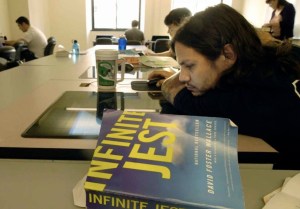 in politics. So Perkins was not to be outdone by his spiritual heir Gordon Lish, whose vaunted cut-ups beginning in the 1970s have only nominal relations to the editees who penned the first drafts. (See, and then never see again, Raymond Carver.) Once ripped from the hands of the author, the locus of creativity was freed up to move entirely into the hands of publishing executives like Simon & Schuster’s Richard Snyder, who, during the reign of Lish, set the modern industry standard of “profit at any price” — the kind of model that favors the predictable sales and easy marketability of cookbooks over novels and literary nonfiction. This bureaucratic mishandling foisted editing into collusion with marketers and sensitivity readers and other ancillary personnel whose editorial aims have nothing to do with books as works of art but rather as economic and political factors, and has caused many contracted writers to have to hire expensive freelance editors to edit their books. Editors had to justify novelists based on sales projections, and could no longer afford to let novelists develop. Between McCarthy’s debut and his first breakout success, All the Pretty Horses, lay 27 years of Albert Erskine’s patronage, and it can be argued that his greatest works — synonymous in this case with saying America’s greatest works — were written in his near three decades of commercial obscurity, which novelists are no longer permitted.
In the midst of this midcentury coup, when power was still concentrated with the editor, The New Yorker editor William Shawn opened up a separate theater of war against the writer. Shawn began curtailing modernism and experimentation in commercial magazine fiction by mass-modeling fiction into palatable commercialized products, and attaching its fate to the doomed prominence and national indulgence of the magazine. (See, and then see again John Updike — but only occasionally, when Cormac McCarthy is not fuming over your shoulder.) It was during this era that the ghastly phrase “the craft of writing” drifted into parlance. Successful writing became about style and voice more than the soul below the paragraphs, and writers became “craftsmen” and sleazy contractors who build pretty, expensive houses with bad bones that all begin to look the same. “Raise high the roofbeams,” commanded J. D. Salinger. The mansions of this generation look modernist, but their plumbing and electricals are post-mortem. They don’t live. This kind of writing, say of Updike and Philip Roth, can be enjoyed only topographically: that is, at the level of the sentence, there being no levels below.
This is why McCarthy refused to write for magazines like The New Yorker, despite lucrative offers and access to Davenport harborfronts. He was not interested in entering games of fashionable carpentry, the shellac-offs of the lyrically talented. He preferred to perfect novels in penury, since he knew that obscurity and the disinterest of contemporaries in middle age oft attend genius (see Nabokov).
With Updike and Roth, a sieve also opened up in literary masculinity. If they were misogynists, they were the worst kind: beta-male misogynists, who lacked all erotic legitimacy. Updike’s characters vapidly cuckold and then get vapidly cuckolded in turn and throw fits about being fathers and generally disport themselves as unmanly bores who do not love women beyond their bodies. Roth’s characters masturbate five times in one sitting, sometimes into their own mouth. Mailer, on the other hand, pulled in the other direction with his dialectical (and occasionally literal) stabs at the gentler sex, and often rendered his form of reactionary masculinity farcical and flailing. Mailer invited so much abuse that Hemingway took a pounding from the grave just as collateral. The male identity started to commercially crack. Beta males make poor fathers and masculinity became insecure and dubious and vulnerable to the neurotic developments of insecure grandchildren they did a bad job rearing. McCarthy’s unneurotic comfortability with being a man was thus not much in vogue.
“Cormac McCarthy would never read another new novel again, he told Britt. And he never did.”
So the momentum of commercial publishing became fixated on a particular kind of standardized, sellable style, the soft cream at the top of a story, less on the milk. But cream rises to the top from milk, and you cannot construct cream on its own. Though you can create an imitation of it in a factory. You can start canning foamy synthesized sugar, from which college students huff IQ-plummeting gas. You can make swill from almonds and oats. So that’s what America started doing in the post-war college-crazy era, with MFA programs and their anti-artistic, capitalistic, and utilitarian logic that commercial fiction can be taught and great works of art produced under tutelage and economic bondage. The muse, it turns out, is not a mysterious force within the unconscious operating according to its own dictates; the muse is a failed novelist professor who will work for peanuts. And why not, people have to make a buck at something. Thus, this “craft of writing” development lent itself to the synonymous but even more hideous and collegiate MFA-driven “rules of writing,” a satanic delusion that has led to the modern genocide against the adverb. America began industrializing writing, and establishing official parameters for the expression of style and strict rules of narrative. While it can be pleasurable to read the adverb-rich language of Updike, conceptions of writing as a “craft” or a “rule-based trade” following union regulations will eventually turn against language. Words having failed the mediocrity, they start failing words. After all, it is the mediocrity who first came up with applying “rules” to art, for something with rules, the middling talent reasons, can be “learned” and “applied.” This does a very terrible thing: it lets the failure have power over creation.
In 1980s Iowa, the land where they unconscionably turn corn on the cob into bad gasoline and force the whole country to buy it, Frank Conroy, constructed the modern MFA monopoly. Under his influence, the MFA definitively attached itself to publishing companies as convenient factories and funnels of “new talent” who had spent formative creative years not living, but writing for a small uniform audience of randomly assembled mediocrities and their arbitrary sociological critiques, grammatical preferences, and pet envies. (We have already successfully imagined what would have happened if Lolita were to pass through one of these industrial delousing stations today.) It was discovered in the ’80s that genius does not come from obscure, unpredictable, and unconventional places, but can be found herded together in groups, hemming and hawing about semicolons and modern mores and issues of “contemporary significance.” Genius is not a superiority at the top of a hierarchy, which it is the duty of the editor and the publisher to discover and nurture and promote the pants off of, but a perennial student at the bottom of the totem pole extruded through a pipeline at the executives’ feet. Quite the convenience.
The convergence of commercialism and academicism set a definite limit to how creativity could be expressed, to what then could find its way upwards in the bureaucracy of agents and editors and publishers, and turned artists into economic factors whose windfalls could be accurately forecasted — because they all wrote more or less the same novel. Naturally, cookbook-crazy executives want more of the same and less of the untested because they want more of what they can accurately predict, with their predetermined target audiences down pat.
This was when “major” novelists began writing almost exclusively about novelists, and professors, and schools — hemmed in by the totalitarianism of schooling and of rules, they turned self-referential. The industry also began to burgeon with these sociological cogs: many MFA students publish once or never and then go on to become agents, publicists, talent managers, entertainment lawyers, editors, proofreaders, marketers, publishing reps, sensitivity readers, friends, muses, partners, fact checkers, professors, students, assistants, interns — all of whom think the same way and thus know “talent” when they see it. One need not enroll in an MFA program to learn their bad habits, either, what with these rules being dispersed universally on campuses these days: namely, the ethical cleansing being carried out against adverbs and other kinds of grammatical bigotry against “mixed metaphors,” poetical imagery in general, and any attempt whatsoever to describe lightning.
But this is where things get truly dark and could use the bright burst of summer lightning. Critical theorists like Jacques Derrida and Jean Beaudriallard began postmodernizing academe at the same time as Conroy, the architect of the modern, conformist MFA, put literature downstream of it, which required of “serious fiction” to be engaged with the “powerful” ideas of the day, namely the postmodern credulous skepticism toward art and beauty, and its dogmas on the impossibility of truth, further narrowing the scope of imagination and publishable fiction. At the same time, academe was taking its capitalistic course and applying postmodernism and critical theory to every sociological targeted audience imaginable. Gender theory, critical race theory, feminist geography — you name the group or invent one, and there’s a “theory” for it. (One thought the lesson of the 20th century was to stay away from theories of race, but no, “race theories” are apparently progressive and “critical.”) The modernist maximalist expansion of language started to fall by the wayside in such climates, this being the fate of letting the talentless apply red tape to it in the first place. What survived, instead, was therefore not the lyricism of Joyce, Faulkner, or even Pynchon, but their insistence on confusing and disorienting the reader through unnecessarily convoluted plots and structure.
This very confusion became the favorite past-time of postmodern students reverse-engineering creativity, yielding overly complex and unrewarding plot structures and characters in a clever postmodern way of showing how disorienting existence and “systems of power” are. Postmodernism reanimated “serious fiction.” And just as postmodern “philosophers” who could not comprehend and metaphysicize general relativity and quantum mechanics farcically rebranded themselves “critical theorists,” their literary offshoots rebranded “literature” into something called “literary fiction,” a tacit admission that what they were up to had no pretensions to the canon, the canon turning out to be another Western-patriarchal-racist construct of power anyways. Besides “literary fiction” had more important things to do than aspiring to art: it had the alchemical task of fictionalizing sociological doctrine. The sieve Updike and Roth and their ilk opened in masculinity made it vulnerable to these absurd collegiate neuroticisms, collectivist sociological “theories,” and the favorite intellectual pastimes of the beta-male: ironically venerating low culture (TV) as high culture (art) and then, once this quality standard has been established, taking obscure Frenchmen seriously. (Most especially those whose last names start with “Barthe-”.)
The conclusion of this sordid development is to create a world of monopoly publishing with a restricted public and limited progeny. Not to mention plummeting profits.Writing with aspirations of publication must conform to revealed truths of rules of aesthetics and political dictum, to the exclusion of writers and readers who are not part of the industry’s monostyle, monopolitics, and monoconceptions of novels. One cannot strive in this environment to be a Hemingway or even an Austen, enjoyable by brows high and low and first-time readers. There emerged only two acceptable character arcs of a male in a commercial novel: the realization of his internalized misogyny, or punishment for failing to realize it.
As Infinite Jest introductress Michelle Zauner (a musician with her own vanity brand memoir) describes these options, in the “litbro canon (Bret Easton Ellis, Hemingway, etc.): a white, male protagonist, isolated and misunderstood, stands at odds with social norms and expectations and either grapples internally to critique them or identifies the source ideology and seeks violent revenge against it.” The precis describes fewer than zero books by Bret Easton Ellis or Ernest Hemingway, but perfectly accounts for commercial publishing’s one-dimensional view of that mysterious group of humans: men, who, if I have the latest figures correct, populate a meager 50% of the earth.
The modern male reader who picks up a modern sociological text masquerading as a piece of art can only expect to be patronized by going through an arbitrary and tedious process of discovering through a novel that he kind of sucks and was born that way. (Modern women who don’t think men suck are patronized by this, too.) So you know what they do? They stop buying and reading books. The publishing industry then makes one of the oldest mistakes in the book: confusing their present audience for their potential audience. After publishing novels acceptable only to the tastes and standards of bourgeois MFA sociologies and publishing-industrial-complex mores, it gazes into its dwindling audience numbers and sees that “the majority of reliable customers of literary novels are Left-wing college-educated women. We must put out more literary novels for Left-wing college-educated women. Why, by the way, are men not reading the novels we put out exclusively for Left-wing college-educated women?” “Well, didn’t you read the last big summer novel? Men kind of suck.” “Oh yes, right. More of that please. Left-wing college-educated women will love something along those lines.” Technology and competition from other forms of entertainment have contributed to shrinking readership, but publishing monopolies rendered cock-eyed by haste to turn a devalued buck along predictive-marketing lines are colluding with the plummeting literacy of the country. It is amazing how well suited postmodernists and Leftists are for monopoly capitalism, and what a penchant socialistically minded bureaucrats have for alienating working-class readers by telling them they suck. None of this, by the way, can be said to be in ruthless pursuit of profit: for publisher and novelist have never earned so little.
“‘Infinite Jest’ was something of a literary psyop, and McCarthy’s intelligence was being insulted by it.”
In summary, we have the blitzkrieg into a writer’s sovereignty; the bureaucratization of editing; the industrialization and rules-based protocol of writing that can be judged by a grade point average; the postmodernizing of these rules and fictional content; the population of the publishing industry with people not so much brainwashed as mediocre; obligatory character arcs of male insecurity.
What could possibly recrudesce into success from this world but a sordidly pedantic super student? The kind of grammatical hall monitor who hangs around the lockers and says, “Excuse me, my mother’s an English teacher, and I have to tell you the way you’re using that word is wrong,” when he hears a young woman say “nauseous” when she meant “nauseated.” The kind of guy who writes “Don’t get me wrong: I like this,” on fellow students’ short stories. Throws tables at ex-girlfriends’ heads. Turns to a friend in the spring term and says, like a bad actor in a script written by a virgin, “Smell that? It’s the smell of cunt on the air.” Whose idea of a good time with friends is forcing them to watch more than six hours of television while he makes ironically apposite cracks about watching six hours of television. Who, according to his schoolmarm mum, dinged students in his creative writing class for grammatical breaches he couldn’t even explain and conducted full-scale unconsensual semicolonoscopies upon their short stories. Who emails the bosom that did nurse him: “Yo. Question. Re the following sentence — ‘I have trouble being clear, concise, lucid, and brief.’ — are the four adjectives here adjectives, or are they subject complements? In ‘I am tall,’ I know that ‘tall’ is a subj. compl. I was taught that predicates following the verb ‘to be’ are always subj. compl.’s, not adjectives/But is that still true when the form of ‘to be’ is part of a participial phrase that is itself modifying something?”
And the violet past prime fires back: “When I first clapped my beady, bloodshot blues on the beginning of your query quite early this morning, my reaction was ‘Yikes — clear and lucid are synonyms, as are concise and brief — why the wordiness? … My training in grammar (and it was Latin grammar) took place long before subject, object, and verb complements were designations. so [sic! lol] my grammatical expertise is probably antiquated to the point of being little use.’”
The recrudescence I’m referring to is David Foster Wallace, these shimmering biographical factoids emerging only after going through the DTs — that is, the horrifying biography of Wallace by D.T. Max, and David Lipsky’s lip-service Although of Course You End Up Becoming Yourself, a supposedly fun thing I’ll never do again and don’t countenance anyone else sallying forth in quest of adventure doing even for the first time. Writing being the most libertarian of arts, there is nothing more dangerous to creativity than a high-school English teacher, and Wallace was raised by one. Such an unconscionable nurturing can only help rocket one to the top when the standards of judgment and literary fame are those antithetical to art. People often hate Wallace and Infinite Jest for the wrong reasons, or for less important ones: his admittedly insufferable male readership. But McCarthy hated it for the right reasons: for its origins in anathema.
Infinite Jest is a bourgeois novel in the Nabokovian differentiation of the term from its identical Marxian twin. Bourgeois as applied to the social world which Madame Bovary satirizes. “A state of mind, not a state of pocket.” Infinite Jest merged the strains of post-mortem commercialism and postmodernism and satisfied the philistine urge of a contemporary “reading public” to be told what capitalistic “era” they’re in (’60s? ’70s? ’80s? ’90s! That’s it!). The urge to be sold the falsely important “intellectual” topics of the day in a falsely artistic and faux-challenging manner. The public had been told for half a century that it was addicted to media and technology by Marshall McLuhan, Aldous Huxley, Norman Mailer (and every other public intellectual ever) and so was ready to be told it again definitively by Wallace and give him all the credit for the third-hand observation. (Amnesia and a low threshold for being impressed are symptoms of the television addict.) It satisfied the misguided attitude that the height of intellectualism and the cutting edge of originality were whatever the young people were up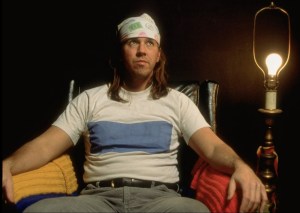 to at those mysterious colleges of theirs. To feel, in the alienated stratum of liberal-college-educated automaton reading public, an ennobled purchaser, a spirited consumer of “art.” In this sense it is also bourgeois in its economic meaning: the novel is an economic product developed by an industry for a specific economic class. Its very length and heft lends its hapless reader an unearned feeling of bourgeois superiority for finishing it (or pretending to): “Oh, you couldn’t finish it? Yeah, it took me a couple weeks but I found a rhythm and actually couldn’t put it down.” “Oh, you didn’t understand it? Yeah, it’s really complex, let me see if I can drill it into you, hold still.”
The novel’s basic plot, as I’ve so far mercifully spared you from, is essentially about a film called Infinite Jest which is so addictive people can’t stop watching it. The message here — because the novel is situated entirely in the industrial foreman’s questions, “What is the author’s purpose?” “What is the author trying to say?” — is about America’s addiction to commercialism, entertainment, technology, and, get this: addiction to other things, too. Addiction, the novel intimates, to addiction itself. A novel about a sociological problem, it offers no solution to mass addiction to entertainment. Wallace repines but ultimately lies in a supine daze to television and technology, and his style is imitative of slop-entertainment, meant to addict the reader to its vapidity and alienation and cybernetic sociology. (If you tell the American public a product is addictive, they will become addicted to it.) The novel, like the fictional film whose namesake it borrows, is après-garde, which is defined in the endnotes as, “characterized by a stubborn and possibly intentionally irritating refusal of different narrative lines to merge into any kind of meaningful confluence.” The narrator is the collated voice of ’90s American cyberneticism, an AI hallucination. Even still, it is falsely complex, falsely clever, falsely poignant and moreover commonsensical. None of the hallowed “blue trees” of Nabokov’s The Creative Writer essay, which the hooves of the commonsense rules of writing back-kick dirt upon.
It is art as total artifice. A work of false maximalism, an opus minimum. If there was a movie called The 90s, Infinite Jest would be the big “challenging” novel written by the film’s fake and cringing novelist, David Foster Wallace, and the producers would say, “Let’s style him like that bandana’d dreamboat John Corbett. His show just won an Emmy.” For Infinite Jest, perhaps the last title to be borrowed from the Shakespearean iambic, and “David Foster Wallace” are canonizable names. They look and sound natural to the ear of the litterateur calmly awaiting the progress of contemporary genius, the next “challenging” book like a cog in a smooth progression they were promised. Like GMO produce it fits in from afar. But that’s all there is to the novel and the novelist: surface. Whereas its supposed maximalist ancestors Ulysses and Gravity’s Rainbow are buxom and voluptuous, Infinite Jest is cuboid, silicone, and ages poorly in wrinkled skin. It looks good only in certain angles in certain photographs staged to look natural. It is a false claimant to the consanguinity of Joyce and Pynchon, more the result of a pedantic superstudent reverse-engineering a novel in his dorm room; the kind of mind that thinks the secret to creating music like the the Rolling Stones’s can be discovered by studying music theory and double-plagals, meanwhile Keith Richards doesn’t know the name of half the chords he plays. (Why have these people never written a good song in their lives?) McCarthy saw straight through it as the bloated dummy text of an impostor.
“Successful writing became about style and voice more than the soul below the paragraphs.”
Ulysses is a language novel whose locus is consciousnesses. Because it deals with the inward angles of consciousness it naturally possesses a cosmogony. God is present in the poetry: “White breast of the dim sea. The twining stresses, two by two. A hand plucking the harpstrings merging their twining chords. Wavewhite wedded words shimmering on the dim tide.” “The heaventree of stars hung with humid, nightblue fruit.” The novel achieves a quantum state of language with the lili-fication of adverbs, as in the famous “godlily.” Joyce replaces the “-ly” ending of several adverbs with “-lily,” using a flower to subtly introduce a simultaneous state where a word is both adverb and poetic compound noun, where God is a lily and a lily is God, a linguistic transcendence which the modern genocide upon the adverb would never allow one to approach as a possibility.
Even Gravity’s Rainbow is a language novel despite being set within a sprawling and disorienting suprastructure, its locus an intelligence officer discovering how and why he is a consequential cog embedded in the Deep State of America’s newborn Western empire in Europe. It is a novel where “Splashes of bell-metal lay forever unrung in the foundry dirt.” The novel, like Pynchon’s best work, operates on the tension line between cosmology and cosmogony: is existence meaningless randomness or a grand mysterious design — and is that design cosmic or man-made? In other words, the tension between Deep State Cosmogony and the Deep State of the soul. “The soil’s stringing of rings and chains in nets only God can tell the meshes of.” Paranoia stalks this knife edge looking for clues and being pulled in the direction of both potential forces.
As for Suttree, McCarthy’s most stylistically maximalist and linguistically Joycean novel, the prose is haloed. “The traveler had seized his fingers in his jaws, but it was not alone this horror that he cried. Beyond the flayed man dimly adumbrates another figure paled, for his surgeons move about the world even as you and I” (emphasis mine). The balls to end the sentence that way, the meter of the paragraph forcing the third person to dip into a brief poetic first. (A no-no according to rules of writing.) “He has watched them summer nights, a pale pagan sat on the curb without. One rainy night nearby he heard news in his toothfilings, music softly” (emphasis mine). With that “night nearby,” spacetime bends to McCarthy and so he bids time relate spatially. He plays God with light: “Yellow lamplight clung in his lashes.” His characters read a few lines of a letter “backward candled against the light at the window…” (emphasis mine).
Now here’s many people’s favorite line from Infinite Jest: “My chest bumps like a dryer with shoes in it.” Hear the insidious technicality of this line? The soulless precision of this image? The A+ grade from a professor? It is an anti-numinous novel of singularly terrestrial concerns. Like Updike (whom Wallace is more similar to than he’d have liked to admit), he may be able to describe what goes on in, say, a church, but he has no artistic conception of the soul, nor what goes on between the soul and God. Thus the novel’s language is Earth- and classroom-bound. Its metaphors grade high on a ’90s collegiate rubric but are utilitarian. The novel’s best linguistic moments are when it attempts poetry, but this is only done in the form of poor imitation of Wallace’s idols. “Wet silhouette” is Wallace doing Updike; “Alphabets of exposed plumbing” is Wallace doing DeLillo; “embranchingly tunneled” is Wallace nearly plagiarizing Pynchon; “even the voice of Steeply had a different timbre inside the shadow” is Wallace doing Pynchon doing Rilke; and “the soul’s certainty that the day will be not traversed but sort of climbed, vertically, and then that going to sleep again at the end of the it will be like falling, again, off something tall and sheer” is Wallace really doing Pynchon doing Rilke. When one borrows and steals, one must improve the absconded phrase and make it one’s own. Nowhere in Infinite Jest does Wallace improve on the predecessors he imitates.
But perhaps the worst thing about Infinite Jest is that it’s not funny. It beggars the multifocal structure of Gravity’s Rainbow, the structural tensions between discohering plotlines (or, do they cohere if you’re smart enough to spot the joinery?), but without any of the comedy. Not that it isn’t trying to be funny: the audience can’t miss the lit signs for laughter, as when one of its characters Hal says, “I consume libraries… I do things like get in a taxi and say, ‘The library, and step on it’.” Or when its Quebecois Separatists speak in bad literal translations of English.
It is a novel of endless itineraries and product histories of telecommunication technologies that don’t exist. Maximally detailed descriptions of buildings. Paragraphs like:
“The Union’s soft latex-polymer roof is cerebrally domed and a cloudy piamater pink except in spots where it’s eroded down to pasty gray, and everywhere textured, the bulging rooftop, with sulci and bulbous convolutions. From the air it looks wrinkled; from the roof’s fire door it’s an almost nauseous system of serpentine trenches, like water-slides in hell. The Union itself, the A.Y. (‘V.F.’) Richey’s summer opus, is a great hollow brainframe, an endowed memorial to the North American seat of Very High Tech, and is not as ghastly as out-of-towners suppose it must be, though the vitreally inflated balloon-eyes, deorbited and hung by twined blue cords from the second floor’s optic chiasmae to flank the wheelchair-accessible front ramp, take a bit of getting used to…”
The whole novel takes a bit of getting used to, beyond the point of its being of any use to reader or young writer. This quote — the last sentence of which goes on and on for over a page, my merciful ellipsis rendering it a bit more readable — is the worst of picayune Pynchon cranked to 11, and it’s the dominant mode of the novel.
Wallace is not in command of language enough to neologize “godlily,” or to splash bell metal into the grass, or to relate time to space in just two words like McCarthy (Wallace would do three pages using “membrane-theory” to explain the spatial relation of time instead rather than find a way to do it with language). Minor readers mistake his pedantic constructions like “existentiovoyeuristic conundra” for hyperverbal megagenius, minor readers being trained by bad translations of French postmodern texts to believe that hypertechnical sentences with incomprehensible neologistic jargon are the natural expression of genius. That incoherence is brilliance and if you don’t understand what’s written it’s because the writer is really really smart and your best course of action is to just assume it’s true. Does the novel say anything about entertainment addiction that Wallace’s essay “E Unibus Pluram” doesn’t? No. Nor does it move “the novel” beyond what others had done in the past, as its people are so oft coerced into believing.
“Wallace was not an artist but an early stage generative Large Language Model.”
The novel is grammatical. That is the best that can be said for it. Whereas Ulysses, Gravity’s Rainbow and Suttree would meet similar fates to Nabokov’s Lilya, Infinite Jest would blow student socks off. It is the work of unnecessary cerebration and bears all the hallmarks of a student-teacher sitting around in his subsidized housing doing a lot of “challenging thinking” while trying to reverse-engineer Gravity’s Rainbow. In fact, the best way to understand Infinite Jest is as the return to this ChatGPT query, “Write me a thousand page novel. Make it Gravity’s Rainbow updated for the social and political banality of the ’90s. Try to be as funny as Pynchon, but only get as far as DeLillo. Infuse The King in Yellow’s plot about an illegal addictive play, as well as Monty Python’s sketch about the joke that’s so funny no one can read it without dying, wherein world militaries try to use the joke in warfare and try to destroy its original copy — apply this to a film and make reference to America’s addiction to entertainment. Along the way include random endnotes like Nabokov made use of in Pale Fire, only make the endnotes less cohesive and more pedantic and Borgesian and make sure that some run to multiple pages. Infuse a lot of random and nugatory post-modern “theories” and philosophers from Germany who don’t believe philosophy is even possible (think Wittgenstein but also go beyond). Have nothing to say about the cosmos or physics: just the self-referential Earth. Make sure the disparate plotlines of the novel do not cohere — or, do they, if you catch my drift?”
There’s nothing wrong with borrowing and outright stealing: it is how all the arts move forward. What matters is how one steals. Wallace merely aggregated. In this way, Infinite Jest was truly ahead of its time. Wallace was not an artist but an early stage generative Large Language Model. A simulator of literature, using all the commercial and collegiate developments of his time. Many now dismiss the celebrity of Wallace, but the damage is done. Too many still see him as a fertility to descend from. Supposedly opening up a new branch of literature with the purpose of saying something about contemporaneity, this simulational style of literature is the reason why philistines have been holding a mysterious place open in publishing for the “Great Internet Novel,” considering everything else in the meantime meaningless. Infinite Jest is the internet novel. It’s not great and we can move on.When we hear the lament, “If only David Foster Wallace were around to write an essay on streaming, or cellphone addiction” we understand just how sordid his influence still is, how bourgeois is his scope.
The only reason why much writing is replaceable by AI is because it has been devolving towards AI’s aggregational style for three decades. Google’s aggregational service co-opted the ad revenue of magazine publishing, the industry’s main profit stream, and forced print magazines that didn’t go extinct to retreat online and compete not by human standards of writing, but by ranking high on Google’s search-result pages. To do so, one has to charm the algorithmic standards of Google, which outrank human voice and style with “authoritative, informative” writing. Gone was artistry and born was the one-sentence opening paragraph, which even an MFA wouldn’t dream up. The only reason why generative AI has a chance of replacing certain types of writing is because writing has been devolving toward AI’s algorithmic, encyclopedial, aggregational style for decades.
The only reasons novels may be replaceable by AI is because of human-made aggregational impostors like Infinite Jest, which fomented within the pipeline of the publishing-industrial complex as a proof of concept, and then lay supine to art-destroying developments in technology, ultimately leaving us in thrall to fictionalizing technology and cybernetic decline. Infinite Jest is considered the canonical branch of the future internet novel, Twitter novel, alt-lit, something called “post-irony,” and the sad stooge’s false question: “Is it possible to be sincere?” One needn’t answer with postmodern reference and sociological argumentation — one need only say, “Yes.”
Only a befuddled ignoramus or perplexed poltroon of an executive — you heard me, I said poltroon — could gaze into this seeping tree-wound and say, “Whither the male reader? Maybe we ought to mend this somehow.” But the intern, fresh from the Ivies, skulks up to his side. “Men don’t read because the novel is dead. And men are low and stupid beasts. And you know, Twitter, and porn….” And so we shall now let this poor, diseased branch of literature obsolesce in peace. Gravity will do its work and it shall fall from the great tree soon, and new flowers will be able to grow luridly from the old wound. We only hope this executive and his intern are brooding below with knit brows when it flutters to the ground.
The moral of the story being: do not be a student for life. The consequences may prove deadly.