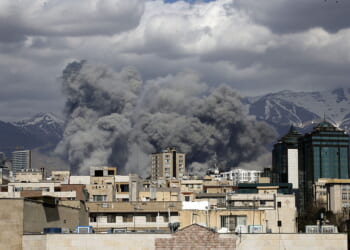
The Iran war is in its second week, and there seems to be no end in sight. The longer the conflict drags on, the worse it may get for US businesses and consumers still reeling from the post-pandemic inflation bomb that has only recently settled. The situation is not so much about the domestic production of black gold as it is about the Strait of Hormuz, a global chokepoint that handles not only 20% of international crude oil but also a diverse array of goods.
Iran War Producing Warflation?
Global crude oil prices topped $100 a barrel before staging a sharp reversal by the March 9 opening bell and heading back to double digits. Natural gas prices are also firmly above $3 per million British thermal units, while refined energy products have also been surging. The national average for a gallon of gasoline has rocketed nearly a half a buck in the past week.
The spike in energy prices has been driven largely by the narrow waterway situated between Iran and Oman. While Tehran has not installed a “now closed” sign on the front door, it has been effectively shuttered by Western insurers. These companies have either canceled coverage for commercial vessels or dramatically raised their premiums.
The administration has attempted to reopen the vital artery by offering guaranteed political risk insurance and naval escorts. But until the conflict is resolved, many tankers may refrain from venturing through the area and instead detour around the Cape of Good Hope in southern Africa. The White House has employed or considered other measures, such as removing restrictions on India’s purchase of sanctioned Russian crude oil and possibly intervening in futures markets.
Of course, the $64,000 question is: Will this conflict produce warflation? It all depends on the length of the military action and how long traffic in the Strait of Hormuz will remain at a standstill.
The rule of thumb is that for every $10 increase in oil prices, inflation rises by 0.2 percentage points. It can also trim about a 0.1 percentage point from the gross domestic product (GDP). However, it is worth noting that this passage also manages a wide range of other products essential to businesses and consumers across the United States.
Goods Inflation
Production shortages, delays, and higher transportation costs could be expected in the near term. But what else does this impact?
Aluminum is one thing, as 7% of the global supply traverses the area. Cement, concrete, and sand are produced across the Middle East, which are vital for construction and manufacturing. This is challenging for the industries because they are already grappling with worldwide tariffs.

India’s pharmaceuticals are shipped through the Strait of Hormuz and other Gulf corridors, meaning as much as 6% of its exports are already at risk. The Middle East is home to five fertilizer producers: Bahrain, Iran, Qatar, Saudi Arabia, and the United Arab Emirates. These products are transported through the strait.
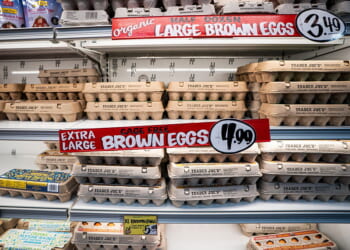
At a time when US inflation averted an aggregate tarifflation surge – for now – the Iran war adds another layer to the inflation conversation. Producer prices unexpectedly soared in January. The Institute for Supply Management’s manufacturing survey showed inputs registering the sharpest increase since June 2022 last month. The Federal Reserve’s latest Beige Book showed US firms anticipating higher prices in the coming months, though they have been reluctant to pass on their costs to customers.
The March Consumer Price Index (CPI) report will be released in April, and it could reveal a sizable increase in the energy component unless all sides lay down their arms and oil prices collapse. Until then, the warflation risk premium will persist, remaining another threat lurking in the background.
Insulation
The consensus is that the US economy is insulated from the economic fallout of the Iran war. Because the United States produces more oil and natural gas than some of the energy powerhouses, the economy should be able to weather the storm. But the outlook is uncertain due to its length, with the Penn Wharton Budget Model forecasting a $200 billion hit to growth.
During the Iraq war, quarterly US GDP growth ranged between 1% and 2%. As of March 6, the Atlanta Federal Reserve estimates the national economy will grow about 3% for the first quarter. But as more data trickle in over the coming months, the resilience of the last few years will either endure or fade.
Fasten your seatbelts, it’s going to be a bumpy ride.