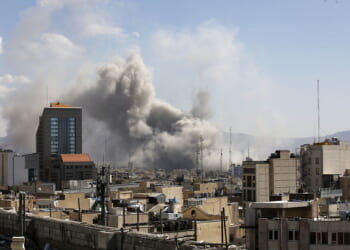
Set low on the eastern flank of Mount Lebanon, Zahlé has a front-row seat over the Bekaa Valley — and the bombs that fall on it daily. No wonder Michel Masaad is so gloomy. In his restaurant on this Christian town’s main street, a prim avenue of banks and pharmacies, he outlines a bleak vision for the future of his country. “This war won’t end. Even if it ends in Iran it won’t end here, it will turn into a civil war.” Masaad glances around, his eyes wide and anxious, then lowers his voice to a whisper despite the fact that the place is totally empty. “These people cannot go back to destroyed homes.”
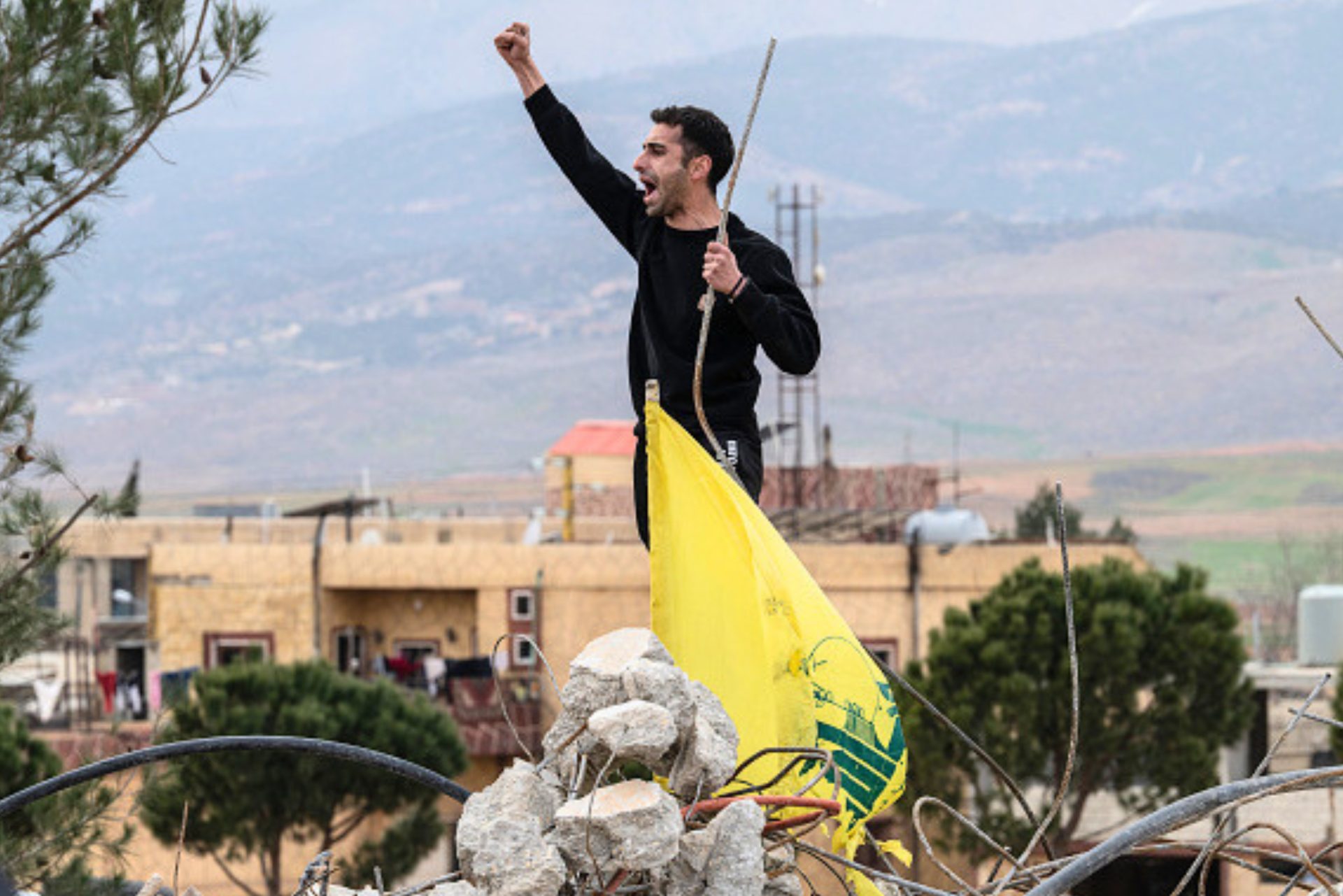
“These people” are the million-plus civilians displaced in Lebanon since fighting resumed between Israel and Hezbollah in early March. Sweeping IDF evacuation orders, encompassing most of southern Lebanon and the entirety of Beirut’s southern suburbs, have made one fifth of Lebanon’s population homeless in just a few weeks. Almost all of them are Shia Muslims. Israeli officials claim that the orders are intended to protect civilian life in their campaign against Hezbollah, creating enormous free-fire zones where bombs can fall. But Lebanon has walked, and often slipped from, a demographic tightrope many times since its founding in 1943, and to move people here is to move politics.
All told, Lebanon is just half the size of Wales. Within its borders, Sunni and Shia Muslims, Druze, and Christians from 12 denominations share space, resources and control. Syria’s civil war saw Lebanon take in more than a million refugees, most of whom remain today. This diversity creates a mix so febrile that Lebanon hasn’t risked a census since 1932, fearing that the demographic assumptions upon which so much of Lebanese society is based might be proved wrong. In this, history is a warning. The demographic upset caused by an influx of Palestinian refugees, after Israel’s founding in 1948, was a big factor in the start of Lebanon’s own civil war from 1975.
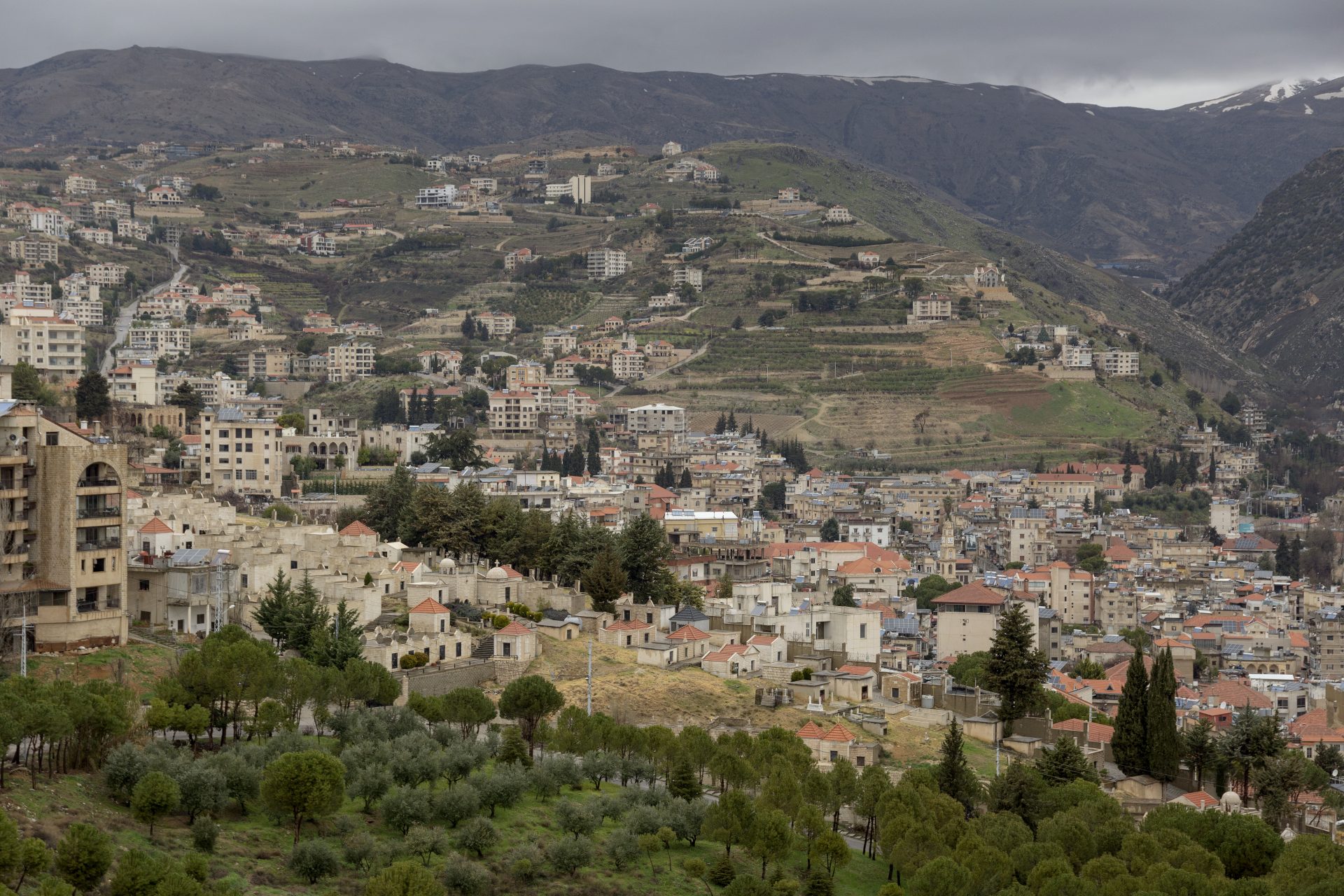
Lebanon’s confessional politics, designed to prevent the ascendance of one group over another, represents the chaotic web of invisible frontiers that span the country. Delineated by religion, history, fear and periodic violence, these frontiers split regions, encircle cities, isolate neighborhoods, and divide even the tiniest of villages. They are marked by roads, rivers and mountains but an uninformed visitor might remain oblivious to crossing them. Like a vase that has shattered and been repaired, Lebanon will break along the same lines if it falls again. Israel knows this well — and is pushing the vase to the very edge of the shelf.
Zahlé is a border town on one of these invisible frontiers. Founded around 300 ago, it is young by the standards of the Levant. Its position on the main Damascus-Beirut highway quickly made it prosperous, and it is now the third-largest town in Lebanon and the largest Christian city in the Middle East. Behind it, to the west, the heights of Mount Lebanon separate it from Beirut and the sea. To the east, the Bekaa Valley stretches out towards the anti-Lebanon and Syria.
The vast majority of Zahliots are Melkite Catholic and Maronite, aligning the city culturally and politically with the Christian communities of Mount Lebanon and Beirut. But Beirut lies on the other side of the mountain, over a hair-raisingly narrow and potholed road that regularly closes in the winter. Economically, it has stronger links with the Bekaa, where the majority of the population is Shia and the rule of law is superseded by a complex mix of clan dynamics and Hezbollah hegemony. An oft-repeated saying here holds that Zahlé has its heart in Beirut but its stomach in the Bekaa.
As well as running his restaurant, a simple spot offering grilled-chicken sandwiches and plates of hummus and salad, Masaad has been a mukhtar for 30 years. Mukhtars operate as local registrars, responsible for issuing official paperwork for a village or neighborhood. They are also important community figures, intimately familiar with their wards. When I ask Masaad what his constituents are afraid of, he looks incredulous, as though the question is profoundly stupid. “What are they afraid of? Everything! People are displaced, the state is broken, the banks took everyone’s money. The people most at risk are the ones at the extremities. Look, when it snows and the high roads get closed, the government opens the roads to the ski resorts but they don’t open the road to Zahlé.”
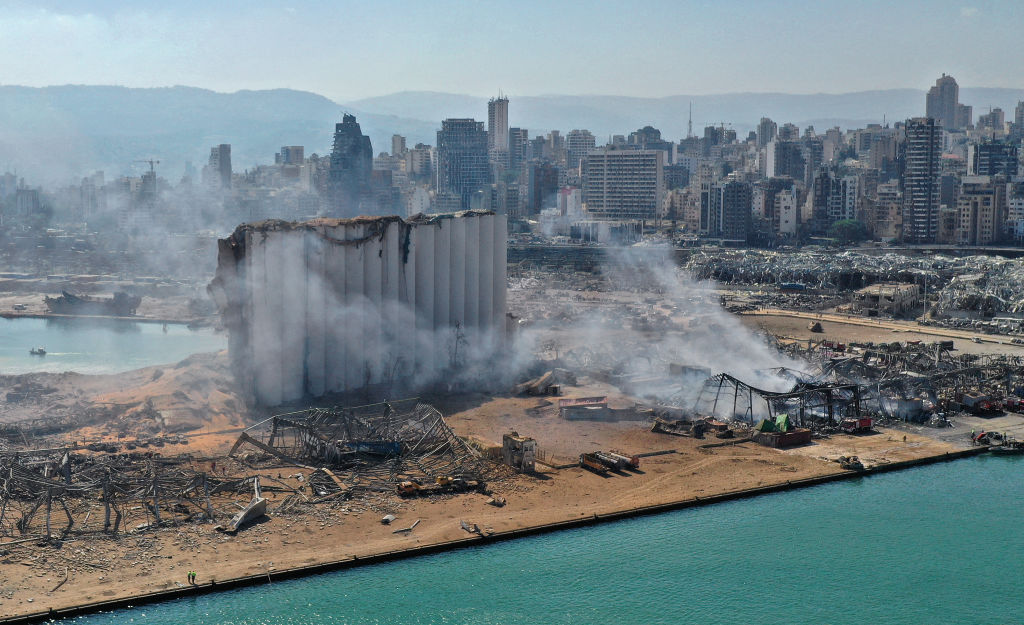
Lebanon’s recent history — one of socioeconomic collapse; massive, but ultimately failed, reform protests; the apocalyptic port explosion of 2020; soaring poverty and war — has made brittle even the glue sealing its cracks. Masaad’s comment about ski resorts references a deep well of resentment, as a thin slice of Lebanese society lives the good life while most struggle to get by. The state is seen as utterly impotent, the banks as thieves. Few are impressed by sectarian leaders who have achieved little but decline for decades, and their patronage is turned to as a last resort. Asked if Zahlé can rely on support from the Christian political parties, Masaad — a Christian himself — waves his hand derisively. “Curse the Christians, they all hate each other.”
In this atmosphere of abandonment and internal estrangement, the Israeli strategy of isolating Hezbollah and its base risks tipping Lebanon into all-out civil strife. Israeli messaging directed at Lebanon has, since the first round of this war in 2024, strenuously tried to frame its campaign as against Hezbollah, not Lebanon. So strenuously, in fact, that it has sometimes achieved an air of surreal gaslighting. On 13 March, an Israel aircraft dropped leaflets over Beirut urging the Lebanese to reject Hezbollah. “This land is yours,” they proclaimed. Yet within days, senior Israeli figures were advocating for the annexation of swathes of southern Lebanon. “The current war in Lebanon must end with a radical change,” said Israeli finance minister Bezelal Smotrich. “The Litani must be our new border with the state of Lebanon.” That river meets the sea some 19 miles inside Lebanese territory.
As Michael Young explains, that’s part of a broader strategy. “Hezbollah is a force that’s anchored deeply in the Shia community,” says the senior editor at the Carnegie Middle East Center. “What the Israelis are trying to do is break the relationship of the Shia community with a specific geographical area in which Hezbollah had created a virtual state within a state.” In Young’s view, the goals of this strategy stop short of pushing Lebanon into civil war. “They understand that they need to restrict Hezbollah within a broader society that can contain it and make it weaker, but they know that if you destroy all of Lebanon, the force that’s most likely to emerge from that is Hezbollah.”
Hezbollah was born in the wreckage of Lebanon’s last civil war, in conditions that appear eerily similar to those emerging today. Back in the early Seventies, the country’s Shia community lacked effective political representation, and therefore didn’t receive the same level of state resources and protection as sects boasting more entrenched political networks. Israel invaded Lebanon in 1982, aiming to remove the threat posed by the Palestinian Liberation Organization, which had gained a firm foothold in the south. The insults and injuries of occupation were a galvanizing force for Shia communities. The Bekaa Valley, where the grip of occupation forces was looser, became a base for a patchwork collection of resistance groups.
“Hezbollah was born in conditions that appear eerily similar to those emerging today.”
The then-new Islamist regime in Iran saw an opportunity in the nascent Shia resistance forming in the Bekaa. Revolutionary Guard advisers and resources were sent to Lebanon, where they trained and organized these groups until, eventually, they coalesced into Hezbollah. As well as resisting Israeli occupation and attacking Western interests in Lebanon — a suicide truck bomb in 1983 killed 241 US Marines in Beirut — Hezbollah sought to fulfill the unmet needs of the Shia, providing services, employment and welfare. In this way they established their “state within a state”.
Even as the party became the dominant political force in the country, Hezbollah continued to lean heavily on a vision of the Shia as a sidelined minority. For the past decade or so, this narrative may have been more rhetoric than reality, but Israel’s attacks have now plunged the Shia community back into poverty. Today, in Christian East Beirut, housewives in yoga gear drink $10 matchas and complain about the whine of IDF surveillance drones overhead. A few hundred meters away, West Beirut is covered in the tents of Shia displaced from the south, sitting in the rain and wondering if they will ever be able to return home — or if they even have a home to return to.
Alongside the violent reopening of a class wound that never truly healed, another occupation appears imminent. Israel has massed forces on the border and started an incursion intended to create what it euphemistically calls a “security zone” up to the Litani. Even if Smotrich’s threat of annexation doesn’t happen, that would still constitute an occupation of 10% of Lebanon’s territory.
In short, the conditions are forming for a disastrous sectarian collapse. If Israel is hoping to defeat Hezbollah, and then deal with a neutered-but-coherent Lebanese state, they may have underestimated just how much the country has fragmented. That fragility is everywhere, running through every crack and seam of society.
The further you get from the invisible frontiers, the more this fragility has bloomed into fear. In Christian Ashrafieh, an affluent Beirut neighborhood of colonial-era villas and French restaurants, I’ve heard people say that they “hope the Israelis can finish the job we started.” Or, referring to the displaced, “How can they expect us to live with these people?” There are also many in Ashrafieh, especially among the young, who have set up kitchens and donation drives for displaced families. But they are battling a strong underlying sense that the war is happening because of another group, a somehow less Lebanese group.
In Zahlé, where daily life demands interaction, these tensions are expressed more subtly, and are tempered by pragmatism. Salim Ghazale, Zahlé’s mayor, is a civil engineer who has spent most of his career working on infrastructure projects in the Gulf. He returned to Lebanon and ran for the mayoralty in 2025, bringing a desire to “help build the state” and a project manager’s zeal for efficiency. “We learned lessons from the fighting in 2024 and set up crisis management committees to prepare months ago,” he tells me with pride. “We leaned on the municipal police to vet people arriving. Nobody wants to take in Hezbollah.”
Zahlé is currently hosting around 6,500 internally displaced people (IDPs), mostly from the Bekaa, and Ghazale claims that the process has been smooth so far. “We don’t want to burn any bridges,” he says. “Zahliots own a lot of land in Shia-dominated areas in the Bekaa and we process a lot of the agricultural produce from there.”
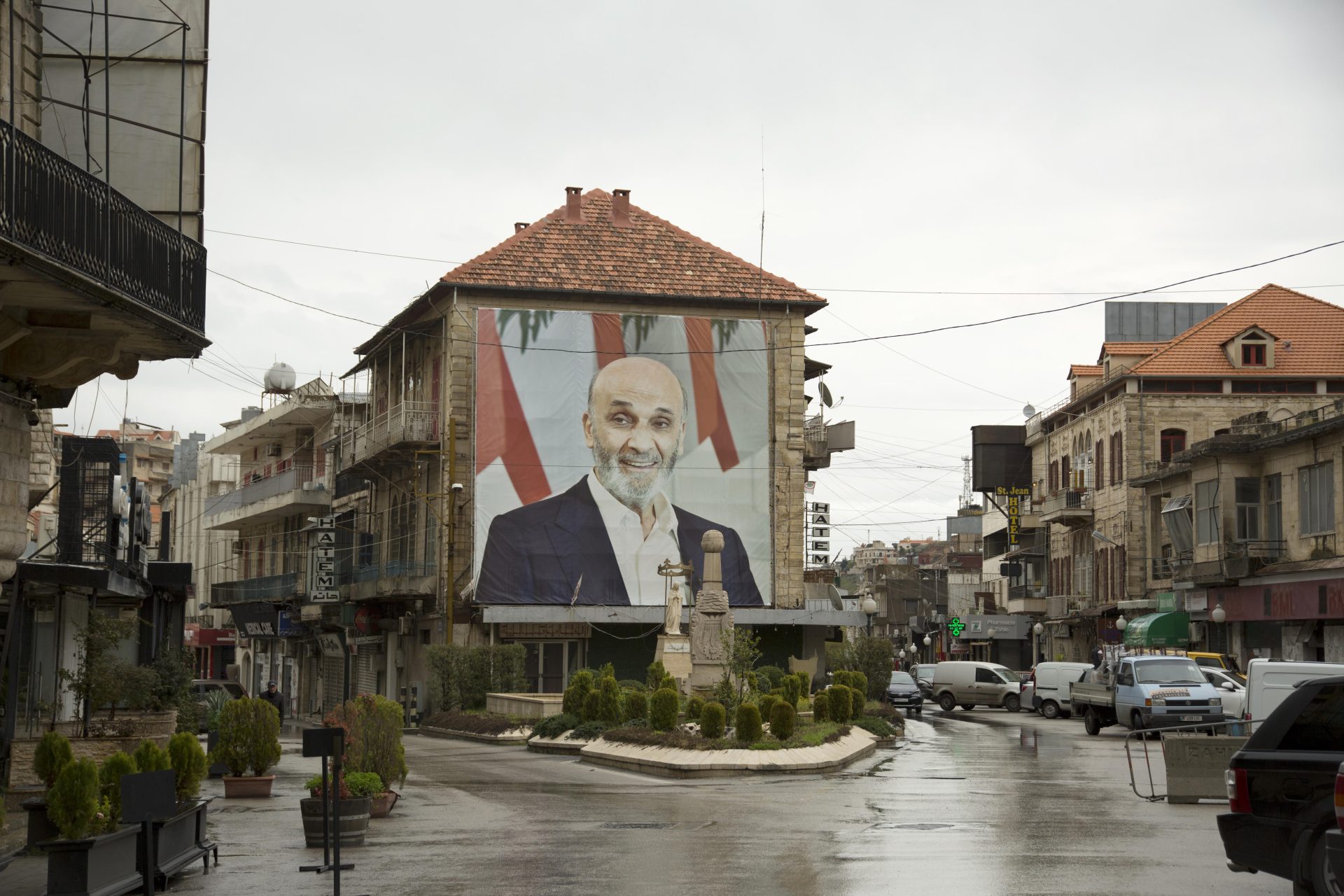
Despite Zahlé’s calm, there are signs of caution. More municipal police officers than usual are visible on the street. At the large roundabout, where traffic exits the Beirut-Damascus highway, a technician is up a ladder installing a new set of surveillance cameras. Once again, it seems clear that these suspicions have been nurtured by Israeli tactics. In 2024, IDF bombing also focused on predominantly Shia areas. But there were several attacks on IDPs who had taken shelter in remote Christian-majority villages in the north, notably Aitou. These strikes were widely read as a warning against taking people in, compounding existing sectarian paranoia.
Nor is it just the sectarian seam that’s so evident in Zahlé. Some here also lament an absent or obstructive state. “I don’t think there is an issue of integration in these frontier communities,” is how Ghazale puts it. “The problem is how to bring them back into the state.” At the same time, though, the mayor seems equally frustrated when government flexes its muscles. Local municipalities send their tax revenue to Beirut, from where it is redistributed nationally. Ghazale claims that successful, tax-paying communities are effectively penalized under this system, held in hock to towns with whom they feel no affinity. “Financial decentralization would allow communities to decide how they live,” he says, “If you want to live Kandahar-style, you can. If you want to live Beirut-style, you can.”
That acid allusion to the Taliban aside, the real threat to Lebanon’s future is revealed in this contradiction. Sectarian tensions are historic, deep and inflamed by the current war, inequality severe and entrenched. But when even the most state-oriented communities in Lebanon view the government as deadweight or worse, it is hard to see how Lebanon can maintain its coherence in the face of the Israeli war machine.
Because Lebanon’s sectarian power blocks are often identified as synonymous with religious identity — Sunni, Shia, Christian, Druze — it is easy to think that politics and religion are identical here. The reality, of course, is more complicated than that. There are priests and imams who preach division and those who preach reconciliation. In Zahlé’s church of Saydit al Najat (Our Lady of Salvation), the approach to the town’s soul is as reasonable as its mayor’s approach to crisis management.
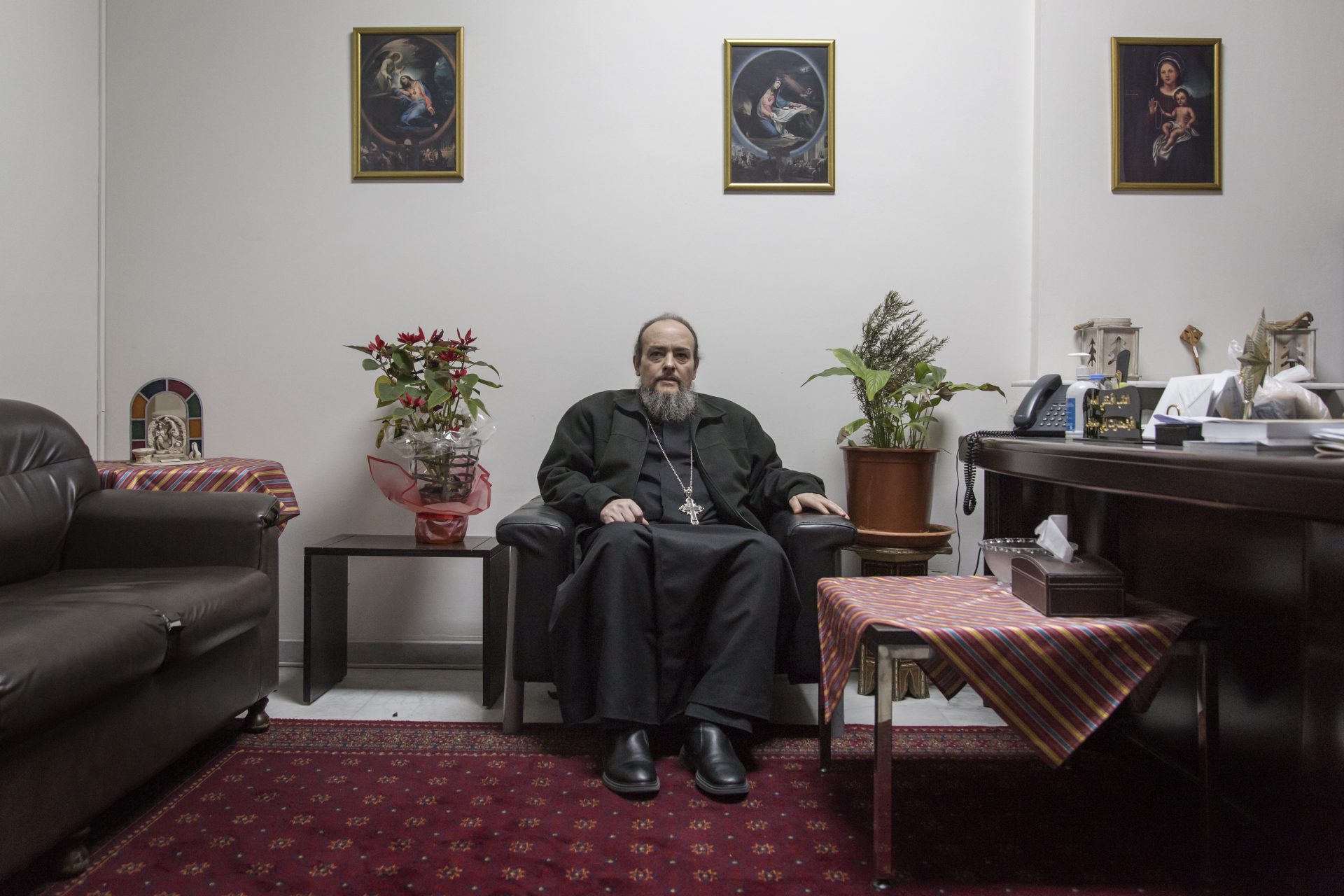
“As a church we keep saying that we are Lebanese and must support each other and pray for everyone affected,” says Father Elie Maalouf before he delivers his mass. “The trouble is, before there were shared goals. Today everybody is working towards their own ends.” He looks tired as he finishes rolling a cigarette and pours himself another coffee from a thermos, as though there is nothing new in this story. “From long ago Israel has tried to divide. We tell people to be aware of this because when they leave we will still be living together.”
Later on, Zahliots gather in the church for the evening mass, coats and hair damp from the chilly rain that has been falling all day. The congregation is subdued, drowned out by the grandeur of the church’s interior. The fresco that circles the walls was painted by two artists. One Russian, one Ukrainian; their work completed before those two communities collapsed into war. There is an air of grim determination in the rituals of the mass, fitting for this orderly, independent-minded town that finds itself neither here nor there.