There is little that excites the Tory party’s inner passions more than, in the words of Ken Clarke, a “bloody difficult woman”. And Robert Jenrick has given Kemi Badenoch an opportunity to position herself as a revivified Iron Lady, rigidly enforcing party discipline against Brexity “bastards”. Her preemptive sacking of Jenrick yesterday — after a mole from his office leaked his plans to the leadership — suggested that, finally, she had mastered attack mode. “She’s certainly found her mojo,” one staffer texted me. But, before everyone slips into Kemi-mania: this signals good crisis management rather than the absence of crisis.
Only weeks ago, it was received wisdom that neither Badenoch nor Keir Starmer would fight the next election. They were dead leaders walking: chronically out of their depth, surrounded by plotters with a battery of not-so-subtle leadership pitches being fired regularly from their own benches — not least those relentless vertical video releases from a baby-faced liberal Cameroon turned gaunt, camera-stalking national-populist. PMQs had become a reliably stultifying exercise in futility, as our inept, dull Prime Minister batted away tame questions from the limp Leader of the Opposition. While Starmer’s conference was hijacked by Andy Burnham’s premature declaration of frustrated ambition, Badenoch’s was funereal, with stories emerging of the party leader forlornly doomscrolling and writing sad self-help notes. These two hapless captains were going to go down with their ships.
“Against Jenrick’s dynamic, X-friendly communications, Badenoch was yesterday’s woman.”
And yet, suddenly, we’re supposedly witnessing what is being optimistically termed the “Kemi bounce” — or, let’s be blunt, a slight nudge upwards for her personal polling numbers. Before yesterday’s surprise suspension of Jenrick, there had already been signs of life in Badenoch. She had given some assured performances in the Commons, even confidently delivering impressions of the flailing Labour Chancellor who had blamed critiques of her dismal reign on latent misogyny. Here, Badenoch was on strong ground: downplaying the platitudes of identity politics is her bread and butter.
But then, astonishingly, came her sacking of Jenrick, long a thorn in her side. It is a political truism that the opposition is in front, but your enemies behind. Now Jenrick is safely out in the open.
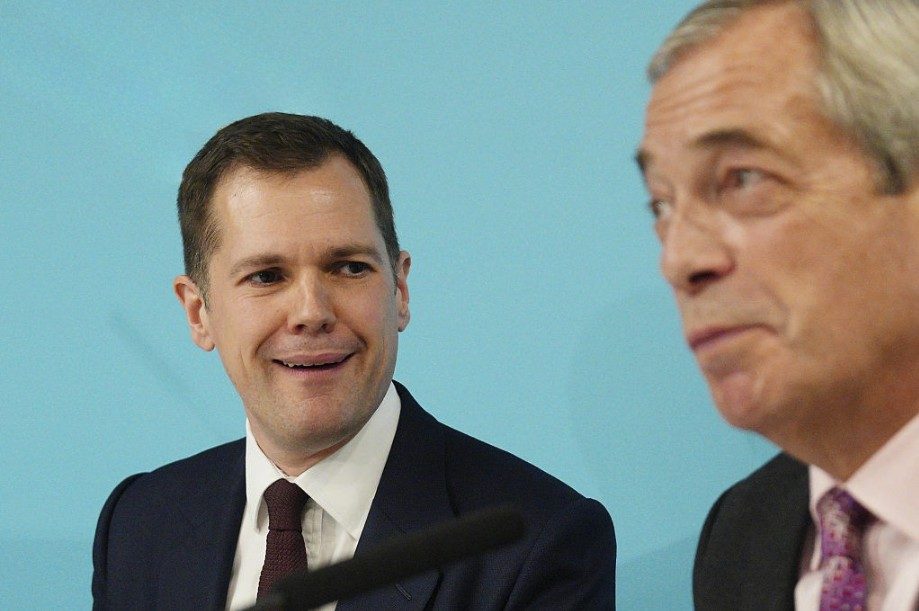
Badenoch’s revelations of treachery bumped her restive justice man into a precipitous embrace of Nigel Farage, who, let’s not forget, had recently suggested that Reform would soon be viewed as moderate compared with Jenrick’s increasingly hard lines on race and migration. At the hastily arranged press conference to announce the latest recruit to the turquoise barmy army, Farage was left to enjoyably improvise as Jenrick arrived late for his first stage call. After some painfully awkward jokes, the turncoat turned up only to deliver a wooden speech, characteristic of the machine politician Westminster belches out so uniformly and regularly. Here on the stage was the difference between the Tories and Reform represented in human form.
Observers could only ask: why would Jenrick, who has spent the past 18 months positioning himself as a Conservative leader-in-waiting, suddenly decide to defect to the disruptors? We have watched him transform from what Michael Gove identified as a Tory-boy archetype that the public are all too familiar with, into an aggressive and nakedly ambitious attack dog. He’d been on Ozempic, he’d finally got a haircut that didn’t scream “Secretary of the Nottinghamshire Young Conservatives 2014”, and he was suddenly at one with the harsher, meaner, populist zeitgeist, plugged into the Very Online matrix of the New Right’s anonymous shitposters, echoing their grievances. Fuelled by Elon Musk’s Twitter, the discourse had moved on from Badenoch’s anti-woke talking points, calcifying into a politics that flirts, at one remove, with old-fashioned, blood-and-soil ethno-nationalism. Against Jenrick’s dynamic, X-friendly communications, Badenoch was yesterday’s woman.
But Jenrick’s path to Tory leader was never assured, despite him being the bookmakers’ favourite. The 2024 election wipeout left the party a rump organisation dominated by the kind of Whiggish, true-blue, free-market social liberals disgusted by what they regard as a dangerously radical populist turn that Jenrick was embracing. Their constituents may force more Conservative Party creep towards Reform-lite positions, as the mood of the whole country sours against small boats, large taxes and visible decline. But deep down, these shire Tories long for the days of their post-financial crisis hegemony, of Dave and George and pasty taxes, for a return to the status quo, before the Leavers and the MAGA-adjacent got their way. They are, though, hopelessly out of step.
And yet Jenrick was one of them not long ago. He was a Remain campaigner, who in 2017 called for a more liberal immigration policy, and who signed a letter denouncing Farage’s “intolerance” and the Brexit “dystopia”. As recently as 2022 he condemned Suella Braverman’s description of small boat arrivals as an “invasion” and warned against using language that “demonises people”. His Damascene conversion to all the ascendent neuroses of the New Right tribe, with ubiquitous anti-migrant posturing at the forefront, will leave voters wondering whether he really believes anything at all.
Jenrick isn’t the first politician to display a knack for protean transformation in the service of his own career. His political versatility mirrors the intellectual and spiritual shifts occurring on the British Right as old institutions and old ideas collapse under the weight of the past two decades of failure. He managed to keep a straight face as he reeled off the reasons behind his political transfiguration: real wages stagnant since 2007; courts and prisons in disarray; the collapsing state of everyday services; regional inequalities that leave the real England, outside of London and the south east, as a closer equivalent of Bulgaria than competitor nations like France or Germany; and a low-waged, low-productivity economy addicted to consistent and sustained influxes of cheap migrant workers.
And yet, Jenrick was a member of the government that presided over the deepening of British decline. As a Reform MP, it will be galling for his Conservative former colleagues to watch him campaign so flagrantly against their own shared record. As an immigration minister, he spoke of “ramping up” the procurement of “even more” hotels to accommodate Channel migrants. His handling of migrant housing led one Conservative MP to complain that the part Jenrick played was “so bad and chaotic” that he “should consider his position”.
Jenrick, though, isn’t alone. His former colleague, Nadhim Zahawi, also fled to Reform this week, leaving the insurgents open to the charge of simply being a lifeboat for desperate Tory deserters. The contamination effect of the defections will make it difficult for Farage’s party to continue to identify as a radical disruptor while it welcomes any comers. Nor will it be able to deliver such an effective kick against Westminster’s detested establishment with all the old-guard in tow. Perhaps sensing this, Farage has now set a cut-off date for politicians hoping to cross the floor: May 7, the day of the local elections. For now, Jenrick is “in sackcloth and ashes”, Reform’s leader told reporters, given his serial failures in government, and his involvement in years of slow-motion social collapse. Whether voters will be so forgiving remains to be seen.