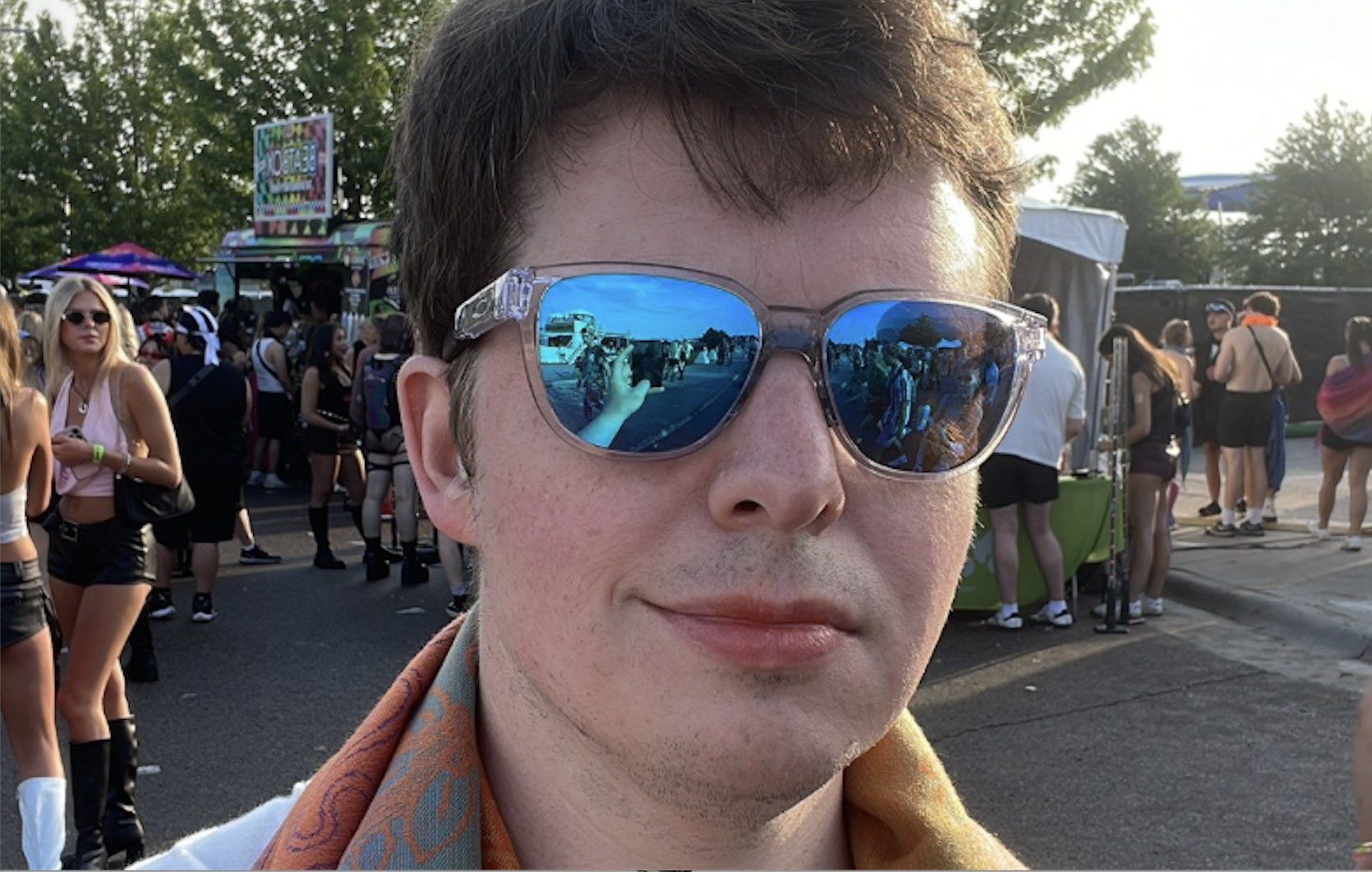
The most unlikely folk hero of Minneapolis’s anti-ICE fight is a man who was, until about 10 minutes ago, a universal piñata. I’m speaking of Will Stancil, a Minneapolis civil-rights lawyer, failed statehouse candidate, and D-list social-media celeb, perhaps best known for his singular ability to attract mockery from just about everyone. Indeed, one of the only things that the far Left and far Right could once agree on was their shared disdain for the annoyingly shrill center-Left talking head.
Yet the bookish 40-year-old with a reedy voice has undergone a surreal, gritty glow-up. Stancil, who didn’t respond to my interview requests, is now the bespectacled public face the anti-ICE resistance, with his visibility second only to the movement’s two martyrs: Renee Good and Alex Pretti. His transformation comes amid the broader backlash against President Trump’s Operation Metro Surge, especially following the killing of Good on Jan. 7.
In response, Stancil didn’t just tweet through it (though he’s doing that, too). He got inside his battered 2011 Honda Fit with an iffy transmission and took action. Stancil and his army of — as he describes it — pissed-off baristas and suburban moms are speeding through south Minneapolis neighborhoods, bird-dogging federal agents, documenting raids, confronting ICE on the streets with whistles and curses to interfere with their daily snatchings of immigrants (and sometimes citizens).
He’s been tear-gassed, he says, every other day. He’s also narrating confrontations in real time, coordinating responses, and making melodramatic statements on the liberal social-media network Bluesky as if a field general rallying his troops. “Minneapolis is winning. The tide is shifting. Can you feel it?” he posted this week after the Trump administration withdrew Border Patrol chief Greg Bovino. “It’s their Gettysburg. The first Minnesota is charging down the hill, bayonets drawn. This is their furthest advance and they will go no further. WE ARE GOING TO WIN.”
Stancil is hardly the second coming of Ulysses S. Grant. Even so, online progressives are eating up this real-life Revenge of the Nerds. Social media is filled with half-ironic tributes casting Stancil as a conquering hero. “Hearing word that Trump has abdicated and handed power to Will Stancil,” one post joked. “The Stancilphate is here, inshallah.” Another dubbed the moment “the siege of Stancilgrad.”
Other images circulated of Stancil photoshopped into Braveheart, sword raised, or likened to other conquering historical figures. “The Revolution Will Be Stanciled,” said a caption accompanying a photo of the nebbish lawyer, looking defiant, toward a line of armored ICE agents. Even some of the liberal media are caught up in the mythmaking. Atlantic staff writer Tyler Austin Harper mused that Bovino’s withdrawal symbolized “Total Stancil Victory.”
This kind of hero-making — arched eyebrow or not — isn’t new. But what makes Stancil’s case distinctive is the stark contrast with his recent past, when he existed primarily as an object of ridicule and algorithmic abuse. “Most-harassed man in the history of Twitter might be the first line of my obituary,” he told Slate.
Earlier in the decade, Stancil’s online persona read as exactly the kind of performative woke liberal male ally holding “The Future is Female” tote bags and Ibram X. Kendi books that are now a punchline among college-age Gen-Zers. He was a relative nobody, a research fellow at the University of Minnesota specializing in housing policy, civil rights, and metropolitan planning. He first became one of Politics Twitter’s “power users” during the 2020 presidential campaign, when he mocked Trump and relentlessly hyped Elizabeth Warren’s doomed bid for the Democratic nomination. He assailed both the socialist Left and the MAGA Right with equal fervor, and wrote exhausting threads in defense of wokeness.
In December 2023, Stancil briefly became unavoidable online after hyperbolically arguing that the US economy under then-President Joe Biden was strong and that claims to the contrary were not merely mistaken, but dishonest. The insistence, delivered with his usual maximalist confidence, triggered a familiar dogpile from both directions.
“For the crime of pointing out the economy looks very strong,” he posted, “I was already getting pummeled by cosplay Twitter communists…. I’m now being swarmed by the right-wing anti-vax types…. This must be how Poland felt in 1939.” It’s the kind of comment that earned him a reputation as a know-it-all who knew very little. “It’s delusional, but it also betrays a staggering level of Messianic arrogance and condescension towards all the people who he thinks he’s manipulating,” Left-wing commentator Carl Beijer told New York magazine.
In Minnesota’s 2024 Democratic-Farmer-Labor primary for House District 61A, that persona followed him into the real world. He was defeated by Katie Jones, an engineer and community figure who went on to win the general election. Stancil blamed the Minneapolis far Left for his loss.
“If the state calls you an enemy of the state for pursuing ICE vehicles in a broke-ass Honda Fit, you’re no longer a weenie; you’re an outlaw.”
Then came Grok. Last July, Stancil made national news for being the object of grotesque hallucinations of Elon Musk’s chatbot Grok after an update that dialed back “woke filters.” Prodded by Right-wing trolls, the AI began generating graphic, violent rape fantasies specifically targeting Stancil, even offering step-by-step instructions on how to break into his home. It was a moment of peak-derangement: a man so loathed that even an entire artificial network wanted to join in. Stancil responded by threatening legal action and publicly criticizing the platform, pointing to tech companies’ failure to protect individuals from dehumanizing algorithmic behavior.
While the AI was busy hallucinating his assault, the human side of the internet was busy turning him into a literal cartoon. The Will Stancil Show, an AI-assisted animated series and its catchy theme song became an earworm for the irony-poisoned Right. It portrayed him as an overconfident liberal trying and failing to solve problems in a stereotyped black neighborhood with little more than a graduate degree in African-American studies and some free housing vouchers. Some commentators described the series as a glimpse of a racist, AI-generated future of entertainment, while Stancil remarked that it was “extremely surreal to become a main character of the online Nazi phantasmagoria.”
At this point, for all intents and purposes, Stancil seemed more meme than man, a guy who seemingly existed only to be swarmed online by people with hammer-and-sickle emojis and others with Roman-statue avatars. Viewed against this backdrop, the evolution of his image in 2026 is striking. The traits that once made him an object of derision — his earnestness, his verbosity, his high-frequency posting — now make him beloved in a moment that prizes visibility and the documentation of ICE in action.
Many on the liberal left are reconsidering their hatred of him. “Did not have ‘become a huge fan of Will Stancil’ on my bingo card, but gotta give the man credit,” noted Georgia State law professor Anthony Michael Kreis. “He’s stepped up for his neighbors when it mattered most.” Not all Leftist types are convinced, however. Stancil remarked this week that it “sometimes feels like a little bit of a race to see if BORTAC (Border Patrol Tactical Unit) kills me first, or revolutionary Leftists.”
Ironically, some of Stancil’s outsized reputation flows from the Right. Conservative media and Trump administration officials have been eager to depict anti-ICE observers and neighborhood defenders as not just bothersome interlopers, but existential threats, even domestic terrorists. One Right-winger on X even compared him to Leon Trotsky and the ancient Persian emperor Xerxes (“commanders who achieved victory by throwing waves of their own infantry to be slaughtered until the enemy’s will finally broke. Minneapolis was a great moment in the history of human wave attacks.”) That inflationary rhetoric, meant to scaremonger, has paradoxically burnished figures like Stancil into symbols of mainstream resistance. If the state calls you an enemy of the state for pursuing ICE vehicles in a broke-ass Honda Fit, you’re no longer a weenie; you’re an outlaw.
If last summer’s resistance movements in Seattle and Chicago and other blue cities had furries and men in frog costumes as their mascots, Will Stancil fills that role for Minneapolis: a slightly ridiculous figure whose very unseriousness mocks the idea of menace. In an irony-poisoned, hyper-online age, his dissonance — looking like someone who used to be stuffed into a school locker, not a guerilla fighter — becomes the point, and ultimately the weapon. To paraphrase The Dark Knight, he’s not the hero that Minneapolis deserves, but the one it needs.