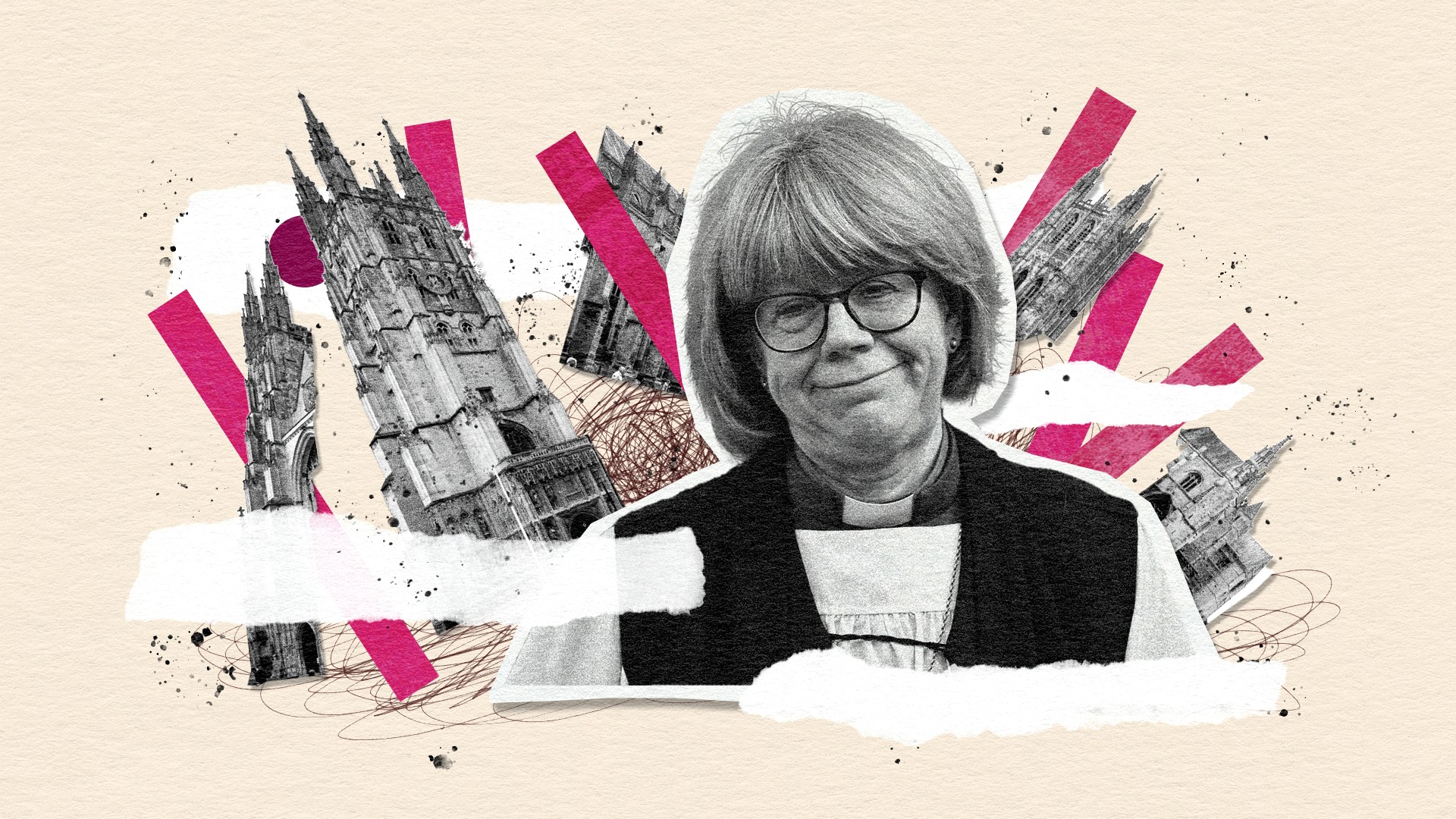
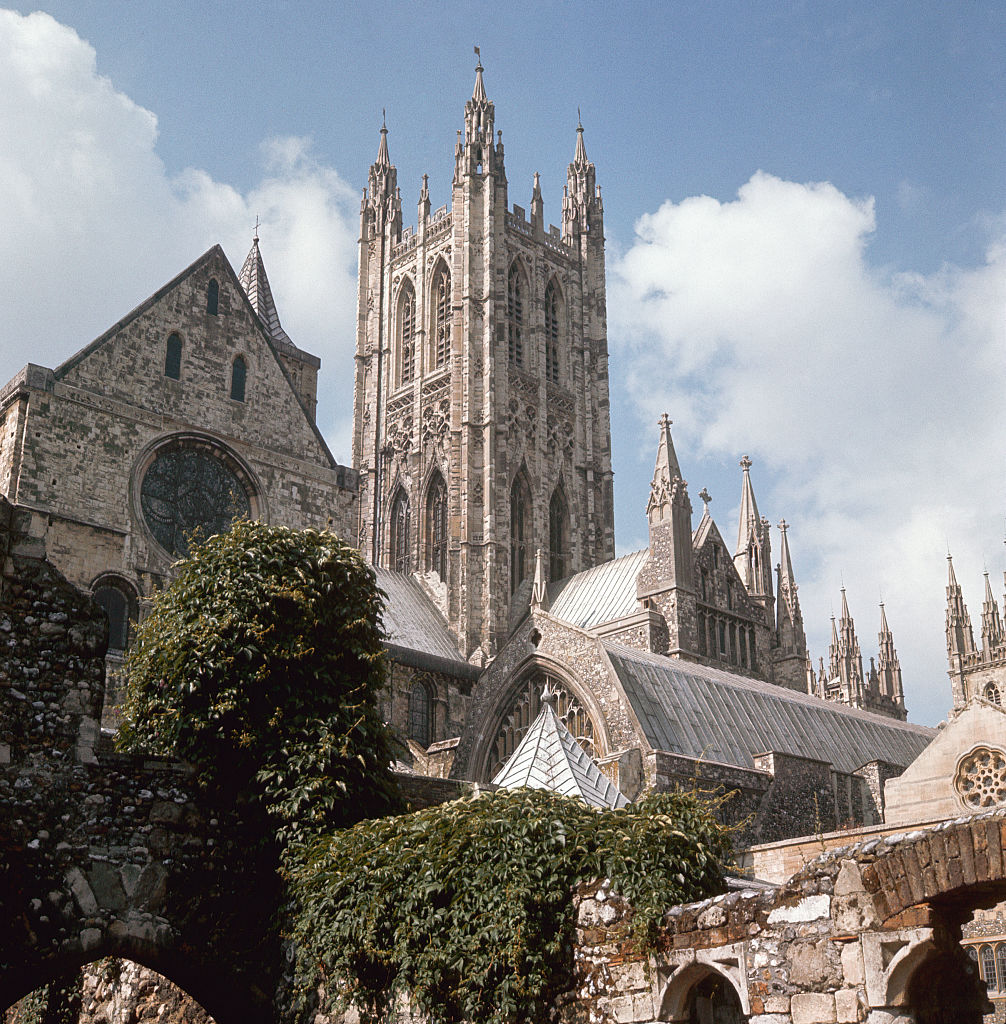
The cobbled streets are practically silent as the sun rises over Canterbury. A garbage truck reversing nearby is my only companion as I slip through the 500-year-old Christ Church Gate and onto the cathedral precinct. The building’s main entrance, through which thousands of tourists will later stream, is shut at this early hour. Instead, I and the handful of other early-bird worshipers must find a small, unmarked wooden door round the corner, before picking our way through the vast medieval cathedral to the Chapel of Our Lady Martyrdom.
There is a hushed silence as a dozen of us, bleary-eyed, trickle in for Matins. It is 7:30am on a Wednesday. Few seem to pay much heed to the vaulted stone ceiling above, the stained-glass windows, the intricately carved memorials and paintings on every wall. The service begins almost imperceptibly, as a black-cassocked priest, sitting quietly in the back row, starts to lead his tiny congregation through the prayer book. For the next 20 minutes, we murmur liturgies and psalms, and listen to Bible readings and canticles. At the end of each section, we recite in unison: “Glory to the Father and to the Son and to the Holy Spirit; as it was in the beginning, is now and shall be for ever. Amen.” And then it’s over, and we file back through the cathedral and out into the brightening morning, a single bell pealing high above us.
That afternoon, David Monteith, the dean of Canterbury and one of three priests to join the worshipers during Matins, tells me it was an unremarkably normal service of morning prayer, a service which has taken place every day at Canterbury Cathedral for nearly 1,400 years. This daily rhythm, which winds through a lunchtime communion and ends with choral evensong in the evening, is what Monteith calls the “heartbeat” of the institution. It might seem quaint, even banal, reading out the same words, day after day, to much the same tiny group of people. But for Monteith, it’s precisely this “tried and tested means of prayer” that “sustains you for the long haul”.
We may soon discover if he’s right. For today, the cathedral’s stone-flagged floors will go from empty to heaving, as thousands attend the enthronement of Sarah Mullally as the 106th Archbishop of Canterbury. It’s a historic moment for the C of E, which for the first time ever installs a woman as its chief priest. Yet more than her sex, Mullally will ultimately be judged on whether she can steady the listing ship that is her Church. She takes over an institution reeling from years of abuse scandals and dangerously low on trust from the nation it claims to serve. And even if she can begin to turn things around, it will count for little if she cannot also find a way to resolve the bitter internal conflict between liberal and conservative factions, still at each other’s throats over gay marriage. And then there’s perhaps the biggest question of all: can Mullally find a way for this ancient institution to survive in modern, secular Britain, all without losing its soul?
If all eyes are today on Mullally, Canterbury owes its fame to another woman. Back in the 6th century, a Christian Frankish princess called Bertha married the pagan King Æthelberht of Kent. When, 17 years later, the Pope asked Augustine to re-Christianize the English, the monk headed straight for Bertha as one of the few known believers in this godless land. Augustine ended up founding the cathedral and becoming the first ever Archbishop of Canterbury, in a line which now stretches all the way to Mullally. Bertha’s own personal chapel still sits just beyond the ancient city walls, and indeed remains the oldest active church anywhere in the English-speaking world.
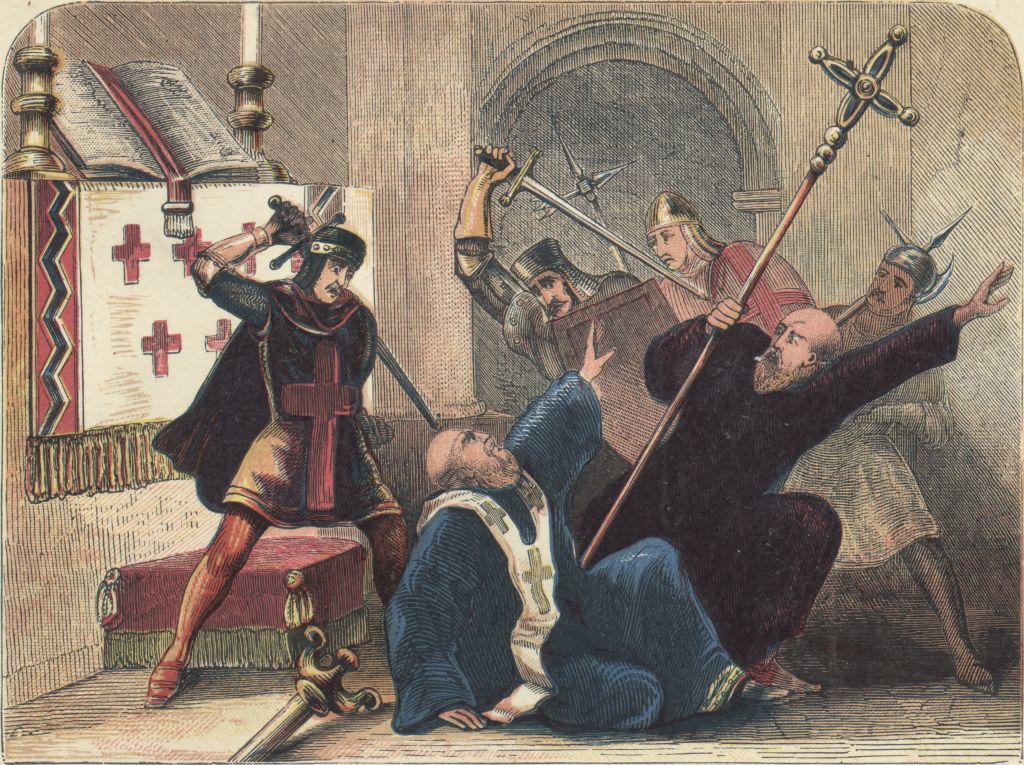
Canterbury’s close association with the Church has not always been easy. In 1647, townsfolk revolted against the Puritanical abolition of Christmas and attempts to confiscate their much-loved festive treats, storming the cathedral in what are now called the Plum Pudding Riots. But this was nothing compared to the turmoil of 1170, when four knights hacked Thomas Becket, one of Mullally’s more ill-fated predecessors, to death with their swords.
Mullally will no doubt be hoping for a less tumultuous reign. But the former chief nurse is taking over the C of E at a profoundly challenging moment. Perhaps the most urgent item in her in-tray is safeguarding. Wracked by never-ending abuse scandals, England’s national church has lost the trust of the nation. At the depths of the crisis last year, after Mullally’s predecessor Justin Welby was forced to step down in disgrace, accused of failing to report an abuser, a poll revealed just one in four people had a favorable view of the Church. In the 18 months since he left, meanwhile, there has been a cascade of new revelations, notably when the Bishop of Liverpool was accused of sexual harassment by one of his peers.
Mullally herself has skeletons in her closet. Some abuse survivors distrust her because during her time as Bishop of London, there was a case which saw a retired (and blameless) vicar kill himself during a botched safeguarding inquiry. Even since she was named as Welby’s successor in October, she’s faced fresh complaints about her handling of separate abuse allegations. “I can’t pretend that those shadows aren’t real and aren’t pressing,” Monteith admits. He himself has been called a “paedo” while walking down Canterbury High Street in clerical garb.
All the same, he sometimes feels as if the Church is “carrying the can” for all of society’s failures. The Bishop of Dover, who acts as the Archbishop of Canterbury’s deputy running the Diocese of Canterbury, says much the same. Sitting in her office nestled up against the cathedral, Rose Hudson-Wilkin accepts that the “furor” around abuse is reasonable. Even so, she fears it wrongly gives the impression that today’s C of E is mired in corruption and cover-up. Instead, she argues, these old cases are emerging precisely because the Church is getting its act together.
Perhaps. But I can’t help but feel like Monteith and Hudson-Wilkin both seem oddly relaxed about the crisis their Church has just weathered. To be sure, they represent a view common within the C of E establishment: that this is primarily a PR problem, and that a handful of high-profile failures don’t speak to a deeper issue. And it’s also true, of course, that crimes have been uncovered everywhere from the BBC to the NHS. But it obviously angers the public much more when the Church — supposedly a paragon of morality and involved in the education of millions of children — is revealed to be as riddled with abusers as anywhere else.
As for what’s next, Hudson-Wilkin parades a number of improvements, notably outsourcing safeguarding to an independent charity. That’ll suit Mullally just fine. A dyed-in-the-wool bureaucrat — long years in the NHS guarantee that — her response to the abuse crisis will be administrative rather than charismatic. Instead of grand gestures, she’ll likely get stuck in with regulation, seeing salvation for the Church in enforcing best practice and ever more bureaucracy. The problem, though, is that the C of E is drowning in procedure already, and all the red tape in the world does little to stop flesh-and-blood humans from flouting the rules. If, then, Mullally can reclaim the bedside manner of her nursing days, giving the Church a softer public image than the sometimes-abrasive Old Etonian Welby, it’s distinctively unclear if managerialism can bury the abuse scandal once and for all.
Certainly, managerialism seems hopeless for the other big item on Mullally’s agenda: the simmering tensions over gay blessings. First announced in 2023, after years of agonizing consultation and spearheaded by Mullally herself, these services have sparked a civil war within the Church. Despite her evangelical background, Mullally has carved out a cautiously progressive approach, pushing for the blessings but refusing to chart a path to full-fat gay marriage. Conservatives have fought a ferocious rearguard action against these so-called “Prayers of Love and Faith”, succeeding in limiting much of the reforms. Initially invigorated by the reforms, their liberal opponents have themselves become disillusioned at the lack of progress, as embittered against their bishops as their traditionalist opponents.
The hierarchy tried to draw a line under the conflict at the synod in February, formally ending the 9-year project. But unwilling to entirely abandon the idea of gay marriage in church, the bishops immediately launched a new working group on the issue. Ever the consensual team player, Mullally won’t pursue anything she fears could lead to further splits, particularly when her bishops are almost as divided as the rest of the Church. It’s more likely, then, that the Church will head for the safety of the long grass, delaying a final decision on gay marriage still further. But this essentially bureaucratic approach again comes with risks. Liberal congregations — including Canterbury Cathedral, now led by its second dean in a row to openly live with their civil partner — will gradually feel their way towards something more accommodating. Yet all the while, conservatives will continue to drift the other way, even if a formal schism currently seems unlikely.
Yet if Mullally’s cautious liberalism just about holds the center in England itself, she’s also the unofficial head of the global Anglican Communion, a family of 42 independent Churches spanning a huge spectrum of convictions. Canterbury itself may be relaxed about gay relationships, but there are Anglican Churches in Africa which vociferously back the criminalization of homosexuality; in 2023 Welby chastised his Ugandan counterpart for backing a bill that imposed the death penalty on gay people. Further complicating the uneasy post-colonial position of the Archbishop of Canterbury in the Communion is the fact that it’s these same deeply conservative Churches in Africa and Asia which are growing fastest — while their liberal Anglican cousins in the West dwindle away. One renegade movement called Gafcon has already denounced Mullally as an unacceptably liberal Archbishop, pledging to boycott official Anglican institutions in protest (though they recently scrapped plans to anoint one of their own as a kind of Anti-Mullally).
Besides, even if Mullally can somehow tempt Gafcon back into the fold, it will count for little if she can’t keep the show on the road closer to home. What, to be blunt, is the use of being “first among equals” in global Anglicanism — if there are no Anglicans left in England? In this, the final issue for the new archbishop to grapple with as she settles into Lambeth Palace is surely the most existential. For generations, the C of E has died before our eyes. Church attendance in 1980 was about 1.5 million. Despite significant population growth, last year it had more than halved to 700,000, with the decline only accelerating during Covid.
“What is the use of being first among equals in global Anglicanism — if there are no Anglicans left in England?”
Fewer and fewer bums on pews means less money in the collection plate, crumbling buildings going unfixed, and less to pass on to regional dioceses (most of which are now in financial crisis and running up multi-million pound deficits). There are also fewer clergy than ever before, forcing bishops to spread their vicars thinner and thinner: most now look after at least two or three parishes at once. In rural areas, it’s not uncommon for as many as 10 churches to all share the same stressed and overworked cleric.
In the face of this crisis, the church is trying to reinvent itself for the 21st century, and find new ways of bringing the English back to their national religion. The Diocese of Canterbury, like most, has an ambitious target to start 200 new types of church by 2030, one for each of their traditional parishes.
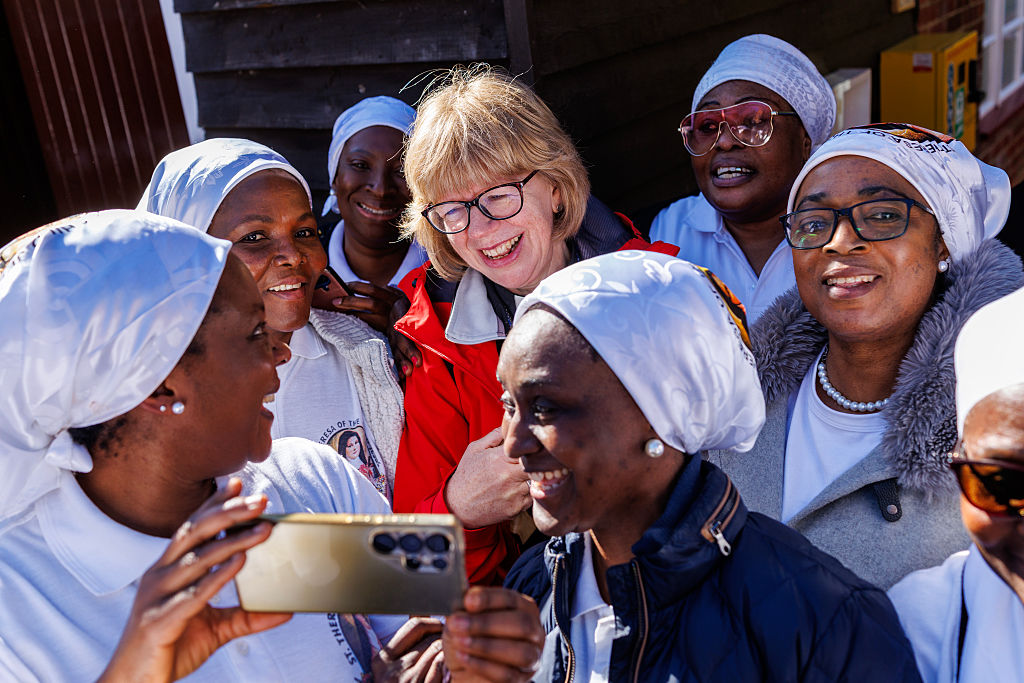
Less than a mile north of the cathedral’s Gothic arches is a shabby and unremarkable place called All Saints. Once the garrison church of the local army barracks, it’s an unpretentious and tatty building, full of peeling paint and flanked by a scrubby car park and blocks of postwar council flats. This is Ignite, which runs most Wednesday afternoons both in Canterbury and five other locations across Kent. Plasticky folding tables have been laid out across All Saints’ faded carpet, and about 30 locals are tucking into baked potatoes smothered in chili con carne and cheese.
It couldn’t feel further from the reverent glories of Matins in Our Lady Martyrdom. And as I sit down for lunch, it becomes clear the people at Ignite are not your usual C of E types either. There are immigrants and the elderly, the disabled and people on benefits. Some are confident Christians, but others are unsure; one man describes himself to me as a “pragmatic spiritualist” (though the vicar later says he’s in fact Ignite’s most faithful attendee). Whatever they are, they very much are not plugged into the agonies of the institution this meeting is technically part of: one person on my table hadn’t even heard there was going to be a female Archbishop of Canterbury.
The service, such as it is, is a far cry from Anglicanism’s prayer book traditions too. The vicar, Patrick Ellisdon, dressed in a jumper and jeans, begins with some ice-breaker games. The heart of today’s event is a five-minute reflection on how Desmond Doss, the pacifist war hero of the film Hacksaw Ridge, tried to live for God. It ends with a contemporary soft rock worship song, with lyrics projected onto a screen: “I fall on my knees and I fight like a warrior, I call on the name of the One who is conqueror…”
After the service, Ellisdon explains that Ignite — which he pioneered with his wife at their previous ultra-deprived church in Margate — was designed to appeal to those on the margins with no religious background: unlike the overwhelmingly middle-class parishes of the C of E. He calls it “drip-feed evangelism”, giving hints of Christianity in accessible language and style for people who would never cross the threshold of an ordinary Sunday service. It may seem like another world to the worship up the road at the cathedral, but it has been backed with a £1 million grant from the C of E’s national endowment fund, allowing the Diocese of Canterbury to hire a handful of staff to roll Ignite out across Kent.
Hudson-Wilkin is unapologetic about her diocese’s hopes to transform the face of Anglicanism for the 21st century. But the main challenge, she suggests, is not about finding the right evangelistic strategy: but rather reinspiring hope and enthusiasm. Far too many churchgoers cringe and hide their faith out of embarrassment, lacking confidence in the gospel they’re supposed to be proclaiming. “If we don’t sing the song of joy and peace and love and forgiveness, then we may as well pack our bags up and hang our dog collars up.” Her people are “holding up and holding on”. But, Hudson-Wilkin says, it’s time to go on the offensive again.
More than that, Hudson-Wilkin says she can spot signs of a turnaround. This is the so-called “quiet revival”, after a 2025 survey by the Bible Society claimed that churchgoing was rocketing among the young. Albeit in a different way to All Saints, even the venerable cathedral has been trying to tap into this trend, offering silent discos and graffiti installations to tempt younger folk. But whether any of this actually works is another question entirely. A slew of social scientists have expressed doubt with the Bible Society’s figures, noting that more rigorous surveys have shown only a continued decline in churchgoing, including among the supposedly faith-curious young. And there is more than a hint of the cringe-inducing “trendy vicar” trope here too — are Gen Zs really going to be drawn back to Christ through graffiti and discos?
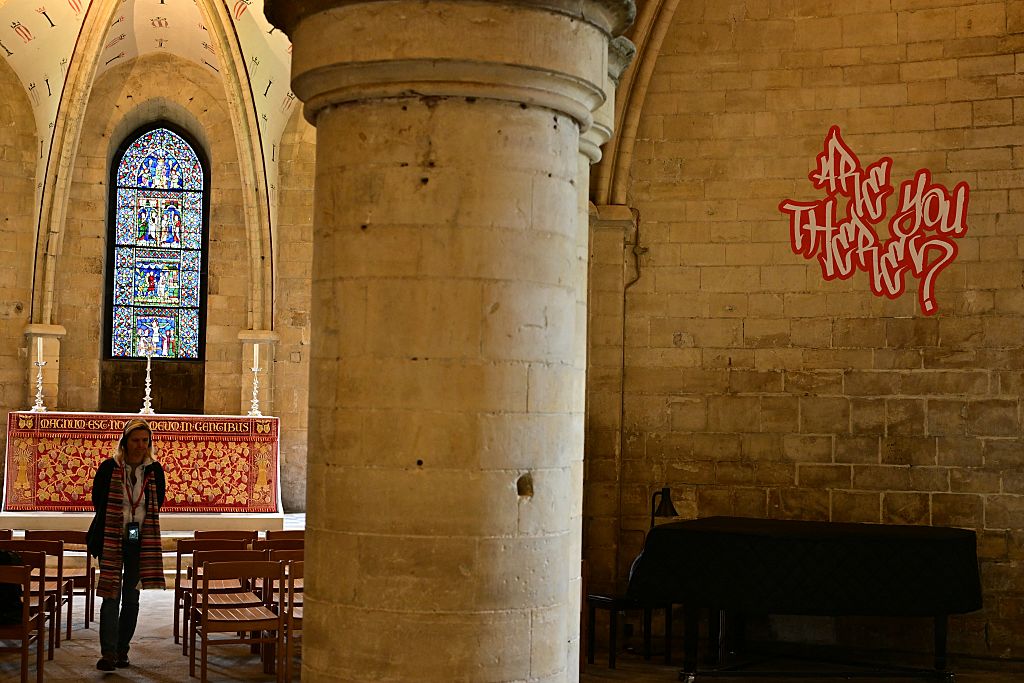
Some think the Church shouldn’t even try, and instead more keenly look backwards. “The good thing about a place like this,” says Monteith, gesturing through his office windows to the hulking 1,400-year-old cathedral next door, “is that I’m reminded that all things pass.” He believes both old and new are attractive, pointing to hundreds attending a Latin mass he lately put on for Ash Wednesday. Even Gen Z, Monteith says, finds the “solemnity and gravity” of traditional church worship appealing. Relatively speaking, cathedrals seem to thrive because they invest in high-quality music, liturgy and preaching, mixing transcendence with a down-to-earth cheeriness.
Yet though it’s true that cathedrals have escaped the collapse of country parish churches — we’re still not talking about large numbers. The total weekly attendance from Exeter to Ely only comes in at roughly 17,000. And though it’s true that a handful of Anglo-Catholic churches have found success in tradition, this feels more like the exception that proves the rule. The fact is that most twenty-somethings are spending Sunday evenings scrolling TikTok in their overpriced flatshares, not at choral evensong.
What, then, of the future? Rosie Duffield, the independent local MP and an occasional worshiper at Monteith’s cathedral, says it would be a tragedy if the C of E withered away to nothing. The cathedral isn’t just a heritage site for Canterbury — it’s “our beating heart and our soul”. “Just the idea that it would turn into a museum would rip the soul out of what we are.” Besides, Duffield argues, the wider church is still a bulwark of stability and moral guidance in a confused and volatile world, harking back to a now famous sermon Welby gave from the cathedral’s pulpit in 2022, decrying proposals to deport asylum seekers to Rwanda as un-Christian.
Yet again, though, there are risks here for the Church here, as it tries to project relevance and weigh in on contemporary politics. For every Duffield delighted by Welby’s condemnation of the Rwanda scheme, there was a Conservative MP castigating the prelate’s intervention as symptomatic of a Church gone woke. Four years on, the country is even more divided, as Reform top the polls and the Greens win by-elections.
Debate over how England’s established church should respond to the recent surge of Christian nationalism has also reached East Kent. Monteith says that nearby coastal towns Whitstable, Sheerness and Margate are full of those sympathetic to Tommy Robinson’s newly Christianized far-Right. The dean, for his part, is open to building bridges rather than dismissing it all as racist bigotry. But Hudson-Wilkin — the first black woman to become a bishop in the C of E — scoffs at what she calls the “disingenuousness” of activists waving crosses while protesting Islam. The Church, she insists, isn’t dying because of Muslim immigration. It’s dying of neglect because white Britons who claim to be believers are staying at home. This is probably true, but also the kind of hectoring unlikely to nudge apathetic agnostics off their sofas and into church. The constant tension facing today’s genteel and overwhelmingly middle-class C of E is that the liberal centrism its current worshipers appreciate — and which Mullally herself epitomizes — is precisely what puts off an increasing number of would-be parishioners.
And on the Matins go. For 1,400 years Anglicans have been intoning that same liturgy: “Glory to the Father and to the Son and to the Holy Spirit; as it was in the beginning, is now and shall be for ever.” But can this really go on forever? Will there still be people murmuring these ancient words inside Canterbury Cathedral, let alone All Saints down the road, on into the next century? These are questions that would daunt even a Becket or an Augustine — let alone a Mullally.