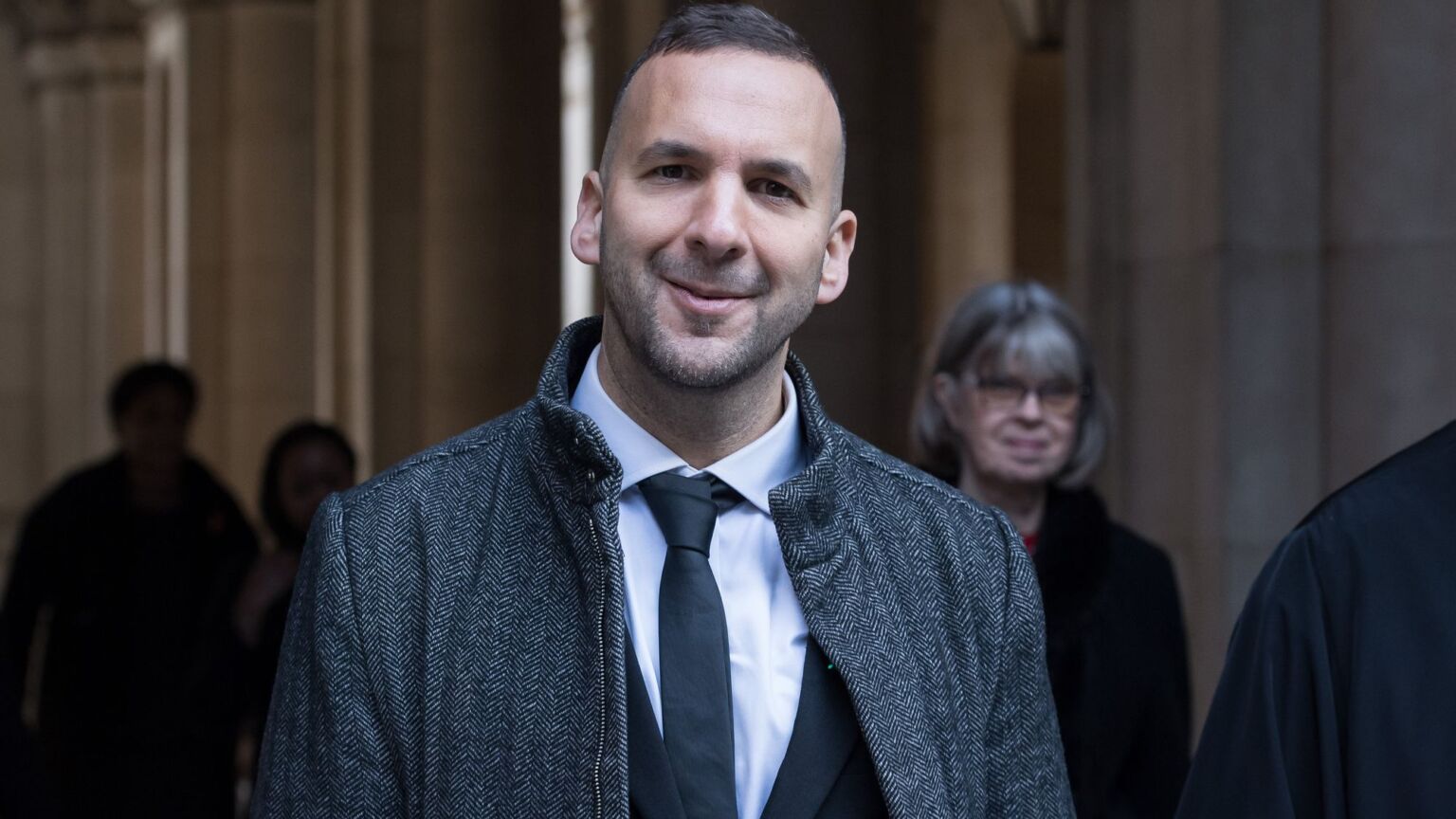
Zack Polanski, Green Party leader and breast-enlarger extraordinaire, could have used his recent appearance on Question Time to talk seriously about social care. After all, it is a sector in a dire situation, staffed by people required to work gruelling shifts to prevent our entire health system from collapsing. Yet instead of addressing these issues, Polanski gave a strange and offensive lecture about how Britain should be grateful to migrant workers willing to come here and do the jobs we Brits don’t want to do, like wiping people’s bums.
There it was, the whole profession flattened, once again, by a punchline about bodily functions. As a carer I can state that, yes, wiping bums is a part of the job. However, it is a tiny fraction of what we actually do.
Carers provide friendship, emotional support, dignity, love and safety. We are a shoulder to cry on and sometimes – literally – a punching bag. We entertain, we reassure, we show endless compassion and empathy. We stand in for family when families can’t be there. In many ways, we mother. I’ve watched elderly dementia residents cry out for their mothers, wandering empty corridors in hope of a face they’ll never see again. And because those mothers are long gone, we step in and become that comfort for them.
Polanski didn’t just repeat a tired stereotype. He revealed something uglier: a belief that this kind of work is beneath him, and by extension beneath anyone like him – an interesting position for a man who considers himself to be ‘kind’ and morally ‘progressive’.
The problem wasn’t just the comment, it was also what sits underneath it. Praising migrants for doing the work ‘we’ don’t want to do isn’t inclusive or compassionate. He was effectively demanding the expansion of a foreign underclass – an underclass specifically recruited to do some of the most emotionally and physically demanding work in the country: caring for our elderly, disabled, chronically ill and vulnerable.
Behind Polanski’s supposedly ‘inclusive’ rhetoric lies a brutally simple economic truth. If you tell the world that Britain will always welcome workers to fill care roles at the lowest wages, then you guarantee that care wages will remain low. You suppress the bargaining power of the people currently doing the job, who are disproportionately working-class women. You ensure that British carers will struggle to demand better pay, flexible hours, or safer staffing ratios, because the labour supply can always be topped up from elsewhere.
And make no mistake: in the past few years, there has been a recruitment surge like nothing the sector has experienced before. After the UK government added ‘care workers’ and ‘home carers’ to the skilled-worker shortage list in 2022, the numbers skyrocketed. By the year ending March 2023, roughly 57,700 migrant care workers were granted visas.
These extraordinary numbers don’t exist in a vacuum. The new migrants arrived precisely as the care sector was bleeding staff, not just through the usual churn, but also because of pandemic burnout, low pay and the vaccine mandate that forced thousands out of their jobs if they did not comply.
Many of these migrant workers have become the backbone of Britain’s night shifts. In my own experience, the night shift is staffed predominantly by migrant workers taking on the hardest hours in the building. Nightfall changes the entire atmosphere of a care home: anxiety increases, falls increase and medical vigilance becomes continuous.
These shifts come with significant health risks: sleep disruption, blood-pressure instability and reduced life expectancy. In any fair system, night work would be compensated with a meaningful pay increase. But in British social care, it isn’t. This is not because the work doesn’t deserve it – it is because we’ve created a labour market where someone, somewhere, will accept the role at its current pay.
That is the real economic effect of the system Polanski praises. It is not generosity. It is not compassion. It is certainly not ‘left wing’. Instead, it is wage suppression under the banner of progressive multiculturalism. Migrant workers also deserve better than to be treated as nothing more than a limitless pool of cheap, replaceable labour.
What Polanski fails to grasp, or doesn’t care enough to understand, is the profound responsibilities that are embedded in care work. We operate hoists, administer medication, observe swallowing and choking risks, and must recognise the early signs of sepsis, stroke, delirium or urinary tract infections. Every shift is a chain of decisions that can determine whether a person lives or dies. There is much riding on our actions.
Polanski claims to uniquely understand the plight of low-paid shiftworkers in the British economy. He might understand them, but he clearly doesn’t respect them. Respect would mean fighting for the wages, staffing levels, training and recognition the job demands. Respect is not using migrants as a buffer to avoid improving domestic conditions. Respect is acknowledging that social care is a skilled, professional role and that the people who perform it aren’t beneath anyone, least of all a man who once claimed he could enlarge breasts with his mind. Apparently, that counts as ‘dignified’ labour, while personal care does not?
If Britain wants to fix the care crisis, it must reject the politics of faux gratitude and stop relying on cheap foreign labour. It must build a system that values carers and it must start by listening to those of us who actually do such vital, valuable and difficult work. Above all, it must ignore the offensive and ill-informed ramblings of Zack Polanski.
Jordan Tyldesley is a writer. Follow her on Twitter: @pippybing.