Late Tuesday evening, April 7, just ahead of President Donald Trump’s deadline for Iran to re-open the Strait of Hormuz, the framework of a deal was agreed. With Pakistan working as a go-between, Washington and Tehran have both publicly acknowledged that they are working toward a ten-point plan that includes the cessation of hostilities and resumption of passage through the contentious waterway. The questions dominating the media divide this morning are who blinked first, and is the war technically over?
Big Threats
“A whole civilization will die tonight,” Trump warned ahead of the Tuesday deadline. It’s the type of rhetoric that is usually reserved for less-than-friendly nations, for example, Iran. After all, Tehran has spent decades calling the US “the Great Satan” and insisting that both America and Israel need to be destroyed. This makes the domestic pushback to such language somewhat peculiar.

Discussions of invoking the 25th Amendment to remove Trump from office were rife in DC. And yet, those who believe the president’s words are so dangerous that he needs to be thrown to the curb do not seem to apply the same standard to a rogue nation whose greatest export is terrorism. However, it seems that harsh language – and not to mention a couple of underreported facts – `brought the Iranian leadership to the table at the 11th hour.
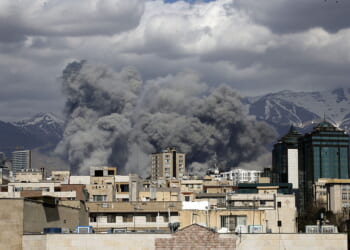
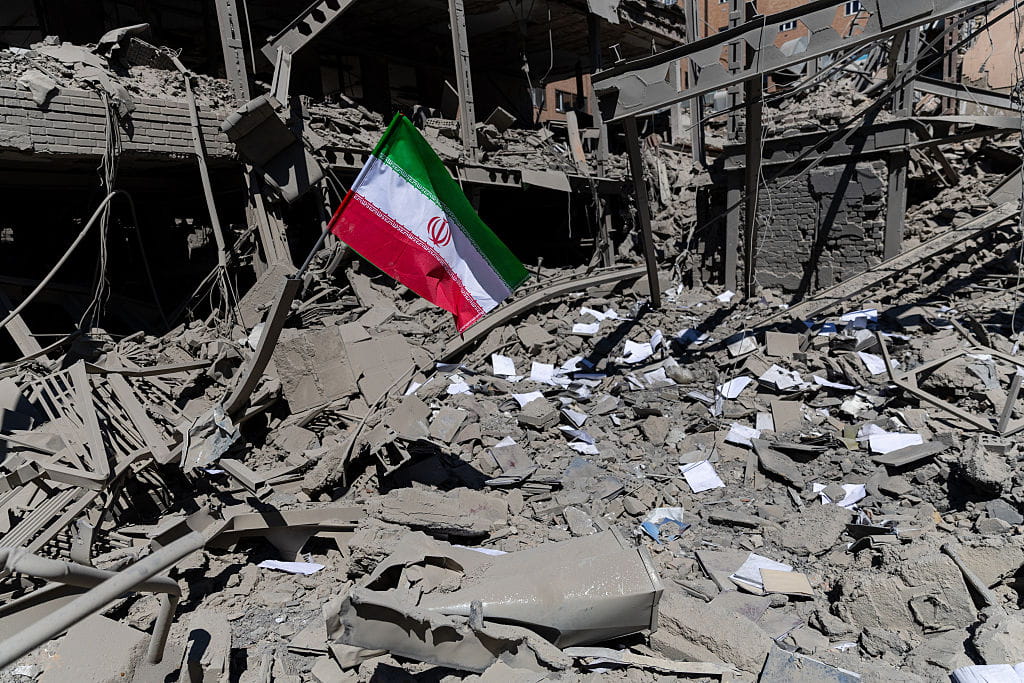
Decisions to opt for a peaceful resolution do not happen in a vacuum. Ahead of the promised destruction, weapons-laden B-52 bombers took off from Britain and were in the air. And then, of course, there were the early Tuesday strikes on Kharg Island – a key element of Iran’s oil capacity. So what is in the deal that pulled both nations back from the brink?
Open to Interpretation…
The ten-point plan – which neither side believes is currently written in stone – apparently contains conditions such as a cessation of military hostilities, the re-opening of the Strait of Hormuz, Iranian control of the strait, and several other issues. Notably, different versions of the list have been released by Tehran, suggesting the Iranian leadership is looking for a domestic propaganda win, while perhaps being open to a watered-down version in international eyes.
According to British broadsheet The Guardian, “In the version released in Farsi, Iran also included the phrase ‘acceptance of enrichment’ for its nuclear program. But for reasons that remain unclear, that phrase was missing in English versions shared by Iranian diplomats to journalists.”
Trump hailed the prospective deal as the beginning of a Golden Age for Iran. He posted on TruthSocial:
“A big day for World Peace! Iran wants it to happen, they’ve had enough! Likewise, so has everyone else! The United States of America will be helping with the traffic buildup in the Strait of Hormuz. There will be lots of positive action! Big money will be made. Iran can start the reconstruction process. We’ll be loading up with supplies of all kinds, and just ‘hangin’ around’ in order to make sure that everything goes well. I feel confident that it will. Just like we are experiencing in the U.S., this could be the Golden Age of the Middle East!!! President DONALD J. TRUMP”
The statement reinforces his core belief that every country could be “great” if its people get to make money. And that’s not an unreasonable position to take. After all, as free markets brought millions out of poverty worldwide, nations became more stable. But will this really be Iran’s Golden Age? Or is the regime just trying to buy time while proving that it can leverage the global economy if tested?
The Iran Dilemma
Fourth Estate coverage of the war has been distinctly partisan, not just in the US, but worldwide. Whether it’s lamenting the “tragic loss” of the “kindly” Ayatollah, or declaring that Iran needs to be utterly destroyed to create a more peaceful world, the reactions and commentary have ranged from the delusional to the desperate. But some basic realities exist.
Iran no longer has a functioning navy or air force, its munitions are depleted, and it has been shown to be unable to counter US dominance of the skies, nor prevent a dedicated mission to rescue a downed American crewman in its own borders. Conversely, America now realizes that it is essentially on its own when it comes to relying on once-lauded allies.
International leaders have either openly stated they do not support the war, and in some cases, refused to allow military operations to originate from their lands (despite having US bases for their own protection). NATO has been hostile to America’s efforts to halt the world’s largest sponsor of terrorism.
This war – currently on pause – should be an eye-opener for all involved. America now faces the stark truth that, as the world’s policeman, it is on its own. And Iran, for all its bellicose rhetoric and talk of its “mighty” and “powerful” military, has been revealed as a paper tiger.