Examples in the complaint, filed with the EEOC, include union members laughing and clapping at the mention of an 82-year-old Jewish woman killed in a terror attack
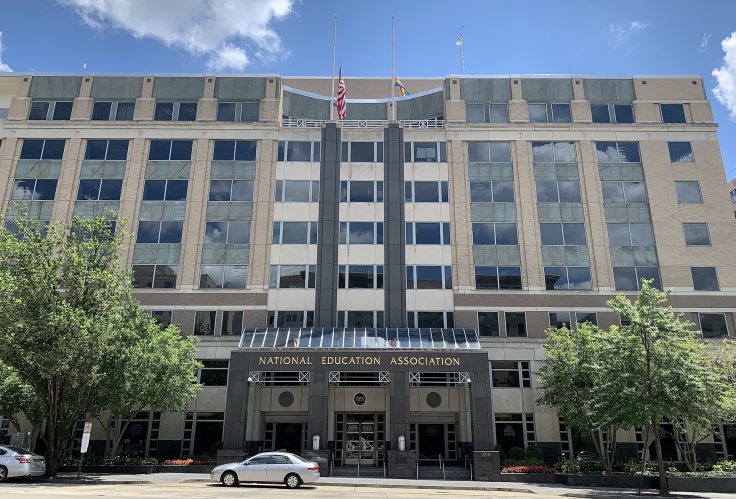
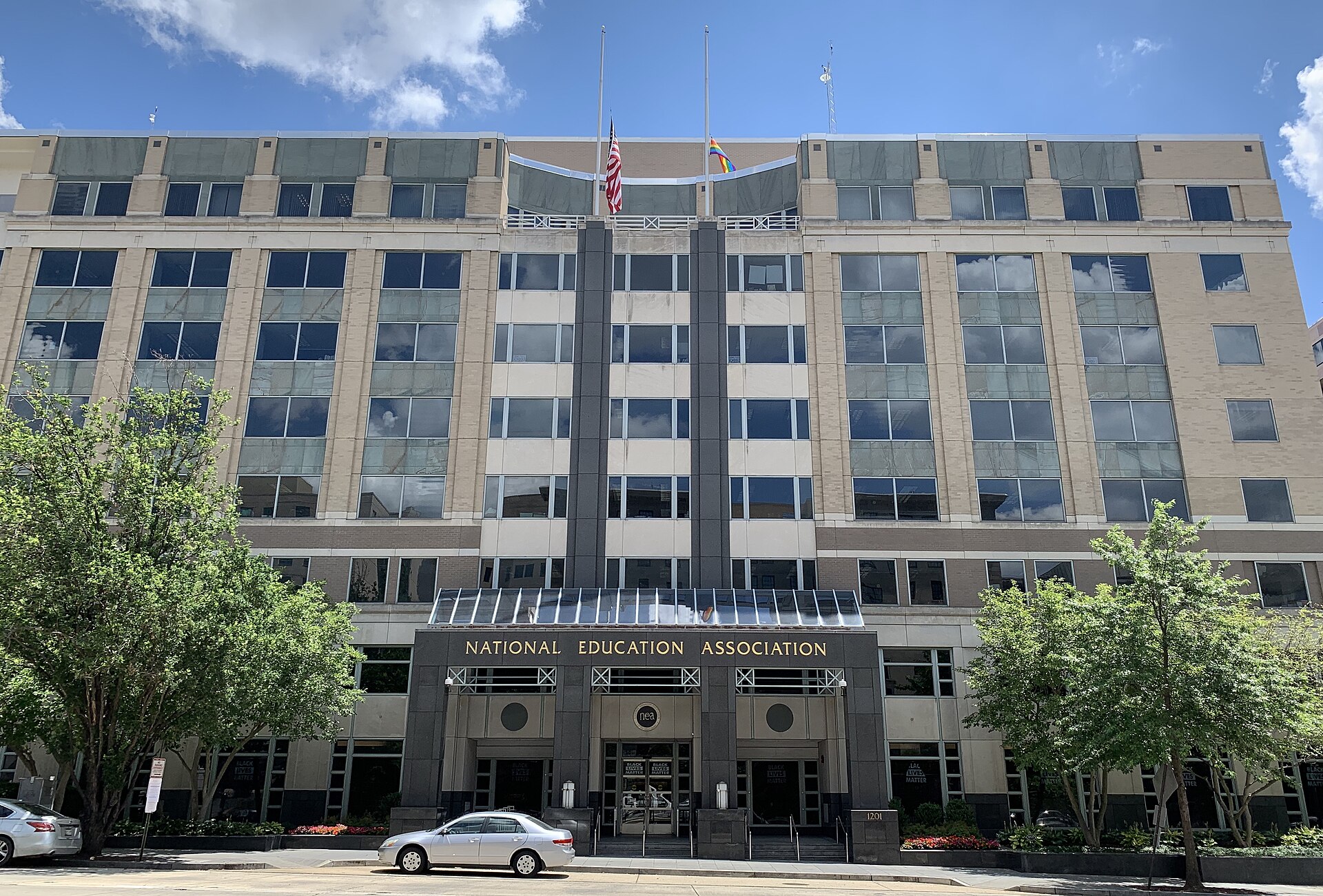
The National Education Association (NEA) was hit with a federal complaint Monday alleging that it subjected Jewish members to an antisemitic environment, according to a copy of the complaint shared with the Washington Free Beacon.
The complaint, filed by the Louis D. Brandeis Center for Human Rights Under Law with the U.S. Equal Employment Opportunity Commission (EEOC) , alleges that the nation’s largest teachers’ union allowed activists within the organization to harass Jewish members. At the NEA’s 2025 Representative Assembly—the group’s annual gathering—for instance, the union debated a resolution banning materials from the Anti-Defamation League from appearing in classrooms. During that debate, “delegates aligned with anti-Israel advocacy physically positioned themselves near Jewish Affairs Caucus members, shouted down Jewish participants, and created an atmosphere in which Jewish delegates reasonably feared retaliation and physical harm,” the complaint details.
In some cases, activists “sat or stood so close to Jewish members that they felt unable to clap, which was required to vote, without risking physical contact and confrontation.”
When one Jewish NEA member spoke against the resolution and mentioned the 82-year-old woman killed during a terrorist firebombing attack in Boulder, Colo., last year, her remarks were “met with laughter and clapping by anti-Semitic participants in the assembly.” Witnesses, the complaint reads, “described the collective, celebratory reactions to the attack and murder of Jews as threatening and intimidating due to the forceful nature of the gestures which were directed specifically toward Jewish delegates.”
A similar incident occurred later in the meeting, when members of the union’s Jewish Affairs Caucus attempted to celebrate the 50th anniversary of their group’s formation. Witnesses cited in the complaint said that members of a competing caucus, Educators for Palestine, “convened several rows behind the Jewish Affairs Caucus members” in a manner that was “coordinated and physically intimidating.” Security at the conference was eventually forced to intervene and stand “between the Jewish Affairs Caucus member-delegates and the individuals involved.”
NEA president Rebecca S. Pringle allegedly prevented the Jewish Affairs Caucus’s executive chair from speaking even though the leader had received prior authorization to do so, and instead “recognized representatives of Educators for Palestine, who had just disrupted the proceedings and interfered with the Executive Chair’s ability to speak.”
Brandeis Center CEO and chairman Kenneth Marcus said in a statement that the radicalism in the union has broader consequences for education.
“The hostile, antisemitic environment propagated by the NEA is not confined to the union; it touches every school and every classroom in which an NEA member works,” Marcus said. “The NEA’s conduct is both completely illegal and morally unjustifiable.”
The NEA did not respond to a request for comment.
The Brandeis complaint comes less than a year after the House Committee on Education and Workforce launched its own investigation into antisemitism at the NEA in the wake of a July Free Beacon report noting that the NEA planned to promote a version of Holocaust remembrance that did not mention Jews. A parallel investigation by the EEOC, which protects minority rights under Title VII of the 1964 Civil Rights Act, would put additional federal pressure on the NEA to address antisemitism—which the Brandeis complaint says it has neglected to do.
While the NEA has received “numerous complaints” outlining antisemitic harassment within its organization, the union “has failed to conduct timely or meaningful investigations,” or even provide those individuals with a “substantive response,” the complaint charges. “This pattern of inaction reinforced a hostile environment for Jewish members and signaled institutional tolerance of anti-Semitism within the union.”
An EEOC spokesman told the Free Beacon that, under federal law, both charges and inquiries filed with the agency must remain confidential and the commission “can neither confirm nor deny” their existence.
“The EEOC can neither confirm nor deny the existence of any charge or charge inquiry,” the official said.