Who isn’t complaining today? That is the question. Whether scrolling through social media or watching the nightly news in 2026, our daily lives have become consumed by perpetual grievances. Everyone is handwringing and howling about something, especially about what they do not have. However, if we did a deeper dive, we might realize our lives are superior to those of even the so-called robber barons a century ago.
Those Darn Robber Barons!
If there is one group of people who have been wrongly maligned, it is the so-called robber barons, or economic royalists. These were and continue to be derogatory names assigned to the wealthiest men who contributed to America’s superpower status in the 1920s.
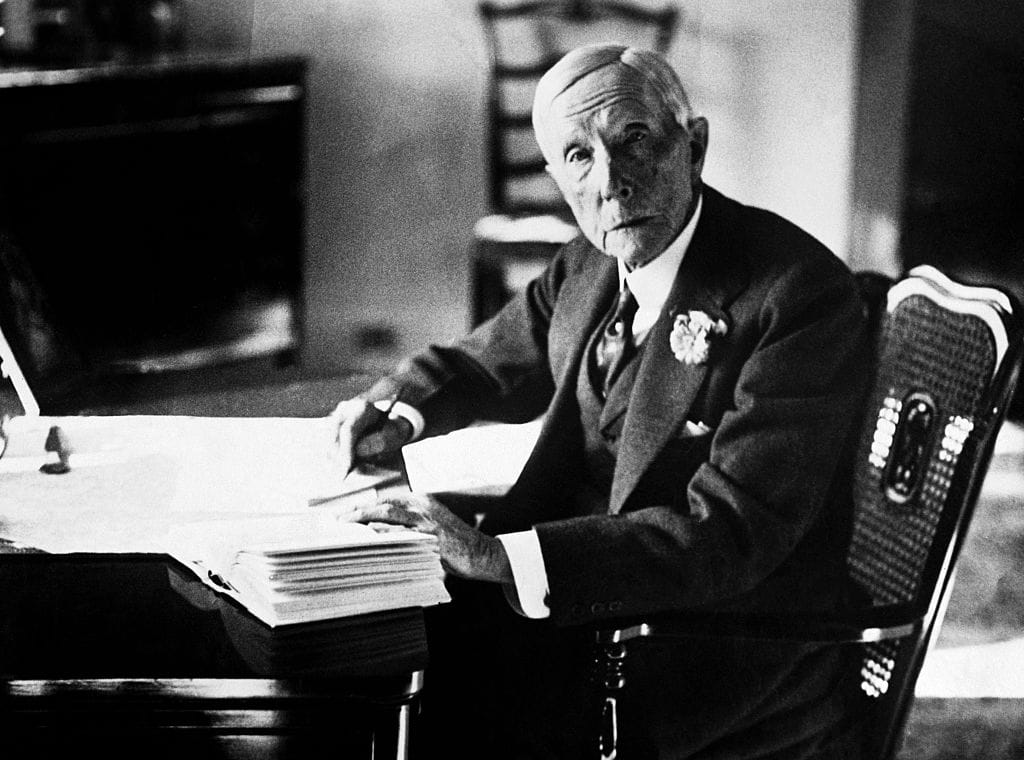
Andrew Carnegie’s steel, Cornelius Vanderbilt’s railroads, and John D. Rockefeller‘s oil: The history books are filled with objections about these men being robbers and barons. And yet, these captains of industry were neither robbers nor barons. Instead, they became affluent through free enterprise, allowing the United States to become the world’s largest economy.
Like other Americans before them, these men planted the seeds for the United States to flourish, supporting the US marketplace’s evolution. Economic conditions have drastically transformed over the last 100 years. Today’s generation is far better off than these men were, even though they were in the top 1%.
Look Around
Wealth is not merely a dollar figure; it is also a measure of what you have in your possession. While economists can manufacture charts, showcase the data, and calculate the dollars and cents, the best option is simply to look around at how even the poorest people in 2026 live from day to day.
 A trip to the 1920s would reveal that showers were uncommon because indoor plumbing was rare. Something that has morphed into a daily routine for billions of people worldwide was viewed as a luxury back then. John Smith, who works at the local McDonald’s frying up CEO Chris Kempczinski’s Big Arch, is probably cleaner than J.P. Morgan was when he helped devise the Federal Reserve System.
A 100 years ago, it would take the average working-class family about an hour of work to afford a loaf of bread. Today, it takes fewer than ten minutes to buy some bread. A week of groceries? About 25 hours of work in the 1920s. Today? Around five hours.
Feeling hot? Turn on the air conditioner. Back then? One of the world’s greatest inventions, which has saved millions of lives over the years, was not ubiquitous in America until the 1960s. Rockefeller, toiling in the day-to-day operations of his business, would have yearned for an AC.
If you wanted to listen to the entire catalog of J.S. Bach or Ludwig van Beethoven’s compositions, good luck! You would be lucky to hear even 10% of their work. Despite most people being indifferent to classical music, virtually the entire genre is available at your fingertips, even for free!
From medicine to entertainment to technology, we are presently living in the best time in history. Yes, there is a lot to complain about, whether the $39 trillion national debt or the Boston Red Sox’s poor start to the MLB season, but the free enterprise system has allowed us to flourish and enjoy life like never before.
Gratitude
The spontaneous order of society. The entrepreneurial spirit in a capitalist country. The invisible hand of the free market. These are all factors that have led to one of the most prosperous periods in human history. Is life perfect? Of course not. Central banks devalue currencies. Politicians force future generations to pay today’s bills. Governments initiate senseless wars. Still, life in 2026 is far better than life in 1926. Well, except for the music and having Calvin Coolidge as president!