OAN Staff Katherine Mosack
11:24 AM – Wednesday, April 22, 2026
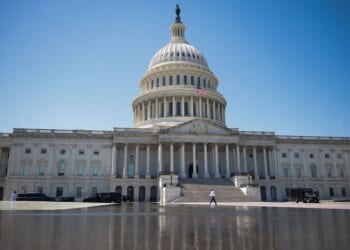
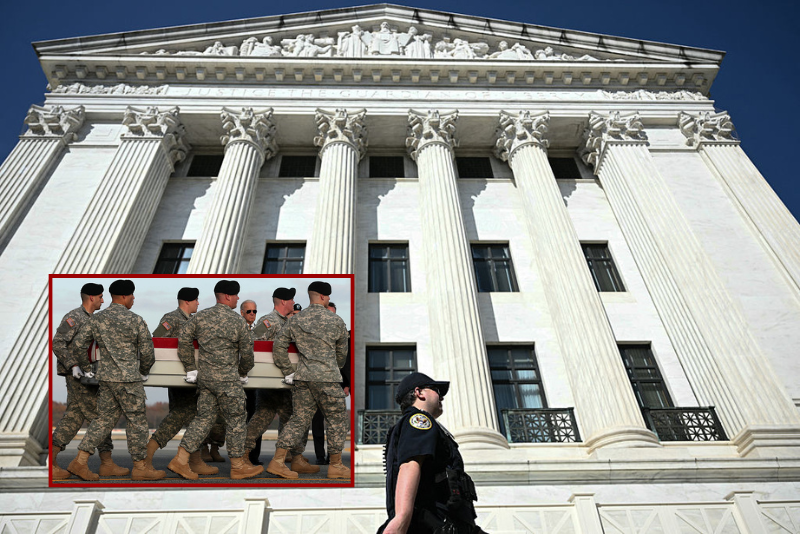
The Supreme Court of the United States (SCOTUS) ruled in a 6-3 decision to allow a lawsuit brought by a U.S. Army veteran injured in a 2016 Taliban suicide bombing to proceed, overturning a lower court dismissal.
Wednesday’s majority opinion was written by Justice Clarence Thomas, who was joined by Justices Sonia Sotomayor, Elena Kagan, Neil Gorsuch, Amy Coney Barrett and Ketanji Brown Jackson. In a rare unifying moment between some liberal and conservative justices, they agreed that military contractors can be held liable for state-based negligence and employee misconduct.
The plaintiff, retired Army specialist Winston Tyler Hencely, sued military contractor Fluor Corporation after being injured in a terrorist attack at Bagram Airfield in Afghanistan.
In 2016, an Afghan national employed by the company — later identified as a Taliban operative — detonated a suicide vest, killing five people and wounding 17 others. Hencely suffered a fractured skull and traumatic brain injuries. The attack also claimed the lives of two soldiers and two civilian contractors, and a fifth soldier died a month later from related injuries.
A Fourth Circuit court in South Carolina, however, upheld the federal “combatant activities” exemption, granting the federal government immunity against claims “arising out of the combatant activities of the military” during wartime, according to court documents.
“The Fourth Circuit’s decision held Hencely’s claims preempted even though the conduct complained of was neither ordered nor authorized by the Federal Government. No provision of the Constitution and no federal statute justifies that preemption of the State’s ordinary authority over tort suits. Nor does any precedent of this Court command such a result. Therefore, we vacate the judgment of the Fourth Circuit and remand the case for further proceedings consistent with this opinion,” the decision stated.
The justices also emphasized that “as a result of the injuries he received, Hencely is now permanently disabled.”
The opinion continued, explaining, “In an effort to recover damages for his injuries, Hencely sued Fluor, bringing state-law tort claims for negligently retaining and supervising the attacker. According to Hencely and the United States military, Fluor’s conduct was not authorized by the military and even violated instructions the military had given it as a condition of operating on the base.”
Justices Samuel Alito, John Roberts, and Brett Kavanaugh dissented from the Court’s decision.
“May a State regulate security arrangements on a military base in an active warzone? May state judges and juries pass judgment on questions that are inextricably tied to military decisions that balance war-related risks against long-term strategic objectives?” Alito questioned in the dissenting opinion. “In my judgment, the answer to these questions must be ‘no,’ and for that reason, this state-law tort case is preempted by the Constitution’s grant of war powers exclusively to the Federal Government.”
“The Constitution divides authority between the Federal Government and the States in many areas, but not when it comes to war. War is the exclusive domain of the Federal Government, but the Court allows state (or foreign law) to encroach on that domain. The Constitution precludes that encroachment, and therefore petitioner’s suit is preempted. Because the Court holds otherwise, I respectfully dissent,” he added.
Stay informed! Receive breaking news blasts directly to your inbox for free. Subscribe here. https://www.oann.com/alerts
What do YOU think? Click here to jump to the comments!
Sponsored Content Below