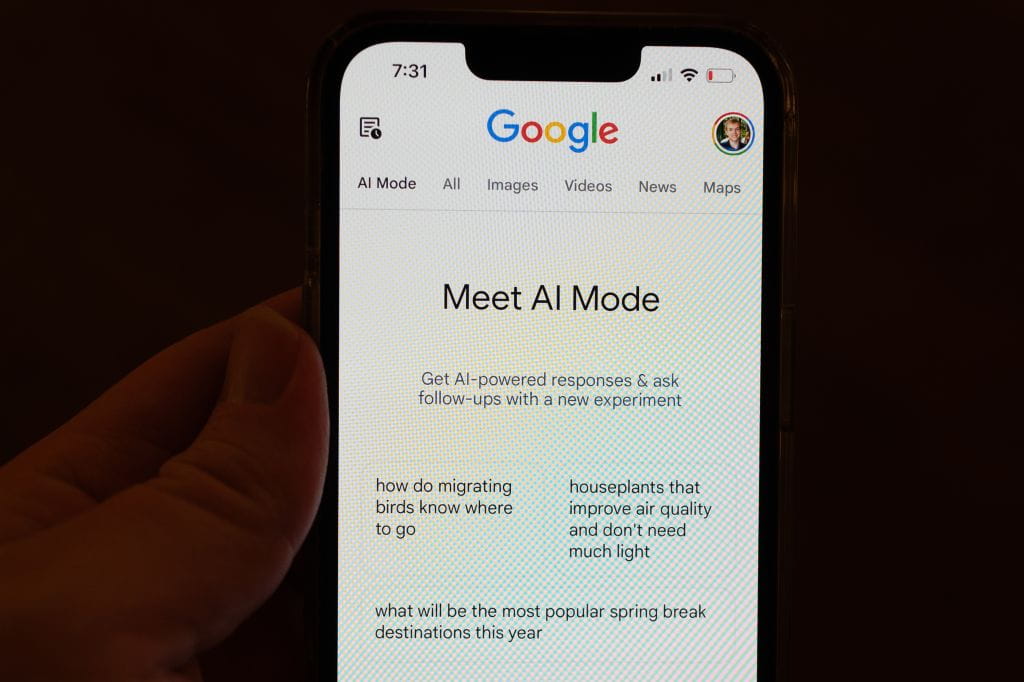
How we obtain information has dramatically changed over the past couple of decades. Instead of searching through encyclopedias or dictionaries, we can get answers in seconds with just a few strokes on the keyboard or phone screen that produce pages of links relating to the topic. If that weren’t easy enough, Google came up with its AI overview, the summary paragraph that posts at the top of the search page. But that little technological addition has caused problems. Some news outlets claim the artificial intelligence program is stealing their website traffic – and that’s not all. A new study reveals that a significant amount of results are wrong.
Google AI Overview Gets It Wrong
Don’t assume everything you read on the internet is the truth. A new study conducted by the startup Oumi reviewed 4,326 Google search results that were generated by Gemini 2 and Gemini 3 models. The results weren’t very reassuring. Gemini 2 was accurate just 85% of the time and the more advanced Gemini 3 got 91% correct. Keep in mind that Google is expected to handle more than five trillion searches in this year alone, which means the AI overviews are giving fake news at a rate of hundreds of thousands every minute.
The study, which was requested by The New York Times, found that more than half of the correct answers were “ungrounded,” which means they linked to sites that didn’t exactly support the information they provided.
When asked when Bob Marley’s home was converted into a museum, for example, Google AI Overview gave 1987 as the answer. However, the correct response should have been May 11, 1986, which was the fifth anniversary of the musician’s death. The three links it provided were also flawed in some way. The first was a Facebook page from his daughter, Cedella Marley, “who posted photos after visiting the museum in Kingston, Jamaica, and did not provide information on when the museum opened,” according to The Times. “The second link was a travel blog called ‘Adventures From Elle,’ which gave inexact information on the museum’s opening. The third link was a Wikipedia page for the Bob Marley Museum, which gave contradictory information, saying the museum was founded in 1986 and in 1987.”
The Oumi study found that Facebook and Reddit were second- and fourth-most-cited sources. “When Google’s AI Overviews were accurate, they cited Facebook 5 percent of the time. When they were inaccurate, they cited Facebook 7 percent of the time,” The Times reported.
One of the problems with AI is that it suffers from hallucinations. It may predict, guess, or even make up results. For instance, if you ask it, “Liberty Nation is a …” it might answer “conservative news and analysis site,” or it could say, “an organization that studies liberty.”
“Because the internet is filled with untruthful information, the technology learns to repeat the same untruths,” The Times explained. “And sometimes the chatbots make things up. They produce new text, combining billions of patterns in unexpected ways. This means even if they learned solely from text that is accurate, they may still generate something that is not.”
News Sites Lose Visitors
Then there’s the losing visitors issue. Google AI Overview scrapes the internet for information and then puts it in a summary at the top of the search results page. The problem here is that the news sites where folks would otherwise go to find that information – the sites Google AI Overview used – aren’t getting the revenue or traffic as they used to because people tend to just read the summary and move on.

“Links were the last redeeming quality of search that gave publishers traffic and revenue,” Danielle Coffey, the CEO and president of News Media Alliance, told New York Post. “Now Google just takes content by force and uses it with no return, the definition of theft. The DOJ remedies must address this to prevent continued domination of the internet by one company.”
To stay in business, the average print newspaper had to go digital – with many even shuttering their print operations and moving entirely online. A 2025 article from The Post demonstrated just how seriously the Google AI Overview has affected these online businesses. Business Insider had to let go 21% of its staff at the time. CEO Barbara Peng said it was a necessary move meant to help “endure extreme traffic drops outside of our control.” Traffic to the site dropped by 55% from April 2022 to April 2025, according to analytics sites. HuffPost lost more than half of its traffic during the same time frame, and The Washington Post also lost nearly half of its search audience.
The Washington Post CEO William Lewis called the AI-generated summaries that replace links “a serious threat to journalism that should not be underestimated.”
A Google spokesperson defended the artificial intelligence summaries in a statement: “Every day, we send billions of clicks to websites, and connecting people to the web continues to be a priority. New experiences like AI Overviews and AI Mode enhance Search and expand the type of questions people can ask, which creates new opportunities for content to be discovered.” So while AI overviews may be fast and convenient, but you can’t always trust them – and they come with a cost that goes beyond a few wrong answers.